Tag Archives: pinot noir

Our Annual Wine Party

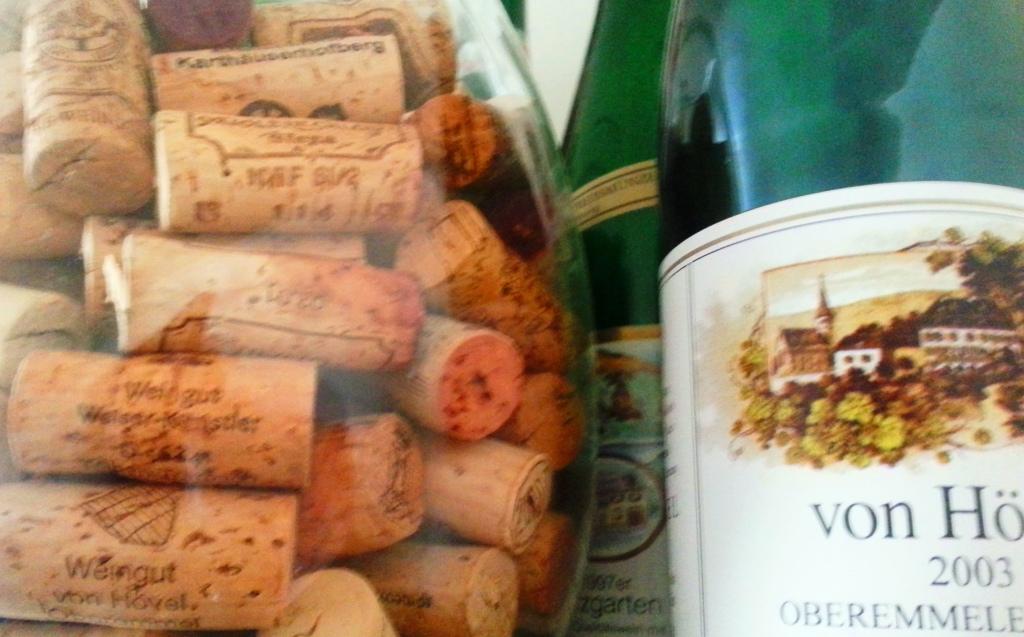
Cork collection

It has become a tradition in our house that every year for Nina’s birthday we throw a wine party. It used to be that it was a wine and cheese party, where we provided the cheeses and opened Nina’s huge treasure chest of mustards and fruit mustards, and everyone invited was asked to bring a bottle of wine they liked or always wanted to try or thought we just had to try. The tradition started back in Germany, where naturally almost everyone brought Rieslings…over the last couple of years we have also been able to open Rieslings from Nina’s birth year which has been fun and educational.

These days, the party has evolved to just a wine party. Nina still gives some guidance regarding what folks should contemplate bringing, and it is usually respected. One cool thing is that a number of friends that come are not really into wine, but are willing to explore and try things out. I always love that. The other cool thing is that it gives me an opportunity to see what others consider when they look at wines and try to bring something to a specifically wine party. Here are some of my impressions from this year’s party:

1) Pinot noir seems to be gaining ground like crazy. I’d guess that half the wines that were brought to the party were made from that grape. Pretty much all of them from the US or other New World locations, mainly because we tend to limit money spent to grad student salaries. I enjoyed seeing that not so into wine folks are embracing that grape more and more, yet some of the wines were clearly underwhelming…it’s just hard at that price range.

2) A Portuguese friend of ours brought a bottle of Alvarinho, a white,  called Deu La Deu from the Portuguese sub-region of Monção e Melgaço. Our friend introduced it by saying it was a vinho verde, and she knew we like vinho verde, but that it was a “next level” vinho verde. I was naturally intrigued, given how much I enjoy vinho verde. When I tried it, I was quite impressed: It has all the citrus and refreshment that I love about vinho verde, the sazziness, the fun. But it also has a more serious air about it: It carries more weight, is a bit creamier, a bit more mature, I guess I would say. At 12.5% ABV it is great to drink, and made for a wonderful surprise! More about the wine here.
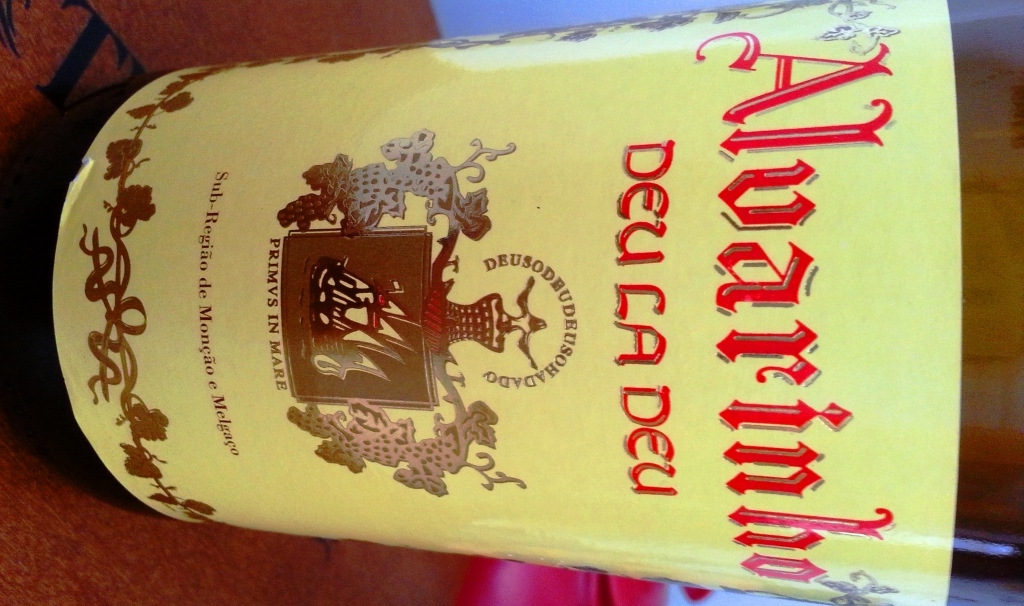
A next level Vinho Verde

A next level Vinho Verde

3) Our newly found blogger friend Hannah (of Next Stop TBD) and her fiance Mark brought a bottle from a winery visit in California last year: A 2011 Ferrari-Carano Cabernet Sauvignon from Alexander Valley. They wanted to retry the wine, because memories of it were a bit hazy, and so we were happy to oblige. You know how I usually see Cabernet Sauvignons with trepidation, but it was a really tasty wine: bold, juicy, chewy, with enough depth. Nina was shocked I liked it, which was probably the other reason I liked it even more. Nothing like surprising your spouse once they think they have you figured out.

4) The amazement that has been Vouvray whites is continuing: Our great tasting buddies and real life friends, coffee roaster Jay and his baking-wine nut wife Sarah brought another bottle: Noel Bourgier 2012 Vouvray, this one retailing for a mere $11! It was just what I described as a winter white in my post about Vouvray a while back: creamy and full, round and enticing. Uncomplicated and quaffable. Go find a Vouvray and let me know what you think!
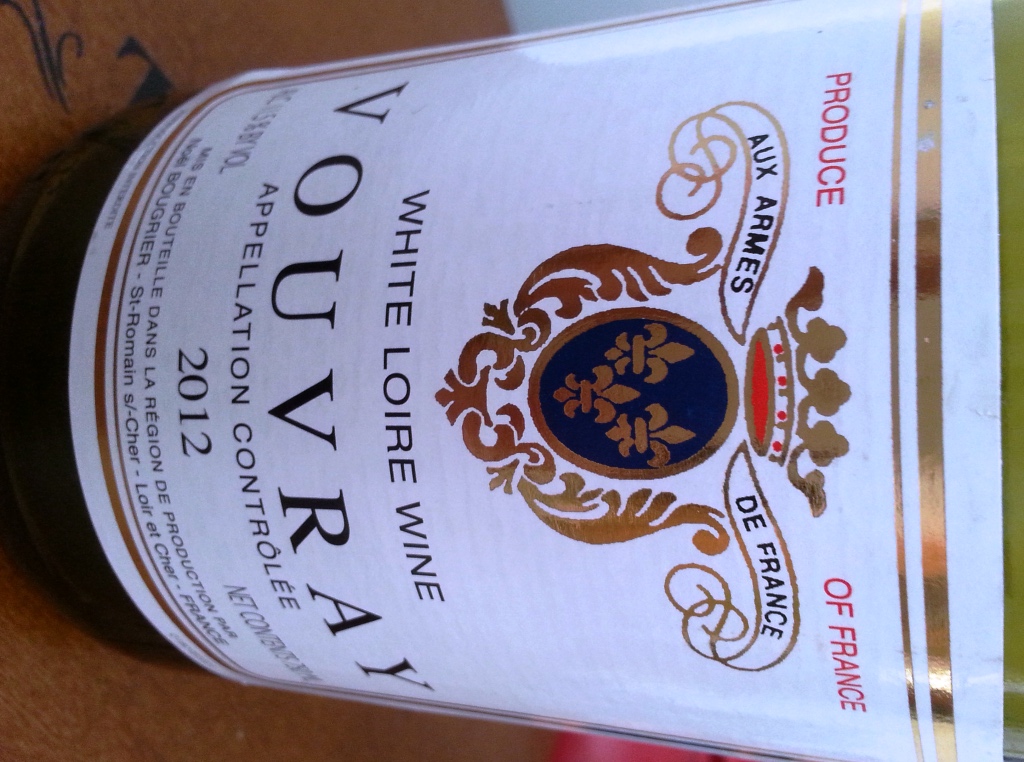
A nice Vouvray at a bargain price

A nice Vouvray at a bargain price

5) As the highlight of the night, we opened yet another 1987 Vereinigte Hospitien Ürziger Würzgarten Spätlese (we have had this wine before, last year we had a Karl Erbes Erdener Treppchen, and we have had Vereinigte Hospitien’s ’87 Erdener Treppchen before). We are now 27 years in, so I begin to worry a bit about how these Spätlesen are going to hold up, especially from a not ideal vintage. I have been telling Nina numerous times that we need to start stocking up on Auslesen and even BAs from that year, if there were even any produced. The cork was moldy on top, but came out seemlessly, and the wine presented itself in fantastic condition: I had gotten the decanter ready, to potentially breathe some life into it, but the tiny sip I tried made me push aside the decanter and go straight for glasses: The wine was firm and structured. There was very bright acidity which held the wine together and led to citrus aromas dominating the wine. The finish was holding up, and so all in all a very solid expression of what an aged Spätlese can taste like. I thought it was very tasty and definitely has a couple more years ahead of it, which I find astonishing….and reason enough to buy a couple more of this when we are in Germany next…
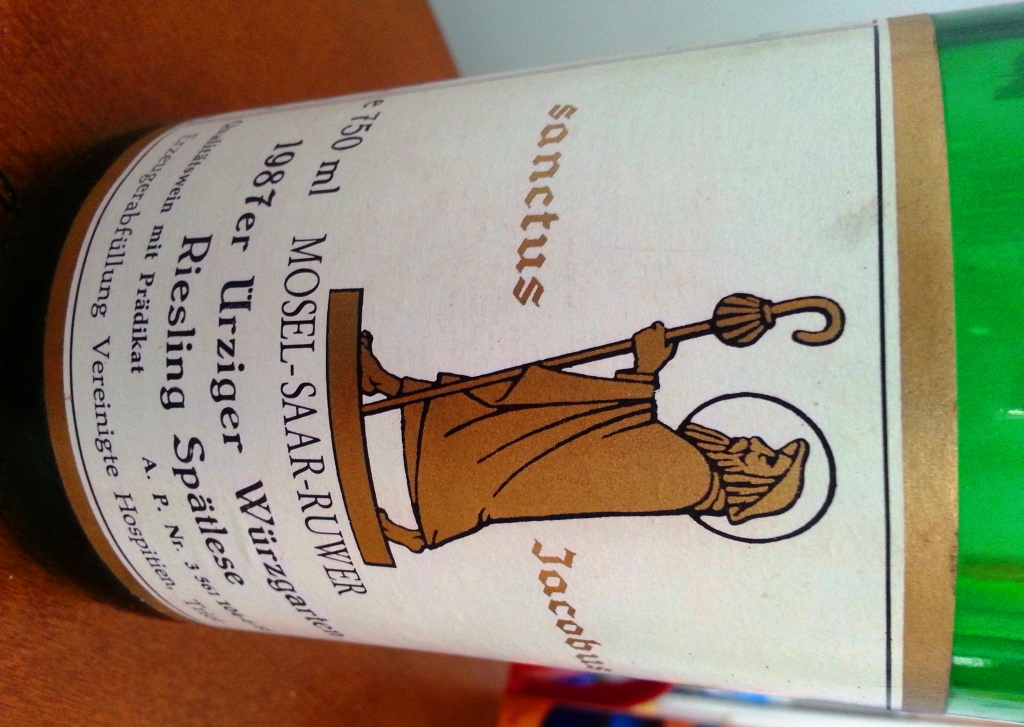
Stunningly fresh

Stunningly fresh

So, when are you throwing your next wine party and encourage friends to bring what they want you to try or share with you?

Tagged , , , , , , , , , , , , , , , , ,

An Eiswein (Ice wine) themed #winechat on Twitter

The three dessert wines participating

The three dessert wines participating

Disclaimer: The wines were provided by the winery or wine association as samples.

Last week, I participated in a #winechat on Twitter. The theme was Eiswein (and dessert wine). The wines were supplied by Knapp Winery and Boundary Breaks Vineyards of the New York Finger Lakes region, and by the Austrian Wine representatives in the US. At 9pm EST on Wednesday, a group of several bloggers who received samples met with the organizers Protocol Wine Studio, the suppliers, winemakers and others interested folks to discuss the wines as well as ice wine in general.

For those unfamiliar with Eiswein (the German word for Ice wine), I wrote a longer piece about it a while back so please feel free to check it out here. To recap: Eiswein is made from grapes that are frozen on the vine (that’s for purists, like me, some regions, like Quebec, allow freezing off the vine). The grapes freeze, so all the water in the grape becomes ice. When you press these grapes, all you get is minuscule quantities of pure concentrated flavors. Sugar and acidity are extremely present in these wines. They make for some of the rarest wines in the world, and age ridiculously well.

Meats from Biercamp in Ann Arbor

Meats from Biercamp in Ann Arbor

We had a few friends over for trying the wines, because of their intensity, I usually only want a small glass of each wine. It is the perfect wine to share. We paired the wines with mostly cured meats from the wonderful Ann Arbor sausage shop Biercamp (duck bacon, Canadian bacon, and a honey/cracked pepper bacon as well as Andouille sausage), cheese (a creamy Delice de Bourgogne, Manchego, goat Parmiggiano, and Roquefort), as well as homemade (by one of our insanely talented baker friends) sweet macarons. I will write a separate post on what to pair with sweet wines, but for now you should know I prefer salty over sweet pairings.

Macaron made by our friend

Macaron made by our friend

But on to the wines. Up first was the 2012 Boundary Break Late Harvest Riesling (not technically an Ice wine). The wine is made by a young winery whose other Rieslings have gathered quite some praise from The New York Times and others. This wine was made with Riesling grapes from one single clone that come from a single vineyard. The vines were planted in 2010, so they were very, very young when the grapes were harvested for this wine. In Germany, winemakers tend to hold off on producing wine from vines that are under 4 years old. The wine had 127 grams of residual sugar per liter, and 14.2% ABV. The first thing we noticed when pouring was how light in color the wine was. The nose offered aromas of ripe cantaloupe, cream, honey, some vanilla, and something the reminded of gummy bears. On the palate, it was very sweet without much acidity, which was what surprised me the most. Its mouthfeel was light, and there were some orange bitter rinds like in English orange jelly. I struggled with this a bit. There was definitely craft in this wine, but I couldn’t help wondering whether the winemakers should have held off on making a small quantity, high level wine from such young vines. It also didn’t feel like a Riesling to most of us. Trying it with the macarons made the wine a bit more acidic, which was welcome. So this could definitely be paired with sweets. Retail price: $30

Boundary Breaks Riesling Late Harvest

Boundary Breaks Riesling Late Harvest

Next up: Knapp Winery’s 2012 Vidal Blanc Ice Wine. Harvested on January 3, 2012 at 11 degrees Fahrenheit (which by my standards makes it a 2011, because the grapes grew in 2011, not 2012), the wine spent almost a year fermenting slowly until it was bottled on December 20, 2012. 24 cases were produced, the wine has 12% ABV and 140 grams of residual sugar per liter. The wine’s color was more saturated than the Boundary Break Vineyard Riesling. The nose was gorgeous, with ripe aromas of spiced orange, some clove, bergamotte. On the palate, this Vidal Blanc showed good acidity, some smoky aromas, with a wonderful viscose mouthfeel to it. I got citrus aromas, mandarin oranges, and raisins mostly. What I was struggling with was the alcohol. It left an almost cognac feel to the wine on the finish, which I was not looking for in an Eiswein. Others on the table had less of an issue with this, so it might just have been me. When I retried this wine 6 days later, the alcohol had stopped bothering me. All in all, a solid wine with good primary Eiswein aromas. However, texturally it reminded me more of an Auslese or Beerenauslese than an Eiswein. I would probably not have identified it as such in a blind tasting. As for pairings: It worked remarkably well with the creamy delice de Bourgogne, taking off the edge of the alcohol. With the goat parmiggiano, more almondy flavors became present, and the bacons worked as well. While I thought it was also good with the macarons, I got shouted down by the table that that was not the case….Retail price: $25

Knapp Vidal Blanc Ice Wine

Knapp Vidal Blanc Ice Wine

Finally, we tried the Austrian 2009 Höpler Pinot noir Eiswein, an Eiswein made from the red grape Pinot noir. The wine poured in a gorgeous amber color, lush and rich and syrupy in texture. The nose was beautiful, with dried apricots, honey, and rum and raisin aromas. When I tried it, my first note read “ICEWINE”, underlined twice. The richness and flavors worked, the wine felt special, just like an Eiswein should. There was a wonderful smokiness to the wines, with the aromas from the nose persisting. Its finish was great: It became smoky again, with lots of honey, and a wonderful acidity that tickled your throat. The wine was decidedly heavier than the first two, and much more intense in flavors. It also paired the best with salty foods. This was a wonderful expression of how interesting ice wine from a red grape can be. Retail price: $69

Höpler Pinot noir Eiswein

Höpler Pinot noir Eiswein

All in all it was a great experience, and I am grateful for the organizers and hosts for letting me participates. The wines were all interesting and showed the diversity there is. The conversation on Twitter was lively and engaged, and I got into some really interesting side discussions about pairings and occasions to drink these wines.

Tagged , , , , , , , , , , , , , , , ,

Sunday Read: What your beer says about your politics

I am posting this for two reasons: it generated quite some commentary and banter on my Facebook wall, and I have not seen it pop up elsewhere on blogs.

Reid Wilson of the GovBeat blog on the Washington Post had some help crunching the numbers of a National Media Research Planning and Placement survey regarding consumers in the US. While Wilson’s article focuses on beer, the graphic attached to the article actually shows wine and spirits as well, and that is what piqued my interest. The premise is that people in the survey indicated their political views and whether they voted. Since it was a consumer survey, they also reported their favorite kind of booze…and that is where it got interesting:

What’s your booze and politics chart (click for larger version)

This is my personal analysis: My favorite hard liquor is Gin (=Democrat, high turnout), my second favorite is Bourbon (=Republican, slightly less high turnout). While I drink Miller High Life at times (low turnout Democrat), my usual is Miller Lite (middle turnout Republican) – my go to, PBR, does not appear. Some of my favorite reds are Pinot noir (=just a little Republican, high turnout), but I also like Sauvignon blanc (insanely high Democratic turnout). Riesling does NOT even appear in the list. Looks like I’m quite the split personality.

Most of all, I am not surprised that Cabernet Sauvignon and Chardonnay drinkers are all Republicans…that might say more about Republicans than anything else…you know where I stand on those two grapes…

Happy Sunday, and where do you stand?

Reid Wilson: What your beer says about your politics 

Tagged , , , , , , , , , , , , , , , , , , , , , , ,