What it means to me to be back in Southern Africa

These last nine days, Nina and I traveled around 3,600 kilometers (a bit over 2,300 miles) throughout Southern Africa. We started our journey by arriving in Johannesburg, moved on to Gaborone (Botswana’s capital, where we met), then an 11 hour drive to Windhoek (Namibia’s capital, beating Google Maps’ 14 hour forecast). From there we moved on to Swakopmund at the coast, and then down to Stellenbosch where we currently are for the next couple of days. We’ll be enjoying wines and meetings with winemakers, what promises to be excellent food (we haven’t had a chance to try any of it), all with the generous support of Stellenbosch Wine Routes, who are hosting us for the next few days.
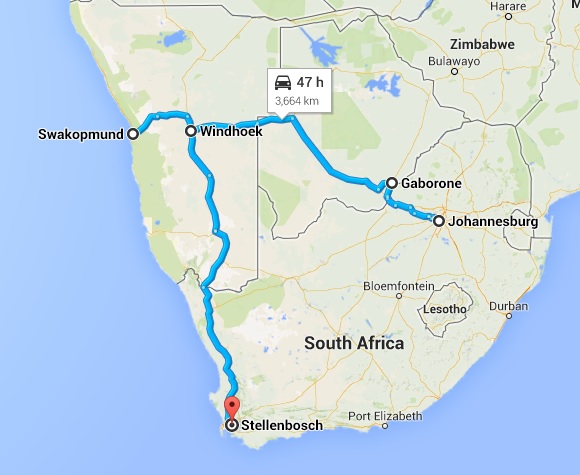
Credit: Google Maps

Credit: Google Maps

Southern Africa has played a major part in our lives and in our life together. It was in Botswana that Nina and I first met, at a sports bar called Linga Longa (yes, it was really called that!). We were both watching the Euro (Europe’s equivalent to the World Cup) in 2008, and during one of the matches I had the audacity to sit down right in Nina’s view of the screen. Lucky for me, I realized it and apologized. That seems to have been enough to get her to talk to me…during the Germany – Portugal game was when we had our first real conversation….Shortly after my return to Germany we decided to give us a chance, and we haven’t regretted it since.

Back at Linga Longa, Botswana

Back at Linga Longa, Botswana

We decided to go back this summer. I liked to point out before the trip that this must be a sure way to ruin your relationship: Returning to the place you met, when everything was still up in the air, and our love was only barely unfolding. When everything was just AWESOME. Now, we have all that “relationship baggage”, you get what I mean. I said it in jest, and nothing could be clearer now: It has not harmed us a bit. We had a blast in Gabs, going back to Linga Longa where we watched Germany play Portugal (just like in 2008, and Germany won again!). We went to the Beef Baron, easily Botswana’s most reputable steak house which serves insanely delicious steak. We revisited places of our past, and while it seemed strange at times, it always was strange in a good way.
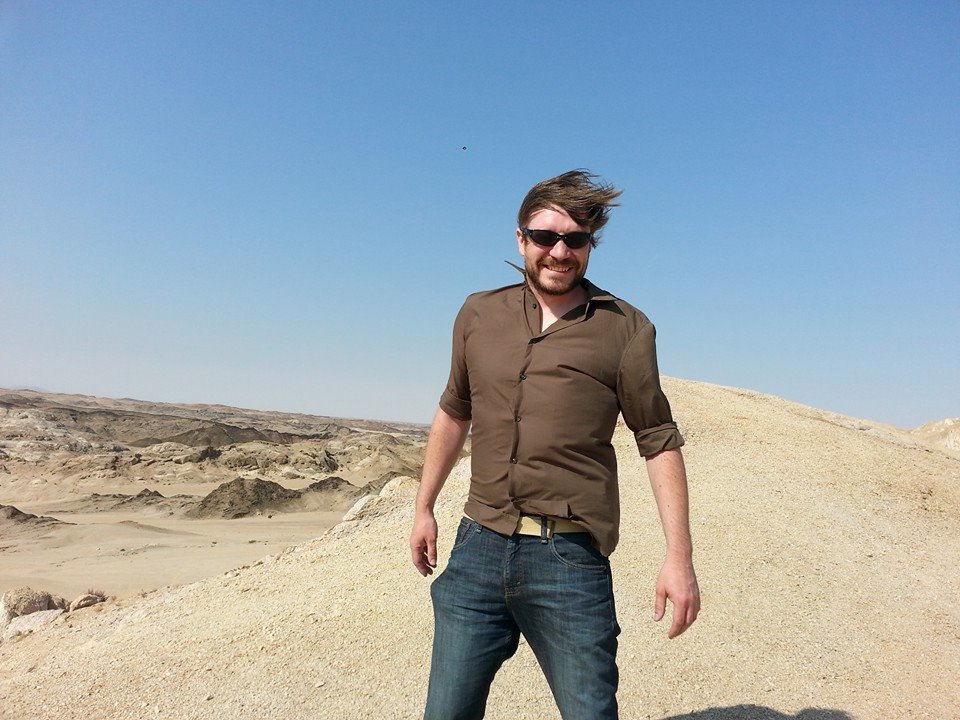
Being sandblasted in the Namib Desert

Being sandblasted in the Namib Desert

We have done our fair share of traveling in Southern and Eastern Africa, and I think it is fair to say that we feel most at home in Southern Africa. The people are so friendly, and once you get used to Africa Time (which I HIGHLY recommend: Don’t stress out about delays or waiting periods, it’s a way of life, and there is no real harm in it) and accept that Southern Africa is a talking culture in which it matters that you greet each other, exchange pleasantries and don’t immediately demand things, there will be no better place on earth to help you relax. The light in the morning and evening is just stunning, the wide African sky spans its wings above you, in desolate areas you actually SEE the Milky Way, the wildlife. Just stunning.
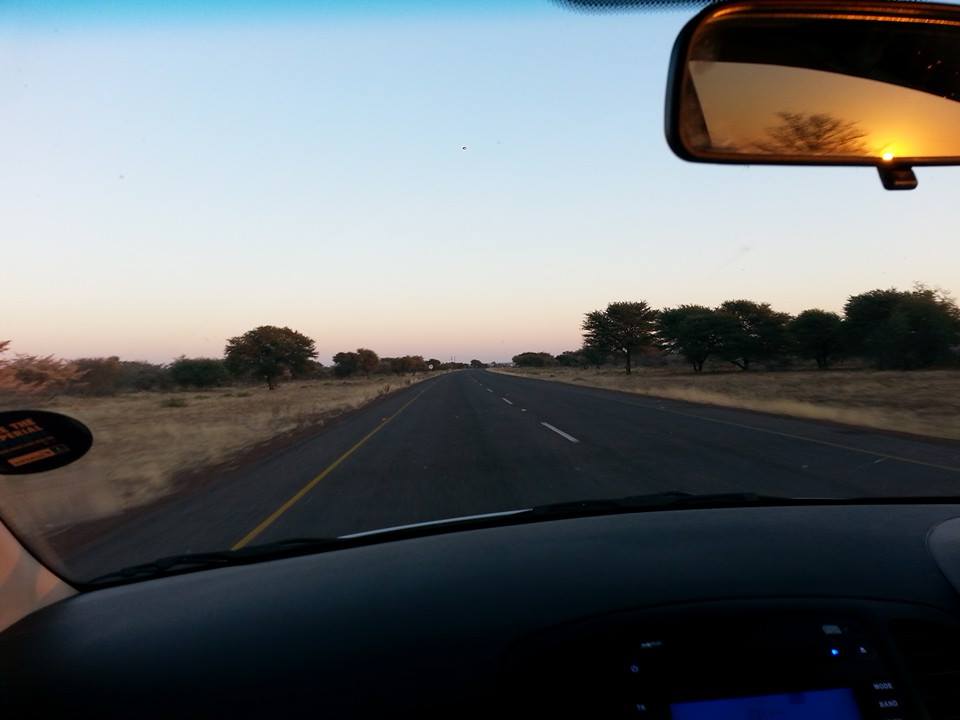
On the Trans Kalahari Highway, somewhere in the Kalahari, early in the morning.

On the Trans Kalahari Highway, somewhere in the Kalahari, early in the morning.

Southern Africa offers us a feeling of home, be it in Botswana or Namibia or now in South Africa. We have met great people along the way, everyone is ready to help, assist, move us along. We are actively contemplating spending a half year or so in the region, to work, but to also live here. It’s been a great homecoming for us, and having been able to add Namibia to our ever expanding list of countries we have to revisit has been an added bonus. You won’t believe the diversity in these virtually empty stretches of land (Namibia is the size of Alaska with 2.2 million inhabitants, and Botswana is the size of France but has only about 2 million inhabitants). While the distances may sound intimidating, the roads are in great condition. If you ever consider traveling the region I highly recommend you drive as much as you can so that you can see more of the countryside.  No need for a guide or driver or a 4×4. We have been driving a Hyundai i10 (a teeny tiny car) without a problem at all. Feel free to contact me whenever you contemplate a trip, we have a ton of tips and advice!

We are now facing four days in the good hands of Stellenbosch Wine Routes. We are super excited the time has come for this part of the trip, and we’ll share about it as much as we can! Our first stop is Majeka House, a wonderful boutique hotel just a bit South of Stellenbosch. We’ll write more about it in a bit, but suffice it to say, it feels great to be here.

Oh, and it turns out there is already a town named after Nina in Namibia….one less thing to worry about.
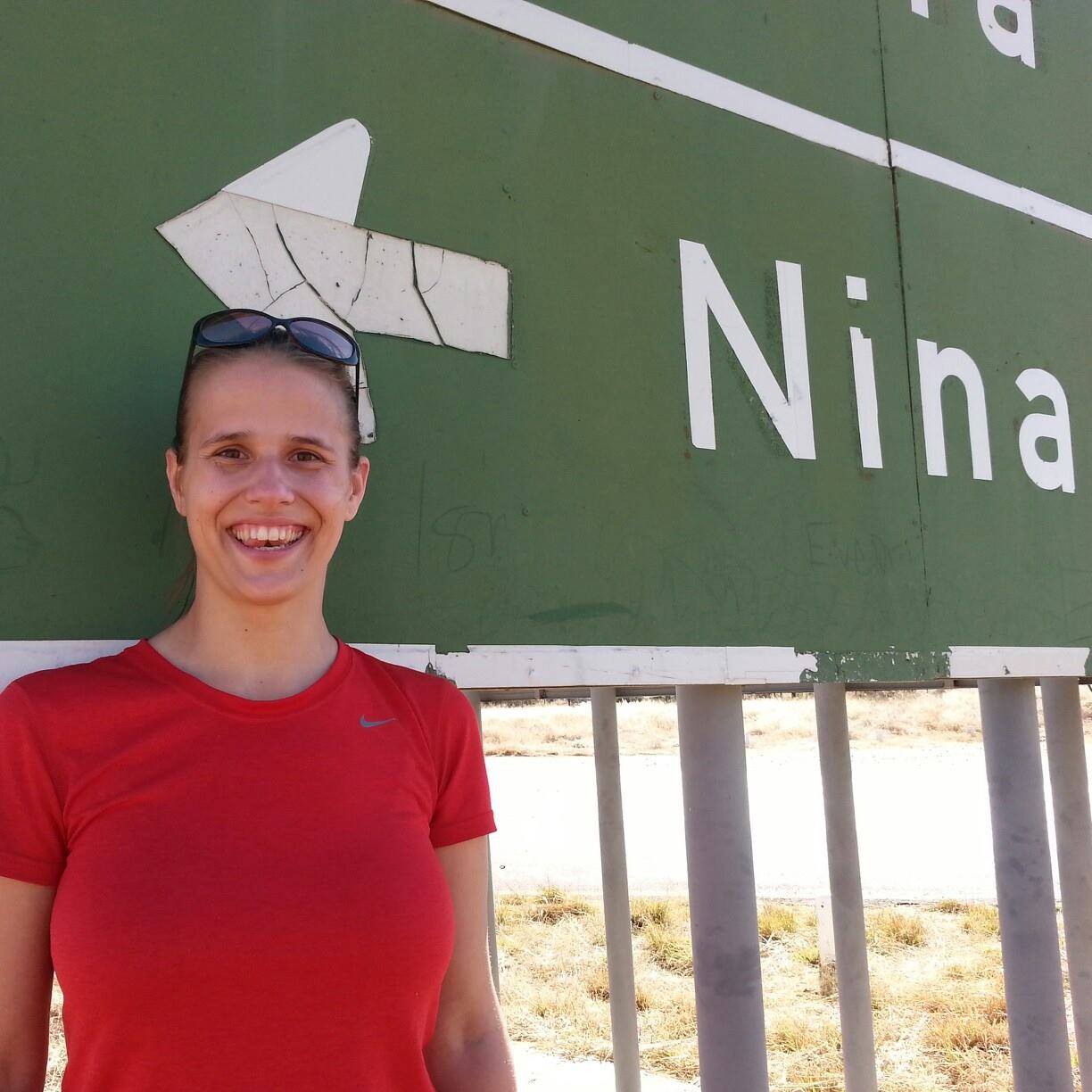
Nina at the place that is surely named after her.

Nina at the place that is surely named after her.


Tagged , , , , , , , , , ,

Repost: Savanna Dry – my not so secret cider love

We are currently in Windhoek, Namibia’s capital, and just returned from Swakopmund on the Atlantic. Tomorrow we are headed as far south as possible before it gets dark on our way to Stellenbosch. Being back in Southern Africa, an area of the world that I love dearly, I am also drinking a bunch of Savanna Dry again, a cider made in South Africa. It’s one of my favorite ciders, and I wrote a paean to it in October 2012, and have decided to repost it here:

South African Savanna Dry Premium Cider

South African Savanna Dry Premium Cider


I like to think that I discovered Savanna Dry ciders during my time in Botswana, because it would be nice to connect this discovery with my other two discoveries there (the other two being Pinotage and Nina). But that is not true. I actually first got exposed to it in 2005, when my ex brought some from a three month stint during her legal training in Stellenbosch…but I digress.

After my return from Botswana, I began looking for sources for it in Germany, and I was lucky. There was a guy who selling it (Germans, you can find his website here)! I admit, it is not cheap, but there hardly is anything like it to get that Southern Africa feeling back into my daily life. So, while Nina and I were living in Germany, we would usually have a box in our house, rationing ourselves in order not to overspend. But for our wedding celebration, we actually bought a couple of boxes to serve while people arrived at the venue…in the spirit of our relationship’s roots.

Here in the US, I have not seen it in stores, and online sellers here seem to be happy to completely overcharge their customers on shipping, so I give that a pass (the insanely high shipping and handling prices here will have to wait for a rant in a seperate post). So, when a friend of mine came to visit us from London this spring and asked what he could bring, I told him Savanna Dry. And he did bring two bottles, big bottles even (500 ml instead of the usual 330 ml)! We had one in the summer, and it was time to have this one the other night…leave aside all the emotional connections with it for me personally, and the first thing you notice is the awesome branding. I LOVE the label and the fact that they bottle it in clear glass, so the cider gives the label its appropriate background.

Savanna Dry is, as the name indicates, a dry cider (the company’s slogan is: “It’s dry but you can drink it.”). The color reminds me of the soft, warm sunlight of an afternoon in southern Africa. Its bubbles are never offensive, and it has this strong and great taste of yellow apples with a bit of tartness, sometimes it even reminds me of biting a bit too deep into the apple and getting the coarser inner bits that surround the kernels, which in this case is not offensive. The company website says it is made from apples in Elgin region in Western Cape province of South Africa. At 5.5% to 6% ABV it is just right for warm summer nights, but also when it gets colder. I like to throw in a slice of lemon for just the right punch of acidity and, I swear, I feel like I am back in Bots … where life is so much more pleasantly slow.

If you get a chance to try it, please do so! You can check out their website here.

Tagged , , , , , , , ,

Because of the gorgeous summer weather: Two Rosés I liked…and a bonus wine

The wines were received as samples from the winery or a marketing association.

We’ve been spending the whole week in London and Oxford, and the weather has been startlingly gorgeous: temperatures in the high 20s Celsius, barely any rain. I don’t think I have ever seen the UK like this…with temperatures like this, I find myself reaching for Rosés, fulfilling every Rosé stereotype: that they are only really good when it’s warm and you can drink them very well chilled. In fact there are a lot more uses for these types of wine, and I acknowledge them, but to me a Rosé still tastes best in the summer…

Over the last months, I received a couple of samples and I was particularly impressed by these two:


Piattelli Premium Malbec Rosé

Piattelli Premium Malbec Rosé

2013 Piattelli Vineyards Premium Reserve Rosé of Malbec

Piattelli Vineyards is an Argentinian winery with holdings on the Eastern side of the Andes in Mendoza and Salta whose head oenologist is Valeria Antolin. This particular wine was made with 91% Malbec and 9% Torrontés (a white grape) grapes and has 14% ABV. I tried it as part of #BevChat, a Twitter tasting, in May. The wine poured (as you can see) in a bright red that I would describe as watermelon color.  The nose offered roses and melon aromas, and was enticing. On the palate, this presented itself as a serious wine, pretty heavy with not much acidity. It felt much more like a light red than a heavy white, if you know what I mean. It had pretty good balance and not much fruit.  The main reason I like this particular wine is that it pairs great with a BBQ, THE summer food. It has the heft to stand up to these charred aromas, and is still fresh. Someone else tried it with a sausage and mushroom pizza and was also seriously impressed. This is not your easy-peasy Rosé you can grab for a few bucks at the liquor store, but it shows what Rosé can be capable of. Retails for between $8 and $14.

Cline Cellars Rosé

Cline Cellars Rosé

Cline Cellars 2013 Mourvèdre Rosé Contra Costa County

I tried this wine as part of a #WineChat hosted by Protocol Wine Studios and received the wine as a sample from Cline Cellars. Cline Cellars has a reputation for producing Rhone-style wines in California, and as it happens, Mourvèdre is a standard Rhone grape but is rare to find in California. The wine has 13.5% ABV and 8.1 grams of residual sugar per liter. The special thing about this Rosé is that the grapes come from vines that are a century old, which is not normally material for a Rosé. It shows that Cline Cellars takes this wine seriously. The way the wine is made is as a blanc de noir, basically a white wine made from red grapes. Let me just say that I loved this wine. It was wonderfully full of raspberry aromas with some floral elements, and it was just super fresh and great. Nice acidity keeps it lively, and the hint of sweetness makes for great drinkability. Retails for between $10 and $14.

And while we’re talking Cline Cellars, let me add a non-Rosé to the mix:

Cline Cool Climate Pinot Noir (Photo credit: www.wine-searcher.com)

Cline Cool Climate Pinot Noir (Photo credit: http://www.wine-searcher.com)

Cline Cellars 2012 Cool Climate Pinot Noir Sonoma Coast

This wine was part of the Cline Cellars tasting, and if you know me, you might have picked up on my weariness when it comes to California Pinot Noir, which I often find too strong, too intense, too fruity. Well, not this one, let me tell you. At 14.5% ABV it is definitely a tad higher than I would wish for in a Pinot Noir, but the wine’s aromas totally made up for it: In the glass, this Pinot Noir was prune colored. The nose gave away raspberry, cherry, white cake batter, and was slightly perfumy. An intriguing mix of aromas. On the palate, the wine was a bit smoky, showed aromas of cocoa and cherry and just great acidity! Someone wasn’t shying away from it in a very good way. There was also enough forest aromas in the wine to make it recognizable as a Pinot Noir, but it wore its New World colors proudly. A great mix, in my book. This should work really well with a BBQ and was a great surprise! Retails for between $15 and $20 and is a great value!


Tagged , , , , , , , , , , , ,