Last night, we had my good blogger friend John, The Wine Raconteur, and his wife over for dinner at our place. The dinner had been a long time in the making, and I am glad we finally got to it. It has become a Christmas tradition in Nina’s parents’ house for me to cook a boeuf bourguignon (beef burgundy) “between the years”, as we call the period after Christmas and before work starts again in early January. I had to tweak my established recipe (over at FX Cuisine’s stunning food blog) a bit, and figured John and his wife would not mind being the guinea pigs to give the new recipe a try.
I have always loved this dish, and pride myself in having mastered quite some skill in its preparation. It is time consuming, with the marinating and dealing with the meat, but it is also so rewarding! This photo is from FX Cuisine, and mine looks pretty much like this (and yes, I do serve it with mashed potatoes as well!):

Boeuf Bourguignon
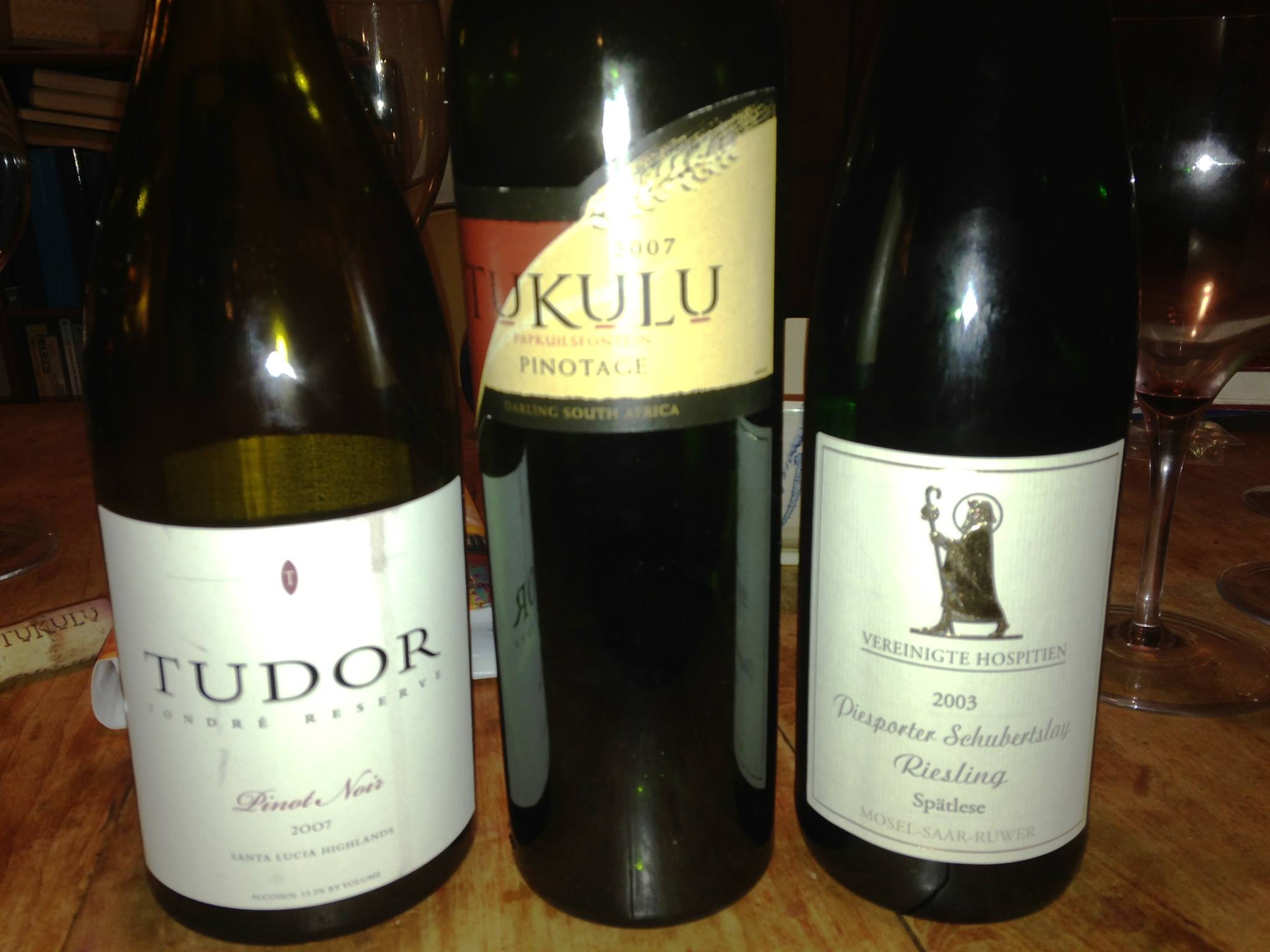
As a French classic, a Burgundy Pinot Noir is normally a must to accompany this dish, but John had something else in mind. He had recently acquired a bunch of single vineyard reserve Pinot Noirs from California-based Tudor Wines and wanted to share this wine, which was very generous. He knows of my reservations as regards California Pinot Noirs (too fruit-driven, not enough earthy aromas), so he grinned and informed me that this had enough “dirt” in it. And oh boy, it did. We were drinking the 2007 Tudor Tondre Reserve Santa Lucia Highlands. It was such a pleasant surprise: The initial taste was this wonderful earthiness that a light Pinot Noir carries when done right, and it stretched through the mid-palate, only to be taken over a by surprising fruitiness of sweet cherry and berries. This fruit explosion was in no way a problem, it was so well integrated and part of the earthy tones. Just a great wine, wonderful with the meal as well.
After we were done with the Tudor bottle and our dinner, and conversation was flowing naturally back and forth, I was making eye contact with Nina. We had a bottle of Riesling in the fridge, but it didn’t feel right to crack that bottle just now. As John’s wife was describing how much she enjoys Cabernet Francs and has a penchant for big wines (just like Nina), Nina suggested we should open our last bottle of 2007 Tukulu Pinotage. John reported that he had only ever tasted his first Pinotage at a recent tasting and seemed not very keen on reliving that experience (who can blame him, a lot of the stuff sold here is not up to par), but we insisted. Nina and I have had a weak spot for good Pinotage ever since our time in Botswana, were amazing wines from this grape were available. Tukulu quickly became my favorite producer back then, and has remained so since. Tukulu was one of the first wineries in South Africa to be run by black entrepreneurs and deems itself a black empowerment project (granted, I do like the winery for that reason alone!). This particular bottle had been sitting for a while, and Cellartracker kept nagging me that its drinking window was closing…man, was Cellartracker wrong. The wine poured in a gorgeous purplish red, and swirled heavily through the glass. The nose was fresh and enticing, with typical rubber and dirt aromas mixed with red fruit. On the palate, the wine was wonderfully fresh. Great acidity, lots and lots of earthiness, mixed in that unique style that only good Pinotage can achieve with red fruit. Stunning, and by far not nearing the end of its drinking window.

A night spanning three continents: North America, Africa, and Europe
Instead of dessert, as is common in our household, we opened a 2003 Vereinigte Hospitien Piesporter Schubertslay Riesling Spätlese. You all know my love for aged Rieslings by now, and this one did not disappoint. Petrol aromas in the nose, some mineral aromas and citrus. On the palate, the wine was a stunning mix of toffee and vanilla and underlying acidity and yellow fruit aromas. It still tasted very fresh, and was not on its way to (what I loosely describe as) the more sherry-like qualities of even older Rieslings. By this I am referring to a narrower scope of aromas, and a “thinner” mouthfeel (thanks to Frank for making me explain this a bit more!). I love this stage in a Riesling’s development: still supple and a good mouthful, but turning more towards the caramel side. In general, I find the 2003 Mosel Rieslings are great to drink at the moment, so if you have a bottle in your cellar, give it a try!
All in all we spanned three continents last night. Add in that we talked about our Asian trip as well, and we can make that four. I love how wine can do that, so easily. But as always, the best wines are worth nothing if not had in delightful company.


 the winegetter