Tag Archives: tasting notes

GranMonte Asoke Valley Winery – The Tasting Notes

The vineyards of GranMonte Winery

The vineyards of GranMonte Winery

Alright, as promised in my Meeting the Vintners article on GranMonte Asoke Valley Winery last week, I want to share some impressions on the wines I tried. We had the chance to try these wines with dinner, and some without, and that definitely shaped some of the impressions. All in all, I think the line up was pretty impressive. The wines expressed a ton of flavor, making them very appealing.

Let me start with a couple of whites:

The 2012 Sole Chenin blanc Viognier, which contains 93% Chenin blanc and 7% Viognier grapes, was fermented in stainless steel and French oak barrels and spent four months on the lees. It has 13% ABV, 5.4 gr of acidity/liter and 3.8 gr of residual sugar/liter, which under German wine laws puts this in solidly dry territory. The wine poured in a clear, light yellow and had an incredibly fresh nose with banana and citrus aromas. On the palate, it showed good fruit in the beginning, mostly citrus, then it became quite creamy on mid-palate to be followed by bitter orange rinds which were surprising but not unpleasant. The acidity kept the wine refreshing, which made it a great companion in the tropical heat.

The 2012 Verdelho poured in a stronger yellow color, and showed a nose full of tropical fruit: a bucket full of papaya and passion fruit. Absolutely loved it. On the palate, it was almost medium-bodied, silky and creamy, with good acidity and nicely lingering finish with some lemon pepper aromas. I enjoyed this wine for its great drinkability. I wasn’t quite sure how to pair this with food, but with a wine like this I don’t actually feel like it needs pairing. Again, very enjoyable white wine.

The 2013 Verdelho, which had just been bottled, in contrast was of very light color, almost as clear as water. The nose had mostly gooseberry aromas (which I underlined four times in my notes), papaya, some chewing gum, and just jumped at me in its fruitiness (yes, even after the previous two wines!). Again, this wine was more on the medium-bodied side, passion fruit the dominating aromas. The mid-palate seemed a bit wobbly, but that might be due to its recent filling, and the finish came through strong with a nice peppery touch. Strong showing.

I really wasn’t expecting the whites to be this fruity and light given the climate. That was a very nice surprise.

In the winery shop.

In the winery shop.

We then moved on to the reds, and we were in for some treats.

We started with the, again recently filled, 2012 Heritage Syrah. Made from only Syrah grapes, this wine ferments in stainless steel and then spends 12 months in French oak. 13% ABV, and a healthy acidity of 5.67 gr/l. It poured in a medium ruby red, and the nose showed cassis, sour cherries, some branches and slightly earth aromas which were complemented by violets. I really enjoyed the fruitiness of this wine on the palate, with raspberries and some jam. It was earthy, had great tannins, and combined subtlety with a good backbone. The finish was just beautifully long, it lasted and lasted and lasted (I wrote down 25 seconds +). The coolest thing about this wine was how it stood up to steaks paired with super spicy oils. We just couldn’t believe how this wine worked with such heat. Incredible.

We then tried the 2009 Orient Syrah, one step up from the Heritage Syrah. The grapes come from their three oldest and lowest yielding blocks in the vineyard, were fermented in stainless steel, and then moved to 83% French, and 17% American oak barrels for 12 months. The wine had 14% ABV and 5.1 gr/l acidity. The color was decidedly darker than the Heritage Syrah. The nose was very restrained, seemed much more old world in style than the previous wine. There was some leather, some prunes. On the palate, this full bodied wine showed great balance, was just the right amount of dark fruits with earthy aromas ( I really enjoyed how earthy this one was), tannins to hold it up. It also showed a long finish and was a pleasure to drink. Not as exciting as the Heritage, but definitely well made.

Probably Nina’s favorite of the night was next: The 2009 Asoke Cabernet Sauvignon Syrah, GranMonte’s flagship wine. Made with 60% Cabernet Sauvignon and 40% Syrah grapes, the must ferments in stainless steel before spending 14 months in 83% French and 17% American oak barrels. The final product has 14% ABV and 5.8 gr/l of acidity. It was pitch dark in the glass, almost black. Wow. The nose was decidedly Cabernet Sauvignon, branchy, a bit green peppers, with red berries and vanilla aromas. Very expressive nose, intense. On the palate, all I got initially was cassis, cassis, cassis, so strong. The wine had great tannins, showed some tobacco, heft and a good mouthfeel. The balance was there, the finish was good. Everything came together in this wine. As I said, Nina really really liked this wine. For me, it was too powerful, I think. I am not a fan of these big reds. Again, this was a great wine, it was just not meant for me. I am more at home with the earthier, less expressive wines.

The final wine was, how could it be otherwise with me, the just filled 2013 Bussaba Chenin blanch Semillon, a white made in the late harvest style. It contains 60% Chenin blanc, 35% Semillon, and 5% Canadian Muscat grapes. The color was very light, almost watery (not what I expected in a late harvest style white). The nose showed intense aromas of honeydew, mango, and mint. On the palate, it was most of all refreshing, again showing this great acidity that Nikki is capable of expressing in her whites, that never make this boring or feel too sweet. It retains a lightness and seems to have the right ingredients to also age well.

All in all, as you can probably tell, I was quite impressed. The wines showed finesse and craft, and most of all, were pretty tasty. I was told by the owners that some of their wines are now available in San Francisco, and when I did a quick Google search, I found the Thai restaurant Koh Samui & The Monkey at least offered some GranMonte wines in mid 2013. Might be worth checking out!

Wine and company make people happy
Wine and company make people happy

Tagged , , , , , , , , , , , , ,

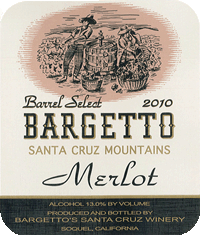
2010 Bargetto Santa Cruz Mountains Merlot

2010 Bargetto Santa Cruz Mountains Merlot

2010 Bargetto Santa Cruz Mountains Merlot

Last summer, we spent about 10 days with Nina’s grandmother who lives in Santa Cruz, California. During that visit, we had the good fortune to attend a tasting at Ridge (for the report and an awesome photo of me see here – at the bottom of the post). While I love visiting producers that are widely known and appreciated, I also get a kick out of visiting smaller, less well know, more local wineries. For one weekend, we decided to go and hit up Bargetto Winery, a winery I had never even heard of. It’s located in Santa Cruz and was established in 1933. It was founded by two brothers that migrated to the United States from the Piemonte region in Italy. From 1918-1933, due to prohibition, the winery was only making wine for family and friends, until in 1933 they cranked up production with the end of prohibition. It is the oldest continuously operating winery in the Santa Cruz Mountains appellation.

We went to the tasting room in Soquel on a Saturday afternoon, and had a great time. It was a rather quiet day, we paid the California obligatory tasting room fee, and then proceeded to try their Merlot, Pinot Noir, and other varietal wines. We got to talk to Michael Sones, the winemaker who is a great guy, and got a tour of the estate. The winery claims to try to follow the Northern Italian wine making tradition, which seems to entail trying to express colder climate flavors in their wines. For us, that approach seemed to work. Grandma signed up for the wine club, and we took home a couple of bottles of this Merlot, and one of their high end Pinot Noir, which I really enjoyed.

Another note to send ahead: I don’t understand why so many people have issues with Merlot. When done right, it is such an interesting grape, with awesome flavors. Its rather light feel is a much better fit for me than the seemingly heavier Cabernet Sauvignons. In my book, if you are looking for something between Cabernet and Pinot Noir, try a Merlot….but that might just be me.

The 2010 Santa Cruz Mountains Merlot is composed of 90.2% Merlot and 9.8% Petite Syrah grapes with the vast majority of grapes coming from Regan Estate vineyard. The wine has 13.5% ABV and was aged in 33% new oak barrels for 18 months before being bottled in September 2012. 381 cases were produced. Price: $25.

In the glass, the wine showed a bright darker red with hazy rims. The nose was extremely full of berries, mostly crushed raspberries, but also currants. There were floral aromas, and hints of smoke. I thought the nose was terrific. After a while, branch aromas started to show up and the nose got more earthy. On the palate, the first thing I noticed was a healthy acidity, and then what I can only describe as vanilla ice cream with raspberry sauce. It was such a cool tasting experience, and definitely not what I remembered from our tasting room tasting. The mouth-feel was silky and fresh, and some wood aromas shown through. The wine was of good length, with all in all well integrated flavors. If I had one issue, it would be that the acidity was maybe a bit too bright for it to be entirely balanced.

All in all, a cool tasting experience. I enjoyed the flavors, which became more spicy and herbal as the bottle progressed, and it brought back good memories from last year’s visit to the Bay area. Cannot wait to go back. Also, I tried some dark chocolate with this wine, and it was a great pairing. The red berries and chocolate just hit it off! If you get a chance, stop by at Bargetto Winery and give their wines a try.

Tagged , , , , , , , ,

Sempre Vive: A Napa Valley Cabernet Sauvignon Vertical 2002 – 2006

The line

The line

I need to start with an apology: Somehow the camera took almost completely worthless photos, and we forgot to take pictures of the wines in glass…so, the photo component of this blog sucks. Sorry about that.

Over a week ago, we had the last of our wine tastings with friends before the summer break. It was a special thing, because two of our friends are leaving the city for good, so this was also the last tasting in that combination. It has really been a great experience tasting with these people whose opinions on wine I have come to appreciate a lot, and who have made these meetings so much fun. There was just always a good vibe around the table.

In order to celebrate this occasion, I had decided we should do a vertical tasting of Napa Cabernet Sauvignons. When I came across this opportunity on Wines Till Sold Out, I could not resist it for various reasons: I like verticals (see my last wine related post), they offer a glimpse into the handwriting of a winemaker, maybe even terroir, but also into how a particular wine from a particular area ages. Take into account that weather differences can play their role, too, and you have your hands full. I picked this vertical, a 2002 to 2006 of Cabernet Sauvignon not because I am very fond of that grape (I am not) or the area (I have mixed feelings), but because I know that at least three of our tasting group really like bolder red wines. And one of them is among those leaving us. The final push was the offer: WTSO offered five consecutive years, from the same winemaker and the same plot of land. And that for 99 bucks. I figured it was worth a try. An initial quick Internet search did not show many results for people that had tried these, so we were left to our own devices.

The wines came with an info package about winemaker and plot and vintages, which I thought was a neat idea. Let me fill you in, briefly. The wines are named Sempre Vive and are made by Romeo Cellars. The grapes stem from a vineyard in Calistoga, south of a reservoir between two forests. This is said to create hot days and cool nights (with temperature drops of up to 40 degrees between day and night). The oldest vines in that block were planted in 1971, the majority are 37 years old. Apparently, the clone of Cabernet Sauvignon that was planted back then was unknown, so after DNA testing it received the owners’ son’s name…

The winemaker of these wines is Alison Doran, whose father owned Simi Winery. She spent the majority of her working life at Firestone Vineyard from 1976 until 2000. Today, she works for several clients in Napa and Sonoma, including Romeo.

When considering how to conduct the vertical, I weighed the options (young to old or vice versa or even adjusting for taste and not look at the vintage) and had tremendous feedback and help from many you, see here. I decided to go with Anatoli and Jeff’s advice and try the wines first and then arrange the order. It made the most sense to me. I was also pretty shocked when Anatoli remarked that these wines were way too young still…hey, we are talking 2002!! That’s 11 years!! WOW.

So, I opened the bottles and tasted them after 90 minutes. I then determined the sequence, although, quite frankly, I felt a bit overwhelmed with making that decision. I went with 2004 – 2003 – 2006 – 2005 – 2002. The wines remained open for re- and cross-tasting after we were done with the sequence and then most of us ranked the wines and I will give you our ranking in the end.

First up, as explained, was the 2004 Romeo Cellars Napa Valley Cabernet Sauvignon Old Vine “Sempre Vive”. The info sheet stated that 2004 was a short, tough year with late rains in spring, frost and a cool summer with heat spells in September. The grapes were harvested on September 23, 2004, spent 18 months in 50% new French oak. The wine was released on June 1, 2008. It has 15.1% ABV.

In the glass this wine was medium dark red. The nose showed marzipan (sweet almond paste), some alcoholic notes, caramel, then some cherries and berries. Someone noticed ripe strawberries. On the palate, this wine was medium-bodied, very very spicy and had a jammy warmth to it. There was definitely some heat from the alcohol and its tannins weren’t exactly shy. I still felt it was quite balanced. I later got some mint aromas too. The finish, though, was surprisingly short.

This wine split the table. Two of us really, really disliked this wine (curiously, one of them being a bold, heavy red wine lover!) because, to quote them “their mouth went numb from the alcohol”.  I’d say it was a mixed start, the heat was an issue, but the wine still had some interesting aromas to it.

Our second wine was the 2003 vintage. According to the notes, 2003 was a great season with welcome April rains and a warm finish of the season. The grapes were harvested on October 17th, 2003 (a month later than 2004!), aged for 18 months in 50% new French oak. Release date was June 1, 2007. The wine has 14.9% ABV.

In the glass, the 2003 vintage was a rather dark red. All of us smelled manure (not in a good way!), and that was a bad reminder of this stinker that we tried at an earlier tasting. Once you got over the manure, it showed a fruity nose with blackberry and what I would call raspberry-balsamic aromas. Weird. On the palate, this wine was light to medium bodied, a lot spicier than expected. There was a sizable amount of acidity, but one could also tell that the grapes were riper than in 2004, because the wine tasted somewhat sweeter than the 2004 (a bit too sweet for me). It was more herbal than the previous wine, some got black olive aromas, I thought it was smoky with a dark bitter chocolate aroma in the finish.

Next up the 2006 vintage, which was reportedly a cool season with roller coaster hot spells in the fall and uneven ripening that led to reduced quantities. Harvested on October 18, 2006, aged for 18 months in 63% new French oak and released on June 1, 2010, 13.68% ABV.

The color of this vintage was striking: It was a full bright black currant color. The nose was fresh and bright, full of raspberry, blackberry, some vanilla and again marzipan. On the palate, it was medium bodied and nicely velvety to begin with. There was some acidity, tannins, well balanced. I did enjoy the first sips of this wine a lot, except for the shortish finish. Otherwise it seemed nicely balanced. And then it collapsed. Every following sip seemed flatter than the one before. Someone remarked the finish was awkwardly dusty. I don’t really know what happened to that wine, but it just fell apart…that was very sad.

We moved on to the 2005 vintage, which saw a long, cool season with rains in the end. Not exactly ideal. The grapes were harvested October 17, 2005 and aged for 19 months in 50% new French oak. The wine was released on June 1, 2009 and has 15.15% ABV.

It presented itself in a dark ruby red. The nose was full of unripe aromas: greens, herbs, some mint, some red currant. I thought the nose was so, so. Not exciting exactly. In the glass, I did like this one quite a bit. It was light to medium bodied, spicy and had some good branch aromas (I sometimes like that, as in this case). There was definitely too much heat, a general problem for me when wines go over 14.5% ABV. The finish was actually rather long, albeit just of medium length. I thought this one paired well with the goat gouda we had with it…

The final wine in this line up was the 2002 vintage, the oldest of the day. The grapes saw a long relaxed season with some early hot spells. The grapes were harvested on October 7, 2002 and spent 20 months in 50% new French oak. The listed alcohol level was 14.3% ABV. Release date: June 1, 2006.

In the glass, we found a slightly brickish red color. The nose was full of earthy aromas, some age, the fruit aromas had definitely receded from this wine. On the palate, this wine tasted like an older wine, with earthy aromas, some tobacco and leather. Don’t get me wrong, the wine still tasted quite fresh. Its medium body was carried by noticeable residual sugar that led to a long finish. I’d say a bit more old world flavors, which I definitely appreciated. I liked this wine quite a bit. It had some bitter aromas in the finish, but I did not mind those.

Again, there they are...

Again, there they are…

So, staring at my notes, I am wondering: What have I learned from this tasting? I am not quite sure. First of all, I am not sure the order really worked. It was a rather cumbersome guess work what the wines would taste like later when fully explored, and I don’t think I was fully comfortable making that decision. Second, the wines were….so, so. I didn’t expect too much because I tend to have problems with Cabernet Sauvignon single varietals, but others around the table also didn’t seem really satisfied with the experience. Third, I didn’t really get an overarching theme in the wines that I would have identified as the winemaker’s hand or the terroir…I guess I am just not as experienced to get that stuff…The coolest thing about the tasting were the corks, though: The 2002 and 2003 cork did not have a website on it, but an email address that ended in @aol.com. How awesome is that???

We still had fun, and we naturally opened a bottle of Riesling to cleanse our palate and finish off the evening. More about that in another post…

Oh, and our ranking? Well, mine went like this (best to worst): 2002, 2004, 2005, 2003, 2006.

But I was outvoted (only four voted – best wine got 5 points, lowest 1 point):

Groupwise we ended up with 2002 (19 points), 2005 (13 points), 2003 (11 points), 2006 (9 points), 2004 (8 points).

Tagged , , , , , , , , , , , ,