

Warwick’s logo is a wedding cup from which two persons can drink at the same time
One of the first wines I picked up when I lived in Botswana six years ago was Warwick’s Three Cape Ladies, mainly because of the fabulous label, but also because it is a Cape Blend, which by law has to include 30% of Pinotage, that is usually blended with Cabernet Sauvignon and then Shiraz or any other of the French usual suspects. I like Pinotage, and I wanted to try something unique. I liked the wine a lot back then, so when it was time to go to Stellenbosch, I put it high on my list.
Warwick Estate is a family-owned winery that was bought in 1964 by Stan Ratcliff, but the winery dates back to the 1700s. His wife Norma decided to learn how to make wines from other winemakers in the region, and initially produced only wines for friends and family. Norma became one of the first female winemakers in South Africa. Since 1981, winemaking has become more commercial and today the estate maintains about 60 ha under vine and about 110 ha in total, and produces a wide range of wines from whites to Pinotage to a flagship Bordeaux blend. The current managing director is the third generation of the Ratcliff family managing the estate. The grounds boast wide lawns around a water basin, and you can have picnics there while you taste their wines. One curio as you enter the gardens is a larger than life Nelson Mandela statue made completely from beads…

Paying our respects to Nelson Mandela
We met Warwick’s winemaker Nic van Aarde over lunch in the winery’s garden. We were about two hours late because we had had such a grand time with Dirk Coetzee at L’Avenir. Luckily, the chef had prepared tapas food, with most of the ingredients coming from the region. There was chicken liver pate that was to die for, and the pulled pork sandwiches were delicious as well. Even local olives were served.

Very tasty tapas
Nic is an easy going, very likable guy. He’s quick, full of stories, loves to laugh and keeps any taster on his toes with what seemed like constant questions about how I would describe the wines. He has consulted for a while with a Mumbai-region based winery in India…I didn’t know there was winemaking in India, and his tales were amusing but also horrifying at times. Talk about an interesting fellow.
Nic’s winemaking “philosophy”, if you want to call it that, is to try to avoid overly herbaceous wines, a flavor characteristic that one can find in many South African reds. He doesn’t like softening his wines, and prefers to present them the way they come, with some edges and character. The wine he considers most in line with that philosophy is his Cabernet Franc which comes in a small batch and is only available at the winery.
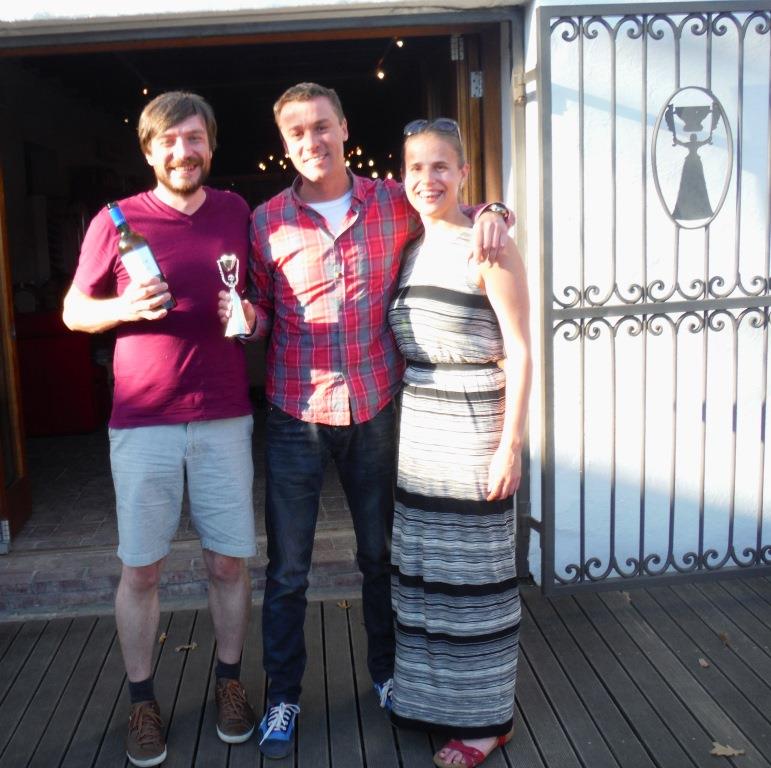
Us with Nic
We tried a host of Warwick’s wines and started with the 2013 Prof. Black Sauvignon blanc. The wine is named after Prof. Black, who planted a peach orchard on the premises in the 20th century, but that didn’t work out so well. Now, the area that used to be the orchard hosts Warwick’s Sauvignon blanc vines. They are among the oldest vines on the property. For this vintage, 14% Semillon joined the Sauvignon blanc, and it worked out well. The wine showed a very light yellow color, with a restrained nose of grass and citrus aromas. The palate was surprisingly expressive given the nose, with minerality, low acidity and great citrus fruits. I was very partial to this wine!
Next up were the 2013 First Lady Unoaked Chardonnay and the 2013 White Lady Chardonnay (which is oaked). The first one is made in the Chablis-style with partial spontaneous fermentation. The color was slightly golden, and the nose showed grapefruit, lees and grass aromas. The mouthfeel was as full as one would expect from an oaked Chardonnay, but it had very clean and light flavors. The oaked Chardonnay is fully spontaneously fermented and after fermentation, the barrels are being rolled to stir the wine. Nic called it great exercise. The vines for this wine are 32 years old, and combined with the wood they clearly produced a more intense nose which also was dominated by citrus aromas. The mouthfeel was fuller than the unoaked (surprise, surprise), and while the wood was noticeable, it still showed good freshness, mainly driven by good acidity. I still preferred the unoaked version though.
We then tried the 2012 First Lady Cabernet Sauvignon, which sometimes gets blended with Shiraz, but not in 2012. The grapes come from younger vineyards and the wine spends 18 months in older barrels. The wine poured in a purplish red color and smelled of ripe red fruit, tobacco and leather. It was an interesting mix of very expressive fruit and tartness, which reminded more of a Cabernet Franc rather than a Cabernet Sauvignon. It confused me a bit too much, I am afraid to say.
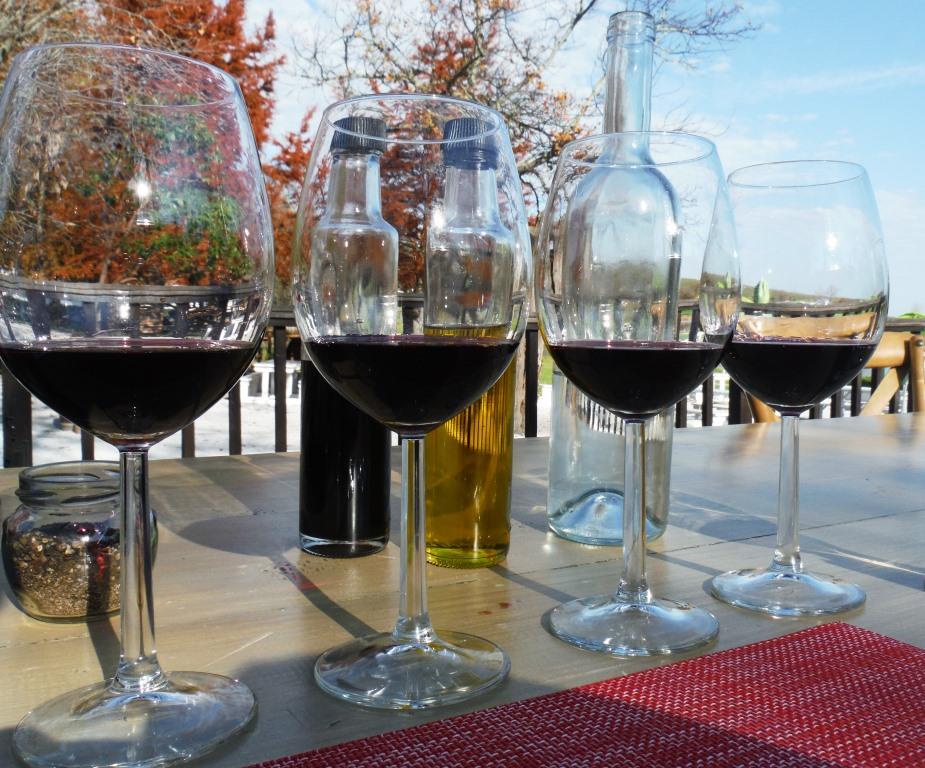
The reds lined up
Up next was the 2012 Pinotage, which hails from old bush vines (vines that are not tied to posts and wire). It is produced in old barrels with a soft approach that does not try to extract too much from the grapes (in order to not get too many tannins). It poured in a dark purple, and the nose was very expressive with cassis, sandalwood and cake batter. We loved it! On the palate, it was light and refined in texture, with cassis being the dominant aroma in this fruit driven version of a Pinotage. Great to drink, very easily accessible. Would recommend this to fall in love with the fruitier side of Pinotage.
After that, it was time for the 2011 Three Cape Ladies, which is a third each of Cabernet Sauvignon, Shiraz, and Pinotage. The wine smelled of red berries, sour cherry and tobacco leaves, a combo I like a lot. In the mouth, it felt silky and had good tannins. The most wonderful thing though was the combination of raspberries and dark chocolate with a whiff of sweetness, and then a bitter chocolate finish. Love, love, love it!
The final wine was the 2010 Trilogy, Warwick’s flagship Bordeaux blend, which sells as Barrique Estate in the U.S. due to copyright problems. The grapes come from two Cabernet Sauvignon vineyards (60%), two Cabernet Franc vineyards (30%) and one Merlot vineyard (10%) and spend 24 months in 60% new oak barrels. The color is dark and brooding, and the nose very complex: There is ripe cherry, definite coffee aromas, and hints of cooked meat. The texture is wonderfully silky, and the flavors are carried by just enough acidity. I found the wine to be very balanced in its play between red fruit and leather aromas. It leans towards the Cabernet Franc side in taste more than in the nose. Very good length on the finish. I was quite impressed with this wine.
All in all we were quite happy with the line-up, which is marked by wines that are ready for consumption, but should also do well in the longer run. The food was great and just what we needed and dealt with Nina’s food allergies very well. Nic is a great guy, and I hope for anyone that they can run into him either at the estate or at an event!
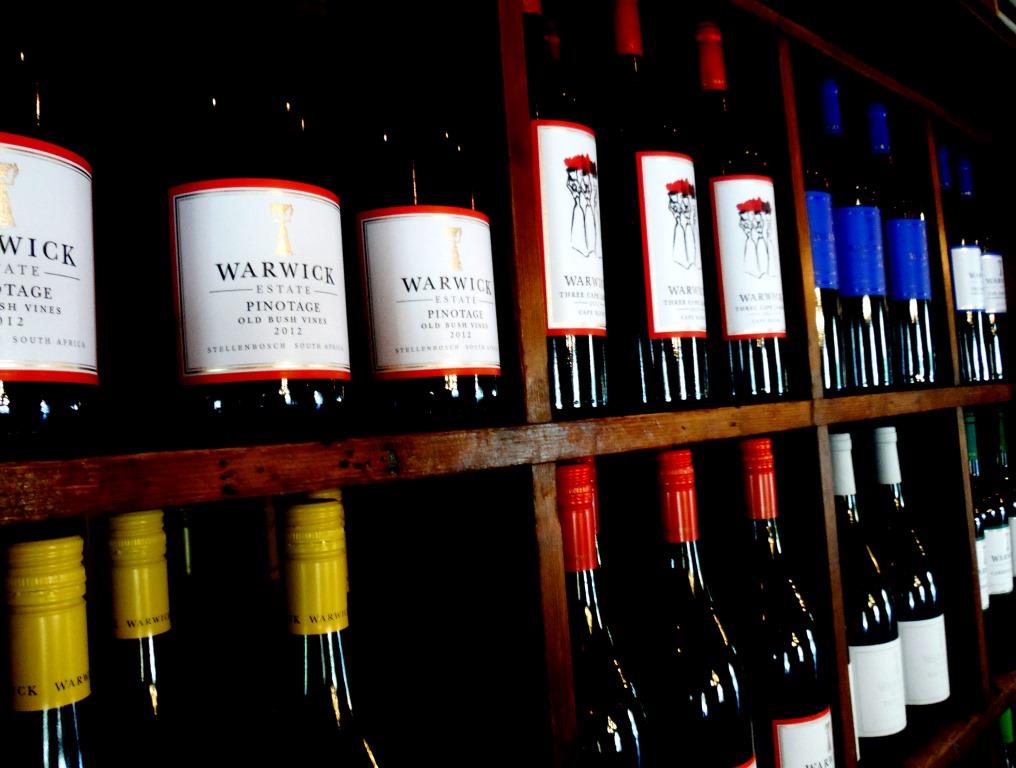
Warwick’s iconic and easy to recognize labels, Three Cape Ladies in the center


 the winegetter