Tag Archives: 2011

Meeting the vintners: Weingut Dr. Hermann, Ürzig (Mosel), Germany

Row upon row of TBA waiting to be shipped to Israel

Stop number two on our epic June 16, 2012 Mosel trip was Dr. Hermann winery in Ürzig. Avid readers of this blog know that I have a love affair with that particular village along the Mosel. I seriously think it is one of the most beautiful areas in the world (see also my post here). Almost more importantly, the vineyards Ürziger Würzgarten (Spice Garden), Erdener Treppchen (Little Steps), and Erdener Prälat (Prelate), which are right next to it, rank among my favorite hills. I am convinced (probably falsely) that I can always recognize a Würzgarten just from its nose.

Before we headed to our appointment with Rudi Hermann at 2.30pm, we took a break at the ancient Roman wine presses they found in the Erdener Treppchen. Hannah had baked amazing filo dough pockets and we dug in. Photos and an account of the wine presses will be shared in another blog post (gotta ration myself).

The Dr. Hermann winery will always have a very special place not only in my heart, but also Nina’s. I had my first encounter with Rudi and Christian Hermann, father and son, at a tasting with my friend ManSoo. They took us into their vineyards and their cellars, and let us taste their full collection. It was stunning. It is special for Nina, because we spent her first birthday in Germany there, trying amazing wines and actually getting to taste a sip of their 2009 Trockenbeerenauslese (TBA), the whole 20 litres of which Christian was filtering that day. Also, we went to spend an hour with Rudi Hermann before I brought her to the airport when she returned to the U.S. for good in summer 2011.

Magnum and double magnum of the Herzlay

Christian, who has been in charge of operations in the cellar and vineyards for a couple of years now, is producing highly praised, classically sweet rieslings typical for the area. The wine guide Gault-Millaut calls them “baroque”, and there is something to it: they are oppulent and succulent, full of sweet beauty and body. The contrast to the leaner Weiser-Künstler was tastable, although both go for sweeter wines.  Dr. Hermann has been on the up and coming for a while now. All wine guides praise the high level of skill, and the wines, from basic to rare, are sought after worldwide. 90% of their production is sold abroad: in Scandinavia and Hong Kong, in Japan, the United States and notably Ontario and Quebec. They win award after award. The great thing is that they are still as accessible and hospitable as they have always been. Whenever we go visit, Rudi or Christian take their time with us, and we get filled in on the latest developments.  If you want to know a bit more about their philosophy, there is a good interview on the Riesling Revolutionary.

In the cellar with Rudi Hermann

Dr. Hermann owns sections of all three vineyards I mentioned above. What makes this area so unique is that within 500 metres you have three different types of soil: the Würzgarten is made mostly of red sandstone and slate; the Treppchen, right next to the Würzgarten, has red and grey slate as well as clay slate; the Prälat, a mere 1.5 hectares (3.7 acres) nestled between the two, combines the red and grey slate in an ideal microclimate. The vast majority of Dr. Hermann’s vines are ungrafted and old, some of them over 100 years.

The challenge for this winery is how to grow further without losing their identity. Their basic riesling, the H, is so sought after that they could already sell double of what they produce! The reassuring thing about Rudi and Christian is their down-to-earthness. They know that the only thing that matters is the quality of their wines. So they will probably expand further by contracting with other winegrowers that they know, using those grapes for the H. But they will never compromise on quality.

The winery cat

We tried a total of 13 wines there (I think) over the course of about 4 hours. As with the other winery reviews, I will write about some of them seperately. If you need clarification about the classification of German wines, check my at a glance sheet.

We began with two of their dry rieslings: the 2011 Riesling QbA dry and the 2011 Erdener Treppchen Riesling QbA dry. All dry wines ripen in wooden barrels. The grapes for the first wine come from vineyards in Kinheim and Lösnich, neighbouring villages. It had a great, fruity nose and confident acidity. The Erdener Treppchen is from 120 year old vines and has the typical creaminess of the Treppchen with lots of fruit.
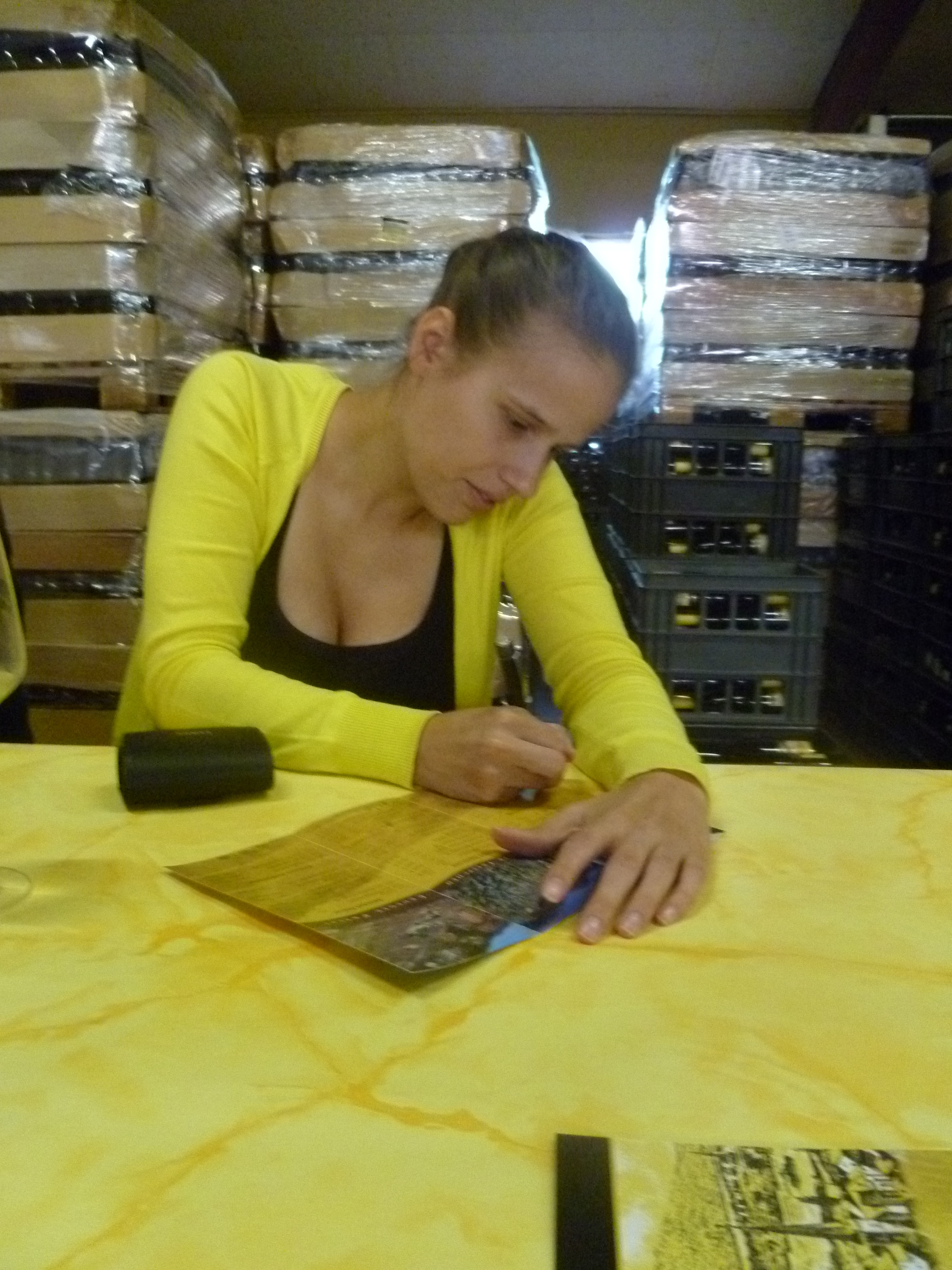
Nina taking copious notes

Next up were the off-dries and sweeter wines. I really liked their 2011 Erdener Treppchen Kabinett, which, again, was creamy with apple notes and good acidity. The corresponding Kabinett from the Ürziger Würzgarten was fresher, had more acidity while retaining the spice notes in the nose.

We then tried the Treppchen Spätlese against the Würzgarten Spätlese and here, too, the differences were striking. While I liked the Treppchen with its nose and taste of stonefruits, I really loved the length and depth in the Würzgarten. It was mild, had the typical floral, herbal nose. Usually, I tend to go with the Treppchen wines, but in the 2011 harvest, it seems like the Würzgarten produced the more interesting ones.

Impressions

We tried more exceptional Würzgarten and Treppchen and then moved on to the stars of the winery, the Prälat wines. I will also talk about those in a seperate post.

We finished the tasting with a 2008 Erdener Herrenberg Eiswein. The Herrenberg is located above the Erdener Treppchen, high up over the Mosel. This wine was harvested at -10 C. I thought it was just beautiful. It is still very young, and should lay low for quite a while. But given that that was the year that Nina and I met, we decided to get a bottle for us and took one for a friend of ours, who loves eiswein.

We had an awesome time with Rudi, who also took us to the cellar to explain the expansions they are currently planning. His generosity in sharing his wines and his thoughts and stories keep overwhelming me. The wines are exceptional, and the pricing is still quite reasonable. Their best wines are sweet, and I am aware that not everyone is fond of that. But if you want to experience why the Mosel is famous for its wines, one of their wines is probably a good way to find out. Don’t have them on their own, when you try something like them for the first time. Give them a salty companion like cheese and bread to soften that sweetness a bit. I love drinking these on their own, too.
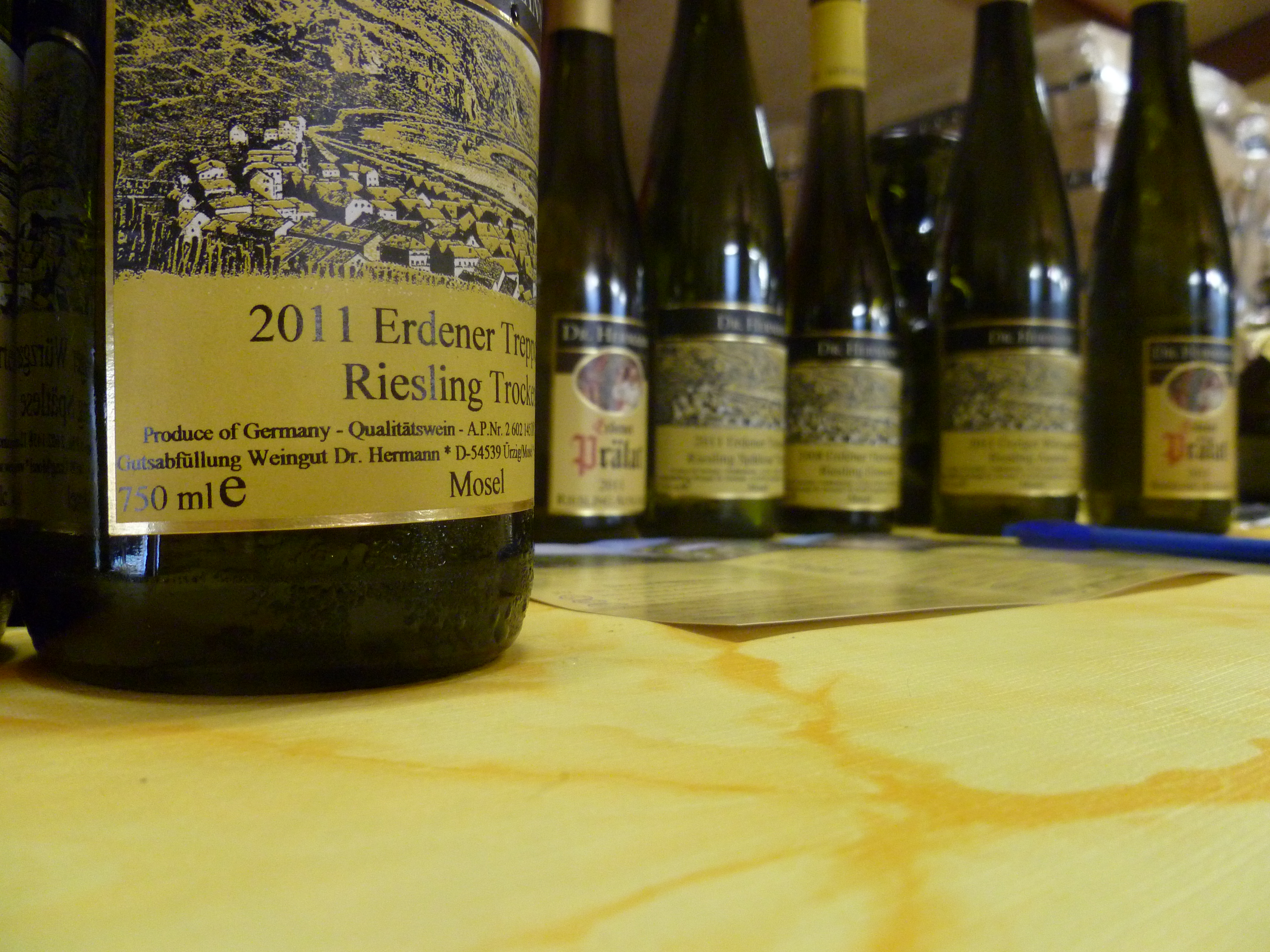
The row

Their wines are among the most easily accessible in the U.S. of all the wineries we visited, so go and try them out. If you are in Germany, it is a bit harder to find them. The easiest is to order from their website directly. This is a winery where you need to make an appointment if you want to visit, because the cellars and tasting room are not connected to the winery. Both Christian and Rudi speak great English.

Tagged , , , , , , , ,

Meeting the vintners: Weingut Weiser-Künstler, Traben-Trarbach (Mosel), Germany

Impressions (stolen from Hannah)

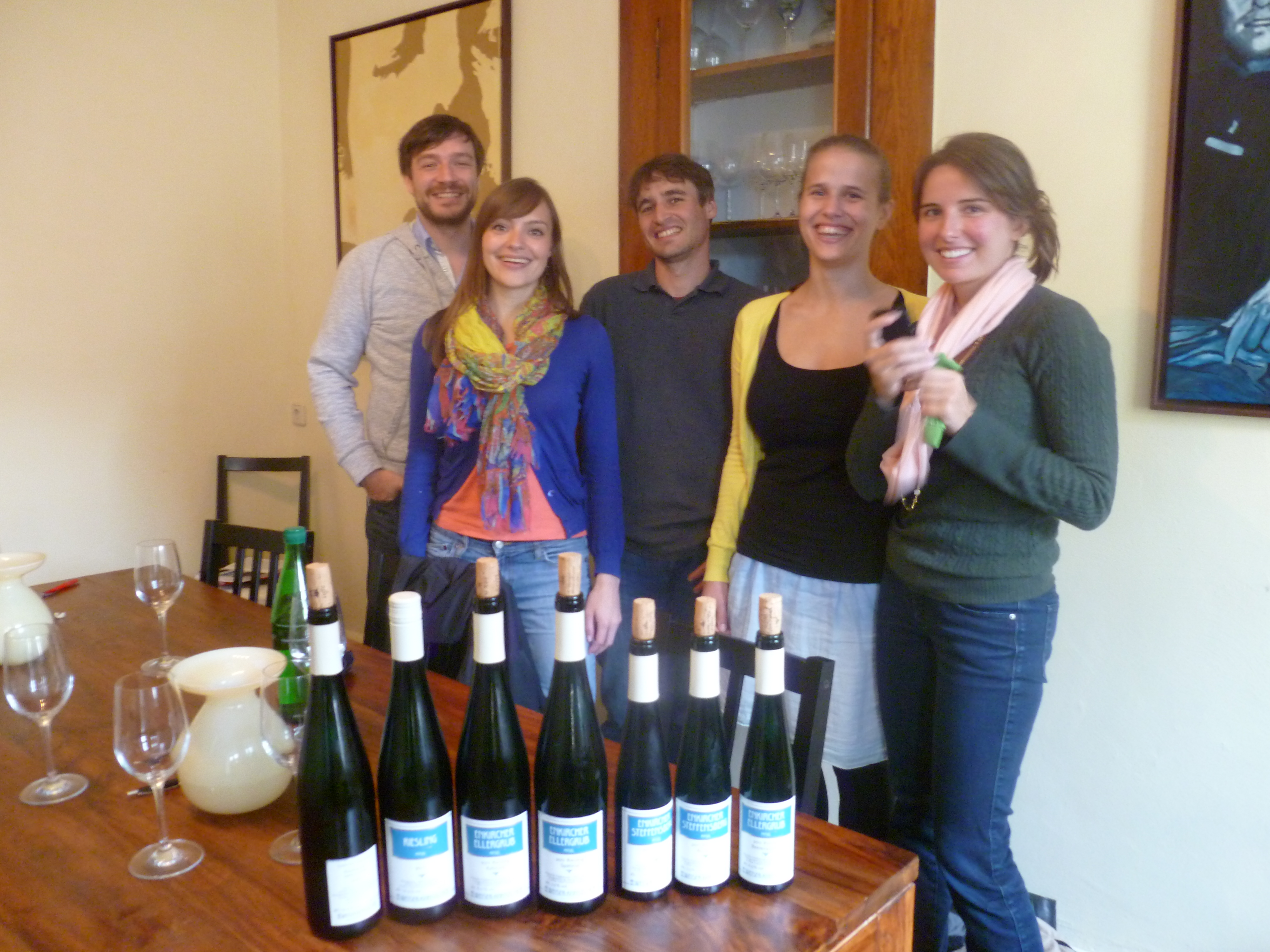
Having lived at the Mosel for a number of years, we now have kind of a routine for tastings. We like to take friends with us, and we like to do several tastings in one day, usually a Saturday. This time around, we took our friends Ganna and Thorsten as well as Hannah, from whom I stole some of the photos for this blog post.

For 16 June, we had arranged our first tasting at Weiser-Künstler, a young winery in Traben-Trarbach at the middle Mosel. Traben-Trarbach is not just a village but a city, and also known for its art nouveau (Jugendstil) architecture. In a nice tribute to that, the winery’s labels are modelled in art nouveau style as well. We first came across them in summer of 2011, when my winefriend Yutaka recommended one of their wines on Facebook right when I was planning yet another wine trip. On our visit then, we were deeply impressed by their wines. They showed a very high level of skill and sophistication. In even more surprising news, they had the very first dry riesling that I actually enjoyed (almost loved!): the 2010 Trabener Gaispfad Riesling Kabinett trocken. I was so stunned that we stocked up on those. In more familiar areas, I loved loved loved their 2008 Enkircher Ellergrub Spätlese.

Cork art at Weiser-Künstler

So, naturally, we wanted to visit them again this year. I emailed with Alexandra, the wife who is mostly in charge of the business side of things, and we were going back and forth a bit about the date. Then, I did not hear anything for a while. When I finally decided to call them before we left for Germany, Konstantin, the husband and winemaker, told me that he had just answered my email and that we were on for Saturday, 16 June at 11.30am!

The Weiser-Künstler estate is pretty small, comprising just 2.8 hectares (about 7 acres) in the steep, epic Enkircher Ellergrub and Steffensberg as well as the Trabener Gaispfad vineyards (please check out the links: they are photos of the hills). The vineyards they leased in long term leases were likely to be given up when Konstantin and Alexandra took them over in 2005. They have garnered early praise from high places, among them (my beloved fellow riesling maniac) Jancis Robinson.

The hills offer mostly ungrafted vines, some of them up to 100 years old, which lead to lower but more concentrated yields. While the Ellergrub is mostly blue slate, the Gaispfad offers red slate for the vines to grow on. These different slates lead to very different wines: I found a consistent streak of peach notes in virtually every Ellergrub wine we tried, while I did not notice that in the Gaispfad. The Steffensberg is in a side valley of the Mosel with more earthy soil of clay and yellow slate. Konstantin and Alexandra believe in naturally grown wines and use natural yeasts for fermentation. Their philosophy is to respect the grapes and create light, low-alcohol rieslings, mostly sweet. There is an interesting piece about them from 2010 on the Moselwineblog here.

We embarked on our tour on a typical German summer day: cold and rainy. When we arrived at the deep blue colored estate, we found the door locked. I rang the bell, and a puzzled Konstantin answered through the buzzer: “Yeeeees?” When I told him my name and that we had an appointment, he said: “Please wait, I will come to the door.” When he opened, it became clear that he had totally forgotten about our tasting…but he had time, and so he took us in for a good 90 minutes of tasting. Konstantin is a modest and restrained person, with great wit and quite personable when you get to know him. One of our fellow tasters commented on his poet-like appearance and demeanor. And in a way that is true. His winemaking skills are so finessed and at the same time light-aired that they have something poetic about them.

Tasting impressions

He led us through an awesome tasting. 2011 has been a good year for them, just like across the Mosel. The yields were not only above the abysmally low 2010 yields, but also on par with the 2009: they harvested 45 hectoliters in 2011. 2012 so far has been a normal year for them, with the blossoming beginning in early June.

We tried a total of 10 wines that day, ranging from the simple Gutsriesling to a Beerenauslese (BA). Again, I will be writing about some of the wines in seperate posts. Also, if you are unsure about the German wine classification, check out my at a glance sheet.

We began with two of their dry rieslings. The 2011 Gaispfad Kabinett was again a star. The 2011 ELLERGRUB Spätlese showed an awesome peachy fruit nose with good acidity on the tongue. Another dry was not ready yet. It is still waiting for its release in September 2012: the GAISPFAD Große Eule (Big Owl).

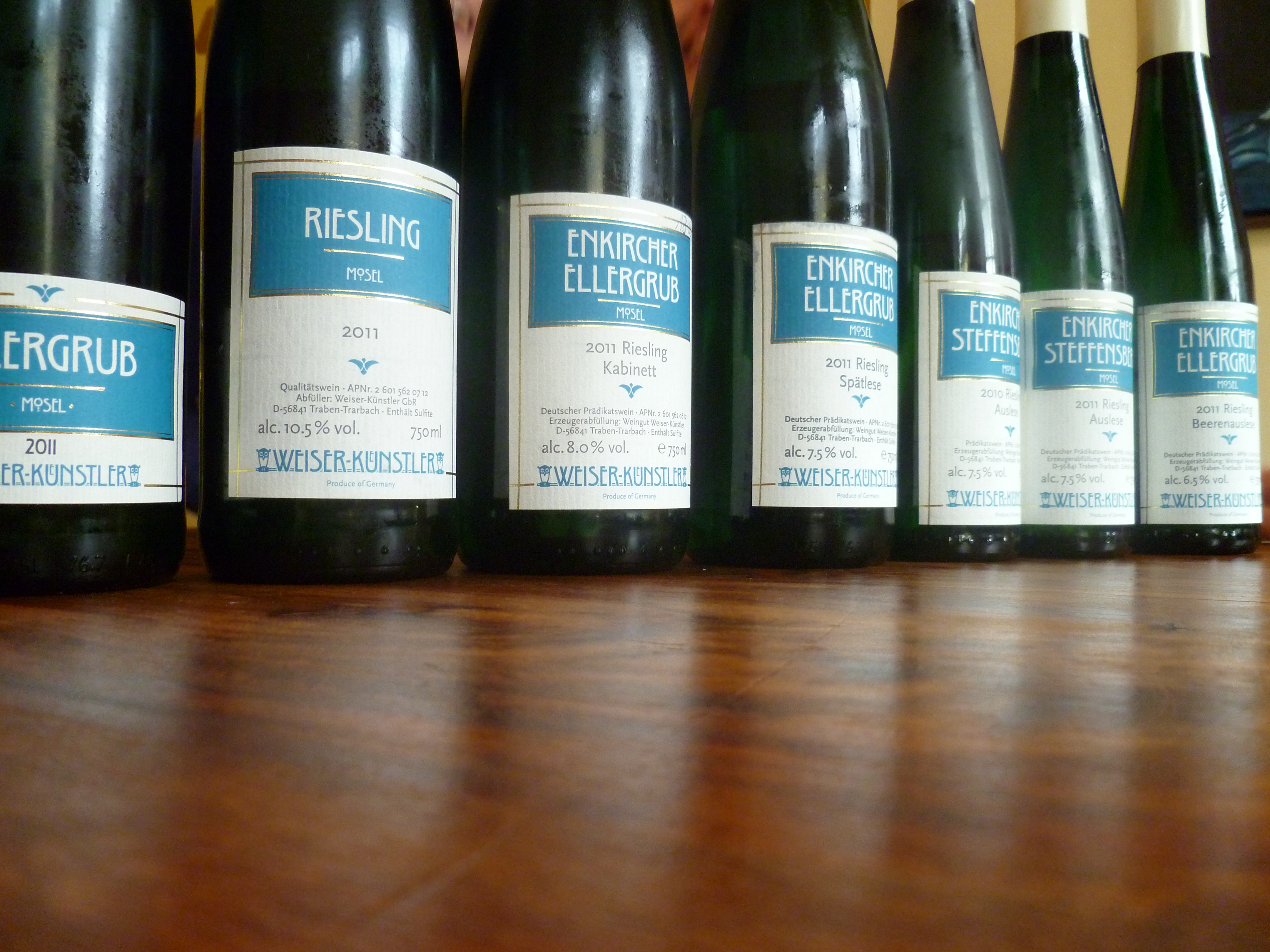
The row

We moved on to the off-dry wines. Their 2011 Riesling “Weiser-Künstler” was pure summer freshness. Great fruit, the acidity well connected to the sweetness. I could see myself drinking this one every evening over the summer. The STEFFENSBERG Spätlese had a fantastic nose of peach and apricot. I found some slight bitter notes on the palate that I was not overly fond of.

In the category of residually sweet wines, we tried the Enkircher Ellergrub Kabinett and then Spätlese, and it was great to taste them right beside each other to bring out the differences in these two styles. More on that in this seperate post.

We then moved on to their Auslesen. The grapes in the 2011 Enkircher Steffensberg Auslese had 100% noble rot (botrytis). It was very well balanced and highly concentrated with a honey-fruity sweetness to it. We then tried the 2010 Enkircher Steffensberg Auslese against it, and were completely taken aback by it. My note reads “Wahnsinnsding” (Wicked/Awesome thing). It has this 2010 acidity punch that 2011 does not offer, there was vanilla and strawberry. It was great, and since it was our wedding year, we stocked up on those, too.

The 2011 Enkircher Ellergrub Auslese has a wonderfully light elegance to it. It is mineralic, and mild, with peaches all over the place and low in acidity.

Stars all around…

As a treat, Konstantin let us try his 2011 Enkircher Ellergrub Beerenauslese (BA), of which he only produced 50 litres, if my notes are correct. That makes somewhere around 150 half bottles. Words failed me on this one. I started taking notes. The nose was very herbal, the color amber. And then I just stopped and enjoyed the beauty of this wine. A wine of this level should not be drunk that young. It should be opened in 10 years, or 15, or 50. This will be good for decades. In this stadium, the sweetness is almost overbearing, and it is hard to not be overwhelmed. But this will be incredible in many years to come. Don’t get me wrong: it is incredible, but it will be even more.

On that note, I want to end this tasting report. We had a blast. What a start to a day of wine tasting. Konstantin and Alexandra both speak great English, so don’t be shy if you ever get to the region. Their wines are available in the U.S., see here. For German and European readers, they also offer shipping, so just send them an email. It is well worth it.

Photo finish with Konstantin in the middle

Tagged , , , , , , ,

Meeting the vintners: Weingut Meierer in Kesten (Mosel), Germany

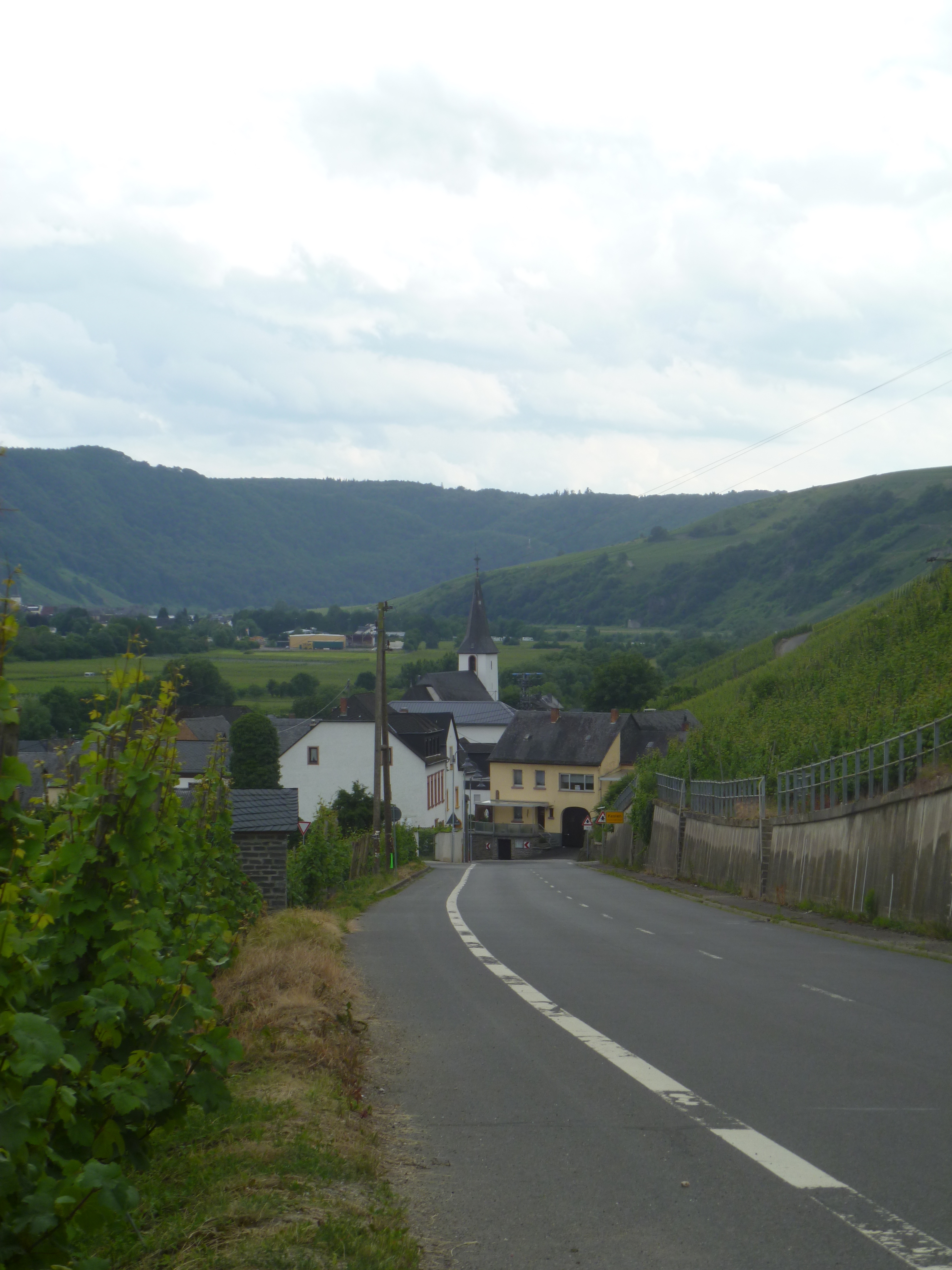
The first winery we visited on our recent Germany trip was Weingut Meierer in Kesten at the Mosel. Kesten is small village located between the two much more famous Brauneberg (with the Brauneberger Juffer, read more about that spectacular vineyard here) and Piesport (with Piesporter Goldtröpfchen). I, frankly, was not really aware of this village before I stumbled across the vintner, Matthias Meierer, on a friend’s facebook page. Kesten is unique in that the hills that rise behind it stretch from the Juffer all the way to the Goldtröpfchen. You can see photos of the spectacular landscape on the winery’s appealing website. I like to add new wineries to my agenda whenever I go, thereby expanding my knowledge and not missing out on new trends. This visit at Meierer was a first for me.

The village of Kesten

The Meierer winery’s history stretches back to 1767, but it is a far cry from traditional or boring. The 29 year old Matthias, who is running the winery with his father Klaus, has radically reduced the number of wines they offer: A core of three wines for each three categories of residual sugar: dry, off-dry, and sweet.  As a rule of thumb, within these categories they produce a basic wine (Kestener), a medium bodied village-style wine (called Kestener Paulinsberg), and a more sophisticated wine from the Paulinshofberg. This makes the whole, at times confusing labelling and categorizing of German wines much more approachable. There are a few additional wines that round out the wine list.

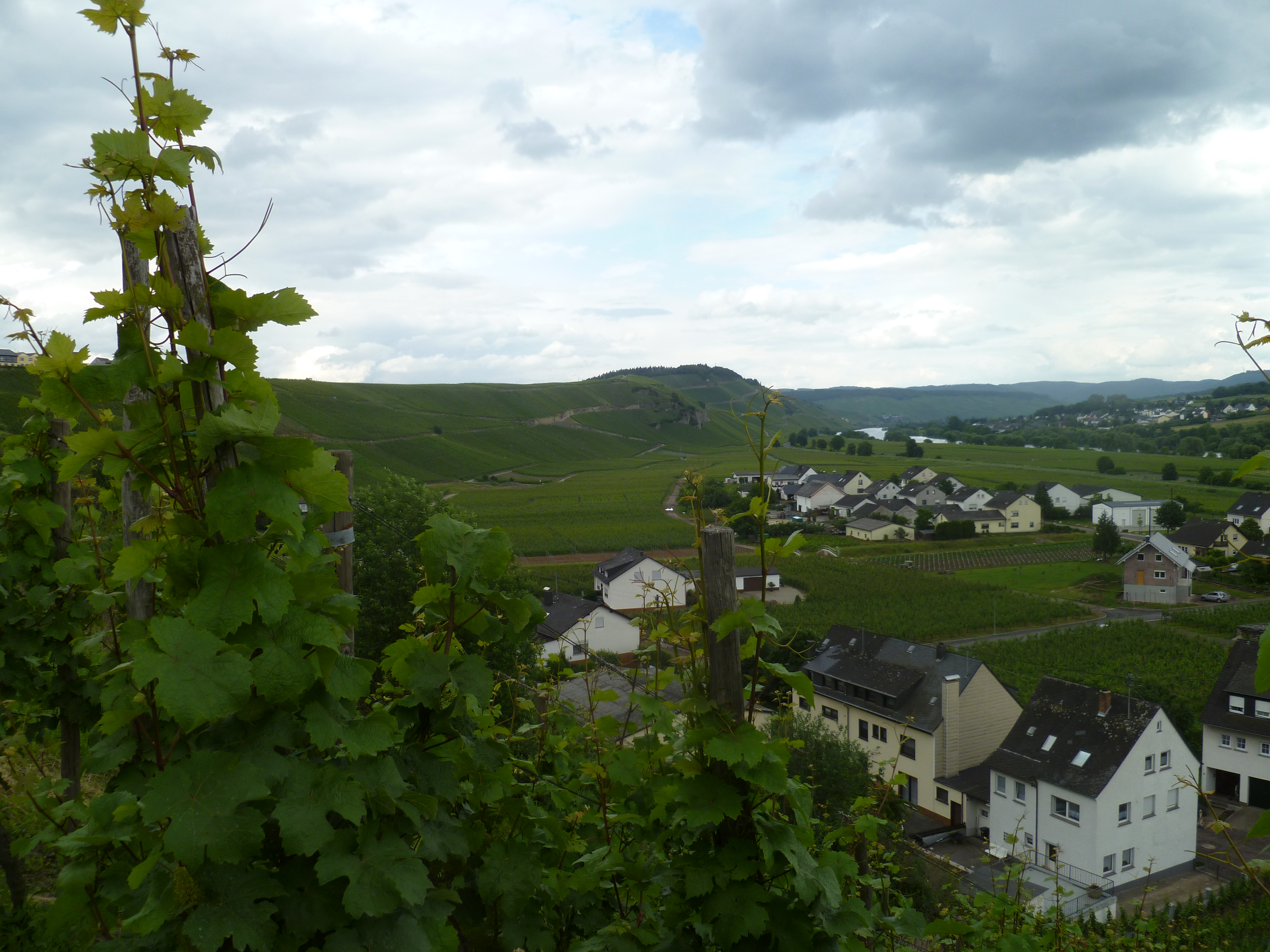
View towards Brauneberger Juffer

A few words about Matthias. After he earned a degree from Geisenheim, Germany’s top notch college for wine growing and making, he started working for the well-reknown winery of Fritz Haag in Brauneberg five years ago. At the same time, he began working in the family winery. Today, he is working 3 days a week for Fritz Haag and 4 for Meierer (talk about lazy Germans, huh?). He is also a lecturer at Trier University. Also, he was named young winemaker of the year in 2008 by the German Agriculture Association (DLG). Oh, and did I mention he is a pretty cool guy? Communication was easy and swift when I arranged the tasting via email, and he was patient with my dithering about when to do it.

Screw cap art…

Their grapes grow on 6 hectares (about 15 acres) of land around Kesten. For them, 2011 was a picture perfect year. While the year started out very cold, spring was warm and very dry which led to their earliest ever blossoming around 20 April. The cooler summer slowed down vegetation, which was good given that growth was about 3 weeks ahead of schedule. On 26 August hails with corns as big as tennis balls hit the middle Mosel valley, but the grapes survived this miraculously. September brought tons of sun and temperatures around 30 C so that they began the harvest early on 4 October with high yields and sugar levels in the grapes. The last harvesting was done end of October and fermentation went quicker than in the last years with the last wines being ready by beginning of February.

New label, row of tried wines

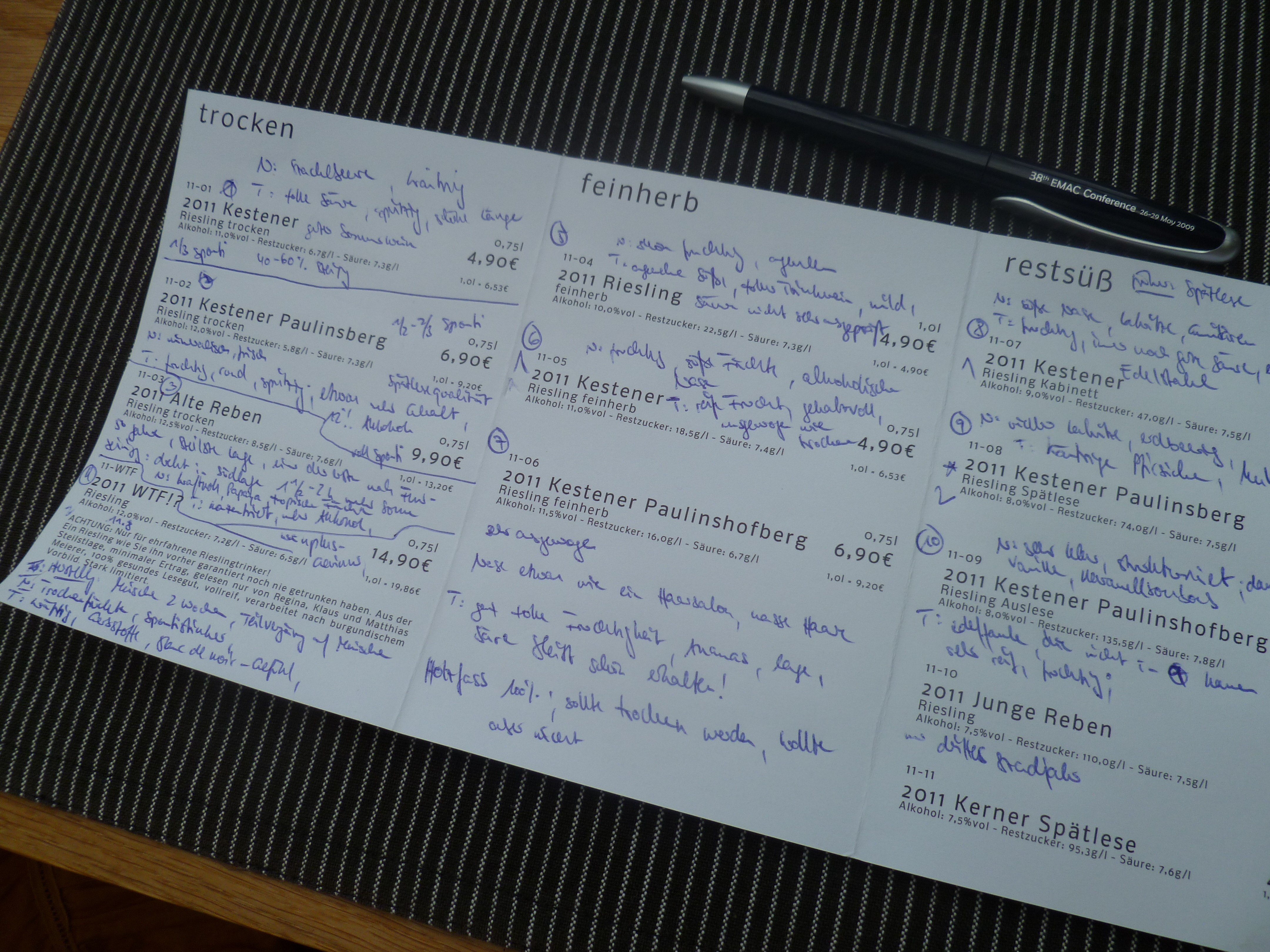
Our friend Helge tagged along, and off we went down the beautiful Mosel valley on June 15. Matthias and his girlfriend Sabrina were waiting for us in their tasting room with a spectacular view. We tried a total of 10 wines and were quite impressed. The wines had been filled in early to mid-April and were all ready for drinking already. Often, wines take a bit longer to settle down after bottling. I will write about some wines in seperate posts, but here are some of my summaries.

The three dry wines we tried were all of exceptional quality, and a nice introduction to many more dry surprises over that weekend. 2011 really has been good to dry rieslings. The 2011 Kestener dry, the basic wine, was the perfect summer wine: gooseberry and herbs in the nose, awesome acidity and freshness with a nice finish. I also enjoyed the Kestener Paulinsberg with its mineralic and incredibly fresh nose and the great fruit notes on the palate.

My notes

Among the three off-dry wines, I used the words “very balanced” in my notes the most. The basic riesling is wonderfully mild and pleasant, while the 2011 Kestener feinherb (off-dry) has a nose of sweet fruits and alcohol (it has 11% vol.) and gives you a full mouth of ripe fruit.

The sweet wines were also very convincing, notably the Kestener Paulinsberg Spätlese (more about that and the Kabinett in a seperate post). The nose on the Kestener Paulinshofberg Auslese was clear and structured, before strawberry, vanilla, and caramel candy came by. It was pretty awesome, just as its taste of very ripe fruit.

The weirdest thing we tried was his 2011 WTF!?, which I will write about in a seperate post….I have got to keep you hooked, right?

Awesome winebox: Beware Glass! – Beware Riesling!

We had a great two hours with Matthias and Sabrina. They were pleasant hosts, and English comes to them naturally whenever something was not clear for Nina in German. I highly recommend visiting the winery. It is definitely a rising star, and the prices are very reasonable. I am glad I can add this to the growing list of wineries I want to visit when I go back.

You can get some of their wines in the U.S. through the wine merchant SRS. For German and European readers: Use the contact site to ask for a wine list. They also have very affordable trial offers including shipping.

Tagged , , , , ,