Category Archives: Year

Weingut Kistenmacher und Hengerer: The Wines

The wines of Württemberg winery Kistenmacher & Hengerer

The wines of Württemberg winery Kistenmacher & Hengerer

As promised, I wanted to share some of my tasting impressions from my visit to Kistenmacher & Hengerer winery in November (you can find my introduction to the winery here):

We started with the Rieslings, which Hans Hengerer likes to make in the trocken (dry) style (90% of his Riesling production). We tried 2012 and 2011 Rieslings, from Gutswein, which is the estate wine, via Ortswein, which would be a village in Burgundy, and then on to his Kabinett and Spätlesen. I was surprised by the sheer number of Rieslings Hengerer produces. Most of the wines showed a beautiful creaminess combined with spiciness. His 2012 Riesling Theresa, a village wine, showed great aromas of caramel and peach with just 4 grams of residual sugar, and his 2012 Alte Reben Spätlese, from vines that were planted in 1971, was dense and concentrated, with nice acidity and time to develop. A 2012 cuvée of Kerner and Riesling, made as a sweet wine with 50 gr/l, was also quite impressive.

We then tried a 2012 Gelber Muskateller, which blew me away. I could not move on from this wine, and at the end of the tasting, I went back to it. The aromatics just were incredible. Gelber Muskateller, according to Austrian Wines called “Yellow Muscat” in English, which is a direct translation of the German term, is a version of Muscat a Petit Grains, according to the San Francisco Exmaminer, which also reports it is the oldest type of Muscat and one of the oldest grapes known (read more here). The vines were planted in 1971, so this is a nicely aged vineyard to begin with…In the nose, I got grapefruit and pine needles. Very intense. I was so surprised by this. On the palate, I got rosemary and again pine needles, coupled with yellow fruits. It was SO intense, hard to put in words. The wine was dry, and tasted great. We discussed what to pair the wine with, because it seems that is a problem, and I suggested pork roast with a mustard crust. Sabine Hengerer was skeptical and later asked a sommelier, who thought it wasn’t a good idea…we tried it out, and while it wasn’t a bad pairing, it also didn’t really help either wine or food to shine…nonetheless, a great experience to try this grape, and what an aroma-intense wine this was.

We moved on to the reds, where I want to focus on the 2011 Trollinger Alte Reben, a grape that is very prominent in the region and also known as Vernatsch or Schiava. The vines were planted in the 1960s, and the first thing one notices is how light the color of the wine was, having a red brick, almost terracotta color. The nose showed ginger bread and meaty aromas, a weird combination but not unpleasant at all. On the palate, the wine is light and refreshing. At 12.5% ABV it’s a great wine to drink with a typical German dinner of bread, meats and cheese, and according to Hans Hengerer it can be served chilled in the summer.

Another red wine we tried was a 2009 Clevner, which is a Pinot droit clone, which is a clone of Pinot noir. The nose was full of red fruit, with earthy aromas and ginger and ginger bread. I really liked that combination of fruit and ginger bread, and the earthy aromas hammered home its Pinot noir character. Fascinating wine. The must had contact with the grape skins for 5 weeks, and the wine was produced in 30% to 50% new wood.

Two Pinot noirs from 2009 and 2010, which were concentrated and intense, yet soft and enticing, were followed by a 2009 Lemberger Alte Reben, which I enjoyed quite a bit as well. Lemberger is a big deal in the region, and Hengerer wants to increase production because the grape copes better with higher temperatures than Pinot noir. The aromas in the wine were great, cherries and tobacco, great acidity and a couple more years to go.

Hengerer also produces more international blends: I tried the 2010 M+C (Merlot and Cabernet Franc) and the 2009 Maximilian (which is a cuvée of Merlot, Cabernet Franc and Spätburgunder aka Pinot noir). The M+C was fruity and nicely soft, with some green pepper aromas and a good length. I could see Nina falling in love with this wine. The Maximilian was a lot more round than the M+C, seemed in a better place at this point of its development. 2009 definitely helped because the acidity was more in check. The wine is aptly named after one of the Hengerers’ children’s cuddle toy, and one can’t help but notice how apt that is: The wine is cuddly and pleasant, very open and very enjoyable.

Hengerer has his own opinion about Merlot and why he blends it. He doesn’t see it as a very interesting grape by itself, but thinks it adds to cuvées. His comment about Merlot: “Does’t hurt, doesn’t make you blind” (“Tut net weh, macht net blind”). Now don’t take this a summary of his collection of wines! Hans Hengerer produces a great array of different wines from different grapes, which I think takes a lot of skill and dedication. The results are at times surprising and challenging (I look at you, Gelber Muskateller!), but always worth the experience. These wines are made for the long(er) run, as was shown by the older wines I was lucky to try. I hope you’ll get a chance to try some these one of these days.

With Hans Hengerer

With Hans Hengerer

Tagged , , , , , , , , , , , , ,

Revisiting the 2006 Cantina del Redi Vino Nobile Riserva

2006 Vecchia Cantina Vino Nobile Redi Argo et Non Briareo Riserva

2006 Vecchia Cantina Vino Nobile Redi Argo et Non Briareo Riserva

About a year ago, we tried the 2006 Vecchia Cantina Vino Nobile di Montepulciano Redi Argo et Non Briareo Riserva. I had picked it up on sale at WTSO because I remembered liking this cooperative’s wines when I first tried them during a trip to Italy in 2005. We tried the first bottle soon after it arrived, and both Nina and I were raving about it (see here). In short, the wine was really good, took quite a while to open up (we decanted it) and was a lot of fun…I finished that post by stating that I wished I had bought many more bottles to follow the wine for at least ten more years.

Last week, we opened the second bottle we have. Upon opening, the wine showed itself very closed off, almost harsh. There were a ton of hard tannins, so I decided to decant it again. After an hour, the wine showed a perfumed nose of raisins, prunes and chalk, but it still seemed quite closed. So we waited another half hour and then finally gave it a try: It showed good acidity, with prevailing aromas of leather. The tannins were gripping, leading to cherry and flower aromas (probably violets). The finish showed some bitter aromas and was definitely shortening compared to last year.

This tasting was a bit of a mystery: This bottle was way less expressive than the one we tried last year. It did not seem to me like the wine was on its way downhill. It felt more like it was asleep. I am aware that wines can go through these cycles and I wonder whether I hit this bottle at a weird moment in its development. Like I said, the aromas were still fresh enough to indicate it is not on its way out, the wine still was firm and fresh. We left some for the next day to see whether it opened up more, but there was barely any budging. Nina was very disappointed with the wine, but I have not given up hope for the next bottle which we’ll try in a couple of months…

Tagged , , , , , , , , , , , , ,

Our Annual Wine Party

Cork collection

It has become a tradition in our house that every year for Nina’s birthday we throw a wine party. It used to be that it was a wine and cheese party, where we provided the cheeses and opened Nina’s huge treasure chest of mustards and fruit mustards, and everyone invited was asked to bring a bottle of wine they liked or always wanted to try or thought we just had to try. The tradition started back in Germany, where naturally almost everyone brought Rieslings…over the last couple of years we have also been able to open Rieslings from Nina’s birth year which has been fun and educational.

These days, the party has evolved to just a wine party. Nina still gives some guidance regarding what folks should contemplate bringing, and it is usually respected. One cool thing is that a number of friends that come are not really into wine, but are willing to explore and try things out. I always love that. The other cool thing is that it gives me an opportunity to see what others consider when they look at wines and try to bring something to a specifically wine party. Here are some of my impressions from this year’s party:

1) Pinot noir seems to be gaining ground like crazy. I’d guess that half the wines that were brought to the party were made from that grape. Pretty much all of them from the US or other New World locations, mainly because we tend to limit money spent to grad student salaries. I enjoyed seeing that not so into wine folks are embracing that grape more and more, yet some of the wines were clearly underwhelming…it’s just hard at that price range.

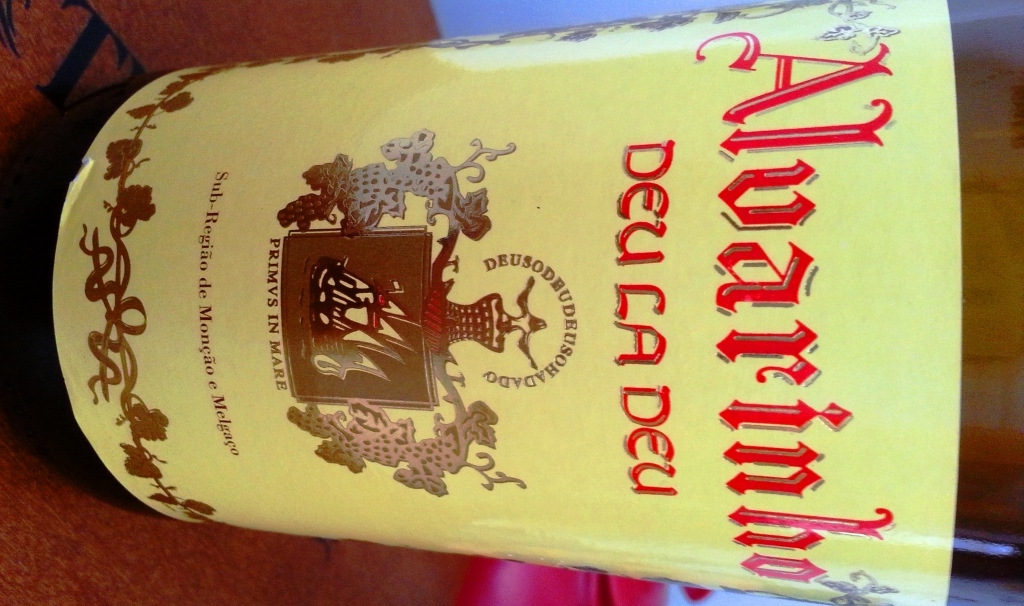
2) A Portuguese friend of ours brought a bottle of Alvarinho, a white,  called Deu La Deu from the Portuguese sub-region of Monção e Melgaço. Our friend introduced it by saying it was a vinho verde, and she knew we like vinho verde, but that it was a “next level” vinho verde. I was naturally intrigued, given how much I enjoy vinho verde. When I tried it, I was quite impressed: It has all the citrus and refreshment that I love about vinho verde, the sazziness, the fun. But it also has a more serious air about it: It carries more weight, is a bit creamier, a bit more mature, I guess I would say. At 12.5% ABV it is great to drink, and made for a wonderful surprise! More about the wine here.

A next level Vinho Verde

A next level Vinho Verde

3) Our newly found blogger friend Hannah (of Next Stop TBD) and her fiance Mark brought a bottle from a winery visit in California last year: A 2011 Ferrari-Carano Cabernet Sauvignon from Alexander Valley. They wanted to retry the wine, because memories of it were a bit hazy, and so we were happy to oblige. You know how I usually see Cabernet Sauvignons with trepidation, but it was a really tasty wine: bold, juicy, chewy, with enough depth. Nina was shocked I liked it, which was probably the other reason I liked it even more. Nothing like surprising your spouse once they think they have you figured out.

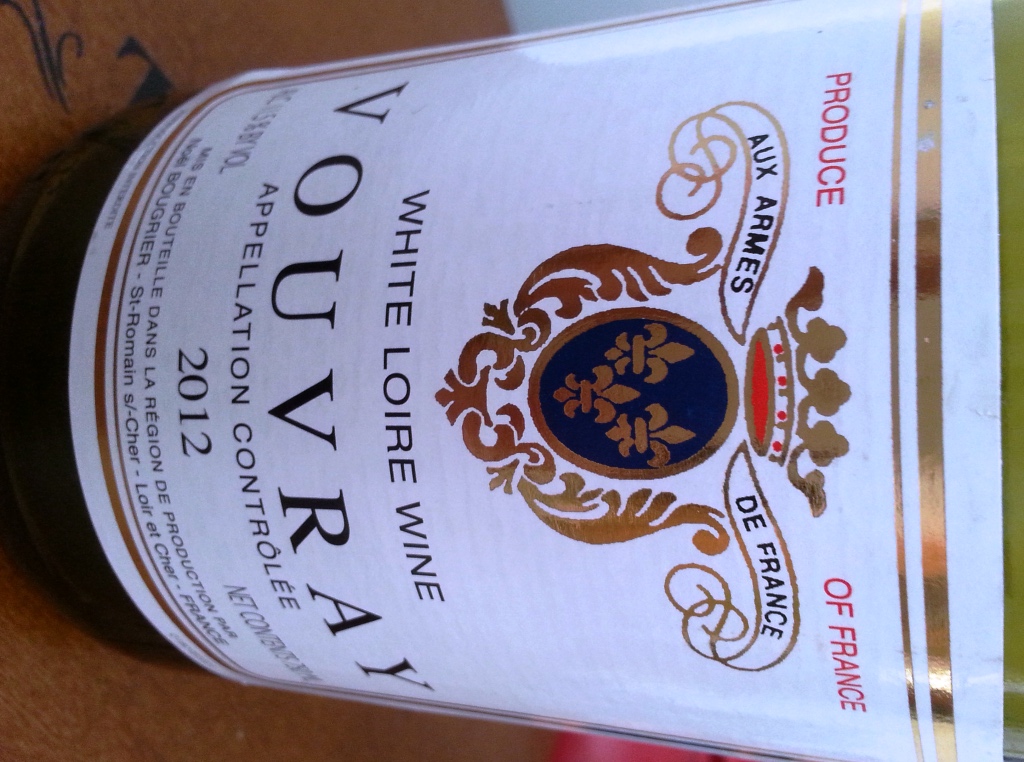
4) The amazement that has been Vouvray whites is continuing: Our great tasting buddies and real life friends, coffee roaster Jay and his baking-wine nut wife Sarah brought another bottle: Noel Bourgier 2012 Vouvray, this one retailing for a mere $11! It was just what I described as a winter white in my post about Vouvray a while back: creamy and full, round and enticing. Uncomplicated and quaffable. Go find a Vouvray and let me know what you think!

A nice Vouvray at a bargain price

A nice Vouvray at a bargain price

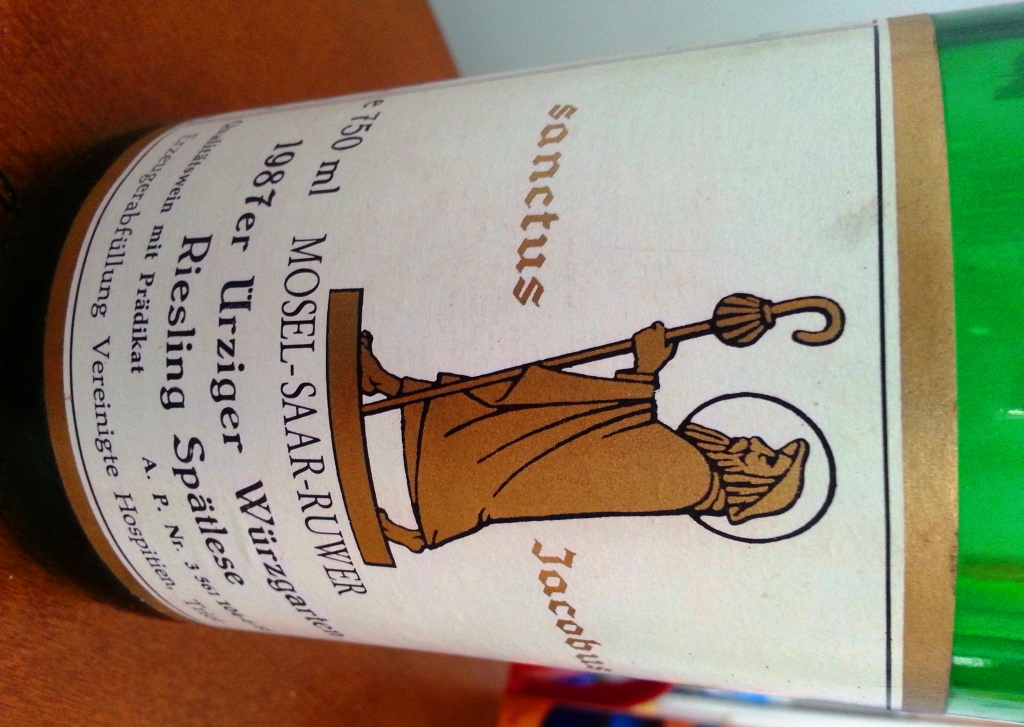
5) As the highlight of the night, we opened yet another 1987 Vereinigte Hospitien Ürziger Würzgarten Spätlese (we have had this wine before, last year we had a Karl Erbes Erdener Treppchen, and we have had Vereinigte Hospitien’s ’87 Erdener Treppchen before). We are now 27 years in, so I begin to worry a bit about how these Spätlesen are going to hold up, especially from a not ideal vintage. I have been telling Nina numerous times that we need to start stocking up on Auslesen and even BAs from that year, if there were even any produced. The cork was moldy on top, but came out seemlessly, and the wine presented itself in fantastic condition: I had gotten the decanter ready, to potentially breathe some life into it, but the tiny sip I tried made me push aside the decanter and go straight for glasses: The wine was firm and structured. There was very bright acidity which held the wine together and led to citrus aromas dominating the wine. The finish was holding up, and so all in all a very solid expression of what an aged Spätlese can taste like. I thought it was very tasty and definitely has a couple more years ahead of it, which I find astonishing….and reason enough to buy a couple more of this when we are in Germany next…

Stunningly fresh

Stunningly fresh

So, when are you throwing your next wine party and encourage friends to bring what they want you to try or share with you?

Tagged , , , , , , , , , , , , , , , , ,