Category Archives: Year

2007 Treana Red Paso Robles

2007 Treana Red Paso Robles

2007 Treana Red Paso Robles

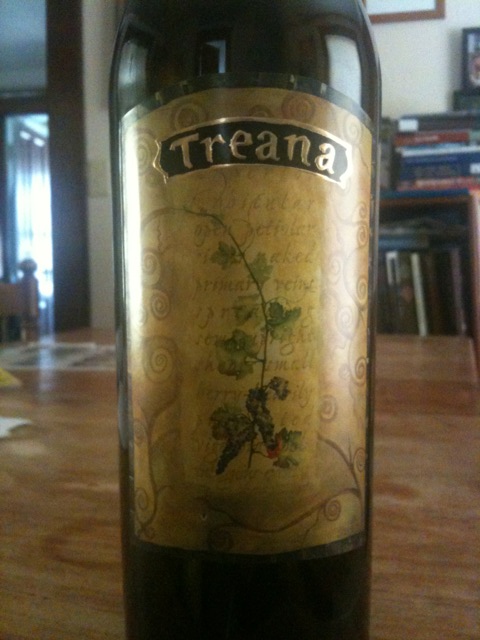
Some of you may remember the dinner I had with my fellow blogger and wine friend John, The Wine Raconteur, earlier this year. John, being the wonderfully generous man that he is brought us a bottle of wine as a gift, which caught us off guard because we clearly did not anticipate this, and had nothing to reciprocate. Well, we promised to make up for it and we will. The wine John gave us was the 2007 Treana Red, a wine from Paso Robles on California’s central coast.

I am not very familiar with California wines: I find most to be overpriced and the chief reliance on Cabernet Sauvignon, a grape variety I am not overly fond of, doesn’t help. I explained earlier that a good friend of ours has made me drink more California reds and I have found ways and makers that I enjoy, but I am still a complete ignoramus when it comes to these wines. I might have heard Paso Robles before, but I would not be able to locate it on a map at all. So, I am afraid a drew a blank when John gave me the wine and looked at me expectantly…I still feel guilty for that.

In an order to redeem myself, I did some research: Treana is part of the family owned Hope Family Wines company which maintains five different brands, of which Treana is one. The family arrived in the late 1970s and planted apple trees and vines. They planted the classic varieties Cabernet Sauvignon, Merlot, Syrah, Mourvèdre and Grenache. In 1996, they produced their first Treana white and red. The current owner and winemaker, Austin Hope, is the son of the founders who was eight when the family moved to Paso Robles.

Treana Red is what the winery deems its flagship wine (I was SHOCKED to see the retail price! John, thank you so much!!). The wine is made with 70% Cabernet Sauvignon and 30% Syrah. It is sourced from their up to eight different best vineyards in Paso Robles. It is fermented with cultivated yeasts and matures for ten to 14 months in French oak (50% new oak). The grapes ripen separately, and in the summer the best barrels are combined in barrels. Before filling, the wine is moved to a tank. The winery describes it as somewhere between a Napa and a Bordeaux wine (now if I only knew what that could possibly mean). According to the label, the 2007 had 15.5% ABV.

The wine poured in an inviting ruby red. The nose was full of cassis, as in full of it. Gorgeous. Add in some perfumy and herbal notes (branches). It was deep and inviting. On the palate, the medium-bodied Treana initially hit us with a quite strong acidity that made it feel unbalanced. There were peppery notes, the perfume continued. But we couldn’t get over how acidic it was. The texture however was great, a really nice silky mouth feel. The finish was of medium length with some bitterness.

We waited a bit, and lo and behold, some beautiful crushed coffee bean aromas started showing up in the finish. I loved that. After an hour, the wine was more herbal and felt much more concentrated than we initially thought, but the acidity persisted. Only after two hours was the acidity finally balanced and gave the wine a good structure.

Nina really liked the wine, and I thought it was pretty good, too. We have different tastes in red wine, and she likes the bigger reds more than me, so that makes sense. Thank you, John and your lovely bride, for providing a great evening for us!
 

Tagged , , , , , , ,

1987 Karl Erbes Erdener Treppchen Riesling Spätlese

1987 Karl Erbes Erdener Treppchen Riesling Spätlese

1987 Karl Erbes Erdener Treppchen Riesling Spätlese

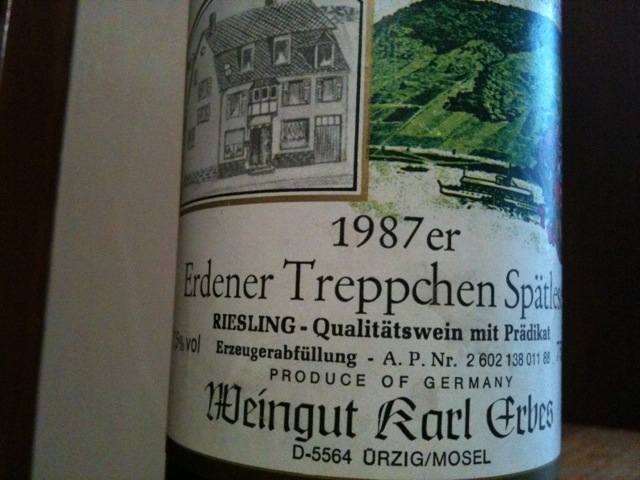
As I mentioned before, one of the things that have become a tradition at Nina’s birthday parties is that we open a bottle of 1987 Riesling, this time a Karl Erbes Erdener Treppchen Spätlese. We’re not sure for how much longer we can continue this, but for now we still have a few bottles…

Some of you might remember that one of my early posts on this blog was about the 1987 Vereinigte Hospitien Erdener Treppchen Riesling Spätlese which we had for her birthday last year (see the post here – in an aside, I am just realizing that that post only garnered one like, from my good old blogging buddy Julian at Vinoinlove. Thanks, Julian!!). Back then I explained, that 1987 is considered a weaker year along the Mosel, so it is always a bit of a surprise when the wines held up.

Trying the 1987 Karl Erbes Erdener Treppchen Riesling Spätlese was particularly interesting because the wine has pretty much exactly the same properties that the Hospitien wine had: Both from the same vineyard (albeit probably different areas within the vineyard), both 100% Riesling and both at Spätlese level, the medium category in the German wines with distinction level, which means they had comparable levels of ripeness in the grapes as measured in degree Oechsle.

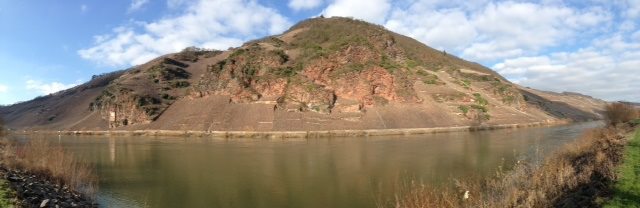
The Treppchen borders the Ürziger Würzgarten and Erdener Prälat vineyards, in the photo it begins on the far right hand side.

Three grand cru vineyards (from left to right): Ürziger Würzgarten, Erdener Prälat and Erdener Treppchen

Three grand cru vineyards (from left to right): Ürziger Würzgarten, Erdener Prälat and Erdener Treppchen

The wine had 7.5% ABV and was made by Stefan Erbes’ father Karl Erbes. One of the many wonderful things about this winery is that they retain a significant number of older vintages at the winery which are for sale. So if you ever make it there, make sure to ask for their older wines, too. They are also quite affordable still. You can find out more about the winery in my post here.

But now to the wine: The cork was in perfect condition and I decanted it for about 30 minutes. It poured in a light golden color, with some visible signs of ageing. The initial nose was very unappealing, strong musty aromas, some hints of leather, hardly any other aromas detectable. At that point, I was worried it might be flawed from that nose. On the palate, it was surprisingly fresh. The mustiness was not detectable when I tasted the wine. It was very delicate, and had contracted quite a bit, making it rather thin. It showed a good acidity structure with just a hint of sweetness. There really were no noticeable fruit aromas, I got more petrolly, aged Riesling flavors. A finish of medium length.

All in all, this was a bit weird. The nose was definitely not nice and it did not improve when I retasted a day later. The wine tasted still decently, but I thought the Hospitien wine we had last year had held up better. But another year of bottle age can also make a lot of a difference, so it is virtually impossible to compare the wines if you don’t try them on the same day. That said, this wine is most likely on its way out.

But hey, it held up for 26 years! And remember, this was “just” a Spätlese, not an Auslese or Beerenauslese. And it was from a vintage that is considered a rather weak vintage…so, absolutely nothing to complain about. The bottle cost us around $16 at the winery, if I remember correctly.

Tagged , , , , , , , , ,

2009 Picos del Montgó Old Vines Garnacha Cariñena DO

2009 Picos del Montgó Old Vines Garnacha

2009 Picos del Montgó Old Vines Garnacha

Last night was one of those nights: We were catching up on The Americans (a great TV show, by the way) and I was vaguely craving a glass of wine. So I checked our box that says “cheaper reds” my eyes landed on this bottle, a 2009 Picos del Montgó Old Vines Garnacha from the Cariñena region in Spain. I had picked it up a while back, probably a year ago, at World Market (so tells me Cellar Tracker) for $8 at the World Market.

The website is not very helpful, it is one of those typical wines made in large numbers for the export markets. It seems like these wines are made by an importer called Vinnico, at least that is what the back label states. I turned to other blogs and it turned out that there are a number of reviews of this wine, but they also don’t really provide much in information about it. The Cariñena region of Spain is located in Aragon, in the North Eastern heart of Spain. It is one of the oldest protected wine growing areas in Europe, apparently having been awarded DO status in 1932 (thank you Wikipedia for that!).

With not much more to give you in background, let’s get to the wine. It has a listed 13.5% ABV. In the glass, a rather dark ruby red wine presented itself, no visible signs of ageing yet. In the nose, I got red berries, some almond and hints of tobacco. It was a riper, more aged wine. On the palate, this wine was medium-bodied, with low and nicely integrated tannins. Definitely on the sweeter side, with some wood and spice and tobacco, plums, vanilla and receding red berries, especially cassis. It was very reminiscent of a Port to me. Don’t get me wrong, it was no Port, but it was so ripe, and tad too sweet, and it showed some age on the palate. The finish was of medium length.

Absolutely nothing objectionable about this wine. Nothing special or earth shattering, but for $8 it was a decent weekday wine. I was actually surprised how much I liked it. Definitely a wine for a fall or winter evening, though. I would probably buy it again, although I assume this vintage will not get better from here on out.

Tagged , , , , , , , ,