Category Archives: 2008

A couple of “Goes down well” wines

I once had a South African wine, I cannot remember which one, several years ago that I enjoyed quite a bit for its ease of drinking. It was smooth and uncomplicated, just a good quaffable wine. The back label stated as a summary of the usual wine descriptors: “Goes down well!” I absolutely LOVED that term and have adopted it since for fun, easy drinking wines.

I have decided to use that “label” for a couple of wines that we have been drinking over the last weeks and for which I did not take any notes because they were basic wines accompanying food or just had while watching TV. I still thought some of you might be interested in these rather affordable, decent wines which is why I am sharing them here. (Ignore my bad photos, I still have not come up with a way to replace Instagram…)

2008 Quinta da Alorna Vinho Tinto

2008 Quinta da Alorna Vinho Tinto

First up is the 2008 Quinta da Alorna Vinho Tinto, a Portuguese red blend comprised of the grapes Tinta Roriz, Castelao, Syrah and Alicante Boschet (YAY, two more grapes to tick off the Wine Century Club application).The wine is from the Tejo region in Portugal and has an agreeable 13.5% ABV. It was a bit heavy at first, but then opened up to a nicely herbal and soothing red, full bodied and well integrated tannins. Not much primary fruit going on, but just what I’d expect from a Portuguese red. Great for a winter evening. I have yet to be really let down by a Portuguese red. Bought for $11.
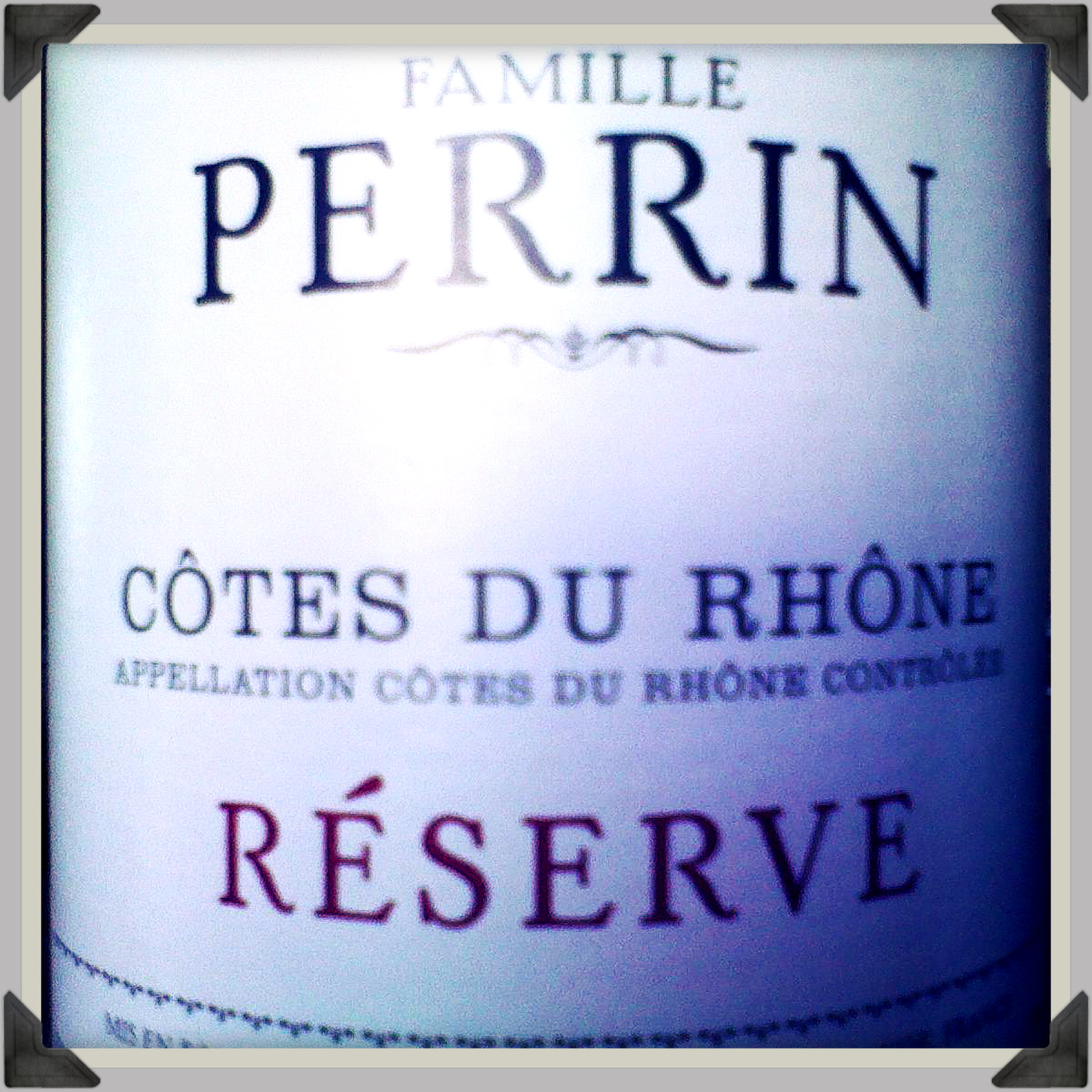
2010 Famille Perrin Cotes du Rhone Reserve

2010 Famille Perrin Cotes du Rhone Reserve

Next up the 2010 Famille Perrin Côtes du Rhône Réserve, a French red blend from the well renown Perrin & Fils winery. A blend crafted from wines all over the region, it has 13.5% ABV and garnered some praise in the wine world for whatever that is worth. According to The Wine Advocate the wine is made with Grenache and Syrah grapes from Perrin estates and contracted wineries. I really enjoyed this wine. It was light and simple without being dull, very fruit forward and accompanied our mushroom ragout with mashed potatoes and goat cheese very well. I can see this work on its own as well. It reminded Nina of summer, what a great compliment for a wine. Bought for $10.

2010 Louis Bernard Cotes du Rhone

2010 Louis Bernard Cotes du Rhone

The best value by far was the 2010 Louis Bernard Côtes du Rhône, another French red blend from Southern France. Another big producer, another goes down well wine. It is made with Grenache and Syrah grapes, with Syrah being the dominant grape in the mix. The wine also has 13.5% ABV (if you see a pattern there, you are right: I prefer lower alcohol reds). The wine is very fruit forward, great red berries and currant. On the palate it is nicely smooth, has low tannins and is super user friendly. It might be a bit too sweet, but that really is just a bit for me. Bought for $ 6 (there is currently a manufacturer mail in rebate possible that brings it down to $4 per bottle!).

I hope you find this helpful. Nothing impressive, but rock solid, good everyday wines.

Tagged , , , , , , ,

“Raindrops on Rotwein” Flight at Crush Wine Bistro in Anchorage

I indicated in my article on the wine bistro Crush in Anchorage, Alaska that we had their Austrian reds flight called “Raindrops on Rotwein”. The flight consisted of three Austrian reds made with typical Austrian red grapes: St. Laurent, Blaufränkisch and Zweigelt. All wineries have garnered some sort of international acclaim, be it in Falstaff magazine or Wine & Spirits. The flight was also really well composed, because the three grapes are connected:

The St. Laurent grape is in the same family as pinot noir. It is described as highly aromatic and is mostly grown in the Czech Republic, Austria and Germany. Blaufränkisch (literally “Blue Frankish”, also known as Lemberger) is a late ripening red grape rich in tannin, that is mostly grown in Central Europe. And finally, Zweigelt is a cross breed of the other two grapes which was created in 1922 by Mr. Zweigelt. It is now the most widely grown red grape in Austria.

I am not familiar at all with Austrian wines, let alone red wines. From what I gathered over the last years, Austria has made a tremendous comeback from its crisis days in the 1980s and a lot of my friends are really excited about Austrian wines. The few wines I have tried were Grüner Veltliner and Rieslings (what else?). My hometown winemaker also produces a St. Laurent that is decent, Nina likes it a lot. So when we saw that flight on the list, Nina and I decided to give it a try: two more grapes to knock off on our Wine Century Club application and the chance to try some reds from a region we knew practically nothing about drew us in.

Let me begin by saying that the tasting really challenged both of us. The wines were quite intense and different in many ways and not necessarily pleasantly so. It might be my underdeveloped palate or maybe I was just not expecting what ride I was in for…but to the wines:

Photo taken from the winery’s website

The first was a 2009 Sattler St. Laurent from Burgenland region. The Weingut Erich Sattler owns vineyards in what it describes as gravelly soil in the hot Burgenland region of Austria, around the village of Tadten. According to the website, the St. Laurent vines are over 40 years old. The winery’s stated goal is to make dense wines, and the St. Laurent ripened in steel tanks, staying on the lees for six months. It had 13% ABV.

In the glass, the St. Laurent was of a lighter red color, similar to a pinot noir. In the nose it was quite alcoholic, with plum and strawberry aromas. It smelled a bit unripe. In the beginning, this lighter bodied wine had a smooth mouthfeel to it, but soon peppery and bitter aromas came in that were increased by a significant amount of acidity. Add to that some burnt notes and the wine seemed quite unbalanced to me. When re-tasted later, the wine showed a bit more fruit (berries) and had a decent finish, but also seemed rather thin.

Photo Wine-Searcher

The second wine was a 2008 Prieler Johanneshöhe Blaufränkisch, also from the Burgenland region. Weingut Prieler is located in Schützen am Gebirge and its history goes back over 150 years. Prieler owns 20 hectares (around 50 acres) of vineyards. This particular vineyard is described as having brown loam soil with red pebbles, high in iron content. It also had 13% ABV.

In the glass, the wine had a ruby red color and showed beautiful viscosity. On the nose, I got earthy aromas of mushrooms and plum. The wine had a good, velvety texture but rather harsh tannins. The aromas we got were quite confusing: I thought I tasted salami (I swear to God!) and there seemed to be a cheesy note to it, too. Really weird. The finish was very short and quite bitter. All in all, this was a pretty harsh wine to me. It just did not work. Nina thought it was overripe overall.

Photo: CellarTracker

The third and last wine in the flight was a 2009 Glatzer Zweigelt Riedencuvée from the Carnuntum region. Weingut Glatzer is located in Göttlesbrunn in this Roman settled area of Southern Austria. Glatzer owns 54 hectares (133 acres) in a number of different vineyards. It focuses on red wines, with the largest crop being Zweigelt (20 hectares). This particular wine was grown on sandy loam soils and had between 12.5 and 13% ABV. It was aged for 9 months in 2000 liter casks.

In the glass, we got a darker ruby red wine. The nose was quite pungent, with aromas of sauerkraut, damp earth and burnt rubber. On the palate, this one had more weight to it than the other two. It had a velvety texture, but I could not get over the taste of burnt rubber that reminded me of everything that can go wrong in a pinotage; Nina remarked that she tasted ash. There were aromas of sour cherries and herbs, but the racing acidity in the end did not help it either. After 45 minutes I did get some strawberries, but the wine was just too sour for my taste.

I am not sure I went away from this tasting with a favorable view on the three wines we tried (re-reading my notes, I am pretty certain I did not). In hindsight, the first of the three was the most pleasant for me. Too bad that I thought it could only get better from there. Naturally, I was quite disappointed. I am now eager to try more Austrian wines, because these definitely did not cut it for me and I am sure there are some out there that are better suited for me. Having no real experience with Austrian reds, and also knowing a number of German reds that I find sub par, it is hard to know whether it is me or the wines…it was puzzling.

Has anyone tried Austrian reds and can point me to some I should try?

Tagged , , , , , , , , ,

2008 Banfi Chianti Classico Riserva and 2010 Fetzer Shaly Loam Gewürztraminer

2008 Banfi Chianti Classico Riserva and 2010 Fetzer Shaly Loam Gewürztraminer

2008 Banfi Chianti Classico Riserva and 2010 Fetzer Shaly Loam Gewürztraminer

Happy New Year! I trust you all made it safely into 2013.

We’ve been going through quite a number of wines here up north, but there weren’t many exciting wines among them. There were some that I had already written about and they did not seem very different  so I felt no need to write about them. Last night though we did have two interesting wines. My mother in law had made a bean and ham soup and we had this bottle of Banfi Chianti Classico Riserva around that I thought might be worth trying.

Banfi is one of the biggest wineries in Italy. I initially learned about them by trying the Rosso and Brunello di Montalcino which I both liked quite a bit. Over the years, they have expanded and now produce a host of wines from different regions in Italy. I am not very impressed with their cheaper wines (the Col di Sasso, for example, is just rather bitter and unpleasant). I had not had a chance to try their chianti classico riserva until last night. The wine aged two years in Slavonian oak and an additional 6 months in the bottle. It is the 2008 harvest and has 13% ABV. The wine is made with Sangiovese, Canaiolo Nero and Cabernet Sauvignon. It was not decanted and drunk straight after opening.

It poured in a lighter red color with slight browning on the edges. On the nose it had prominent cherry and berry aromas. On the palate, I got light bodied wine with a good level of complexity. Several layers of aromas, among them cherry, blueberry and some vanilla worked nicely together. The wine had hardly any noticeable acidity, good tannins and ended in a quite long finish. It was really tasty. I am not sure it worked well with the soup, the flavors did not really complement each other and made the wine too vegetable for my taste. But on its own, I enjoyed it a lot. I am a sucker for good chianti and this one worked for me.

My fellow blogger Rachel blogged about this wine here.

After dinner, we opened a couple of jars of fruit mustards and had them with different cheeses, one of Nina and my favorite pastimes. I rummaged through the wine collection at my in laws and found the 2010 Fetzer Shaly Loam Gewürztraminer which I threw into the freezer to bring it down to drinking temperature. I am not very familiar with Fetzer winery, a big California producer. I do like a good Gewürztraminer, which I also think should be more on the sweet end to bring out all these marvelous fruit aromas. It is difficult to achieve a good Gewürztraminer though, because the grape easily produces overbearing wines.

This one poured in a clear yellow color. The nose was exciting: lychee, gooseberry, papaya, and all sorts of other tropical fruit. It also had a rather alcoholic nose (when I checked, it had 12% ABV, quite a bit for a white wine). On the palate, it was very sweet, on the heavier side of light bodied and combined the aromas I found in the nose in a sugary fashion. The alcohol was prominent and I was not fond to find such a sweet white wine with such a high alcohol level (I know, I am a German riesling snob). It just did not work. The alcohol destroyed potential delicacy, but the sugar also hurt the fruit in the wine. It is hard to wrap my head around it. It just seemed a bit all over the place, without really showing what the grape is capable of. That was kind of sad…that said, it was finished easily.

Tagged , , , , , , , ,