

The Ravens Club on Ann Arbor’s Main Street
The Ravens Club is a bar in downtown Ann Arbor, right on the most important restaurant road in Ann Arbor, Main Street. I’ve been there once or twice, but my main memory is from right after I moved to Ann Arbor. While Nina denies ever having been there with me before, I am certain we went there pretty soon after I moved to Ann Arbor from Germany. From that visit, I remembered its great cocktails fondly. But I also liked the atmosphere with its gold and dark, pretty classy. However, we were dirt poor at the time and couldn’t afford to go out much, and somehow The Ravens Club dropped off my radar…
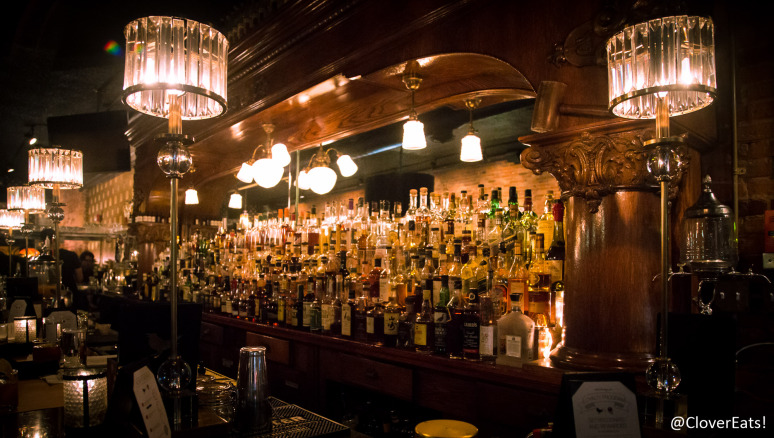
The Ravens Club’s well-stocked bar. The cocktails here are absolutely amazing!
So, a couple of weeks ago I received an invitation from The Ravens Club’s managing partner Jeff to come and sample their new fall menu along with a bunch of other food and booze bloggers in and around Ann Arbor. He specifically touted their revamped wine list, and you know, free food and free wine? Count me in. I was joined by my blogging and real life friends John (The Food and Wine Hedonist) and Hannah (Next Stop: TBD). It was great to meet other bloggers from the area, too, like the authors of Clover Eats and All the Brews. Others have written about their impressions, so feel free to check out The Food and Wine Hedonist‘s, Clover Eats‘, and Hannah‘s take on the event. I also asked both of them whether I could use some of their photos, because a) I suck at remembering to bring a camera, and b) I usually suck at taking photos. They were kind enough to let me use them, so all visual beauty today is thanks to them.
Jeff told us that he thinks he and his team finally figured out what The Ravens Club is about: A bar with excellent cocktails that will offer bar food with a twist. He admitted that it took them a long time to figure it out (roughly four years), but that he is now comfortable with what The Ravens Club is. He wanted to share his vision with us, and we were happy see what they had up their sleeves. The cocktails have always been amazing, so I won’t even go into those.
While I am a foodie of sorts, I want to focus this review on The Ravens Club’s wine list. But the food was good, and I like that they incorporate interesting dishes into the menu. Chef Frank came out to talk to us, and it was interesting to see how this young chef balances making bar food to please the average diner at a bar who doesn’t want fancy food and making food that is creative and keeps him on his toes. I think, overall, he managed to achieve this. These were my favorites:
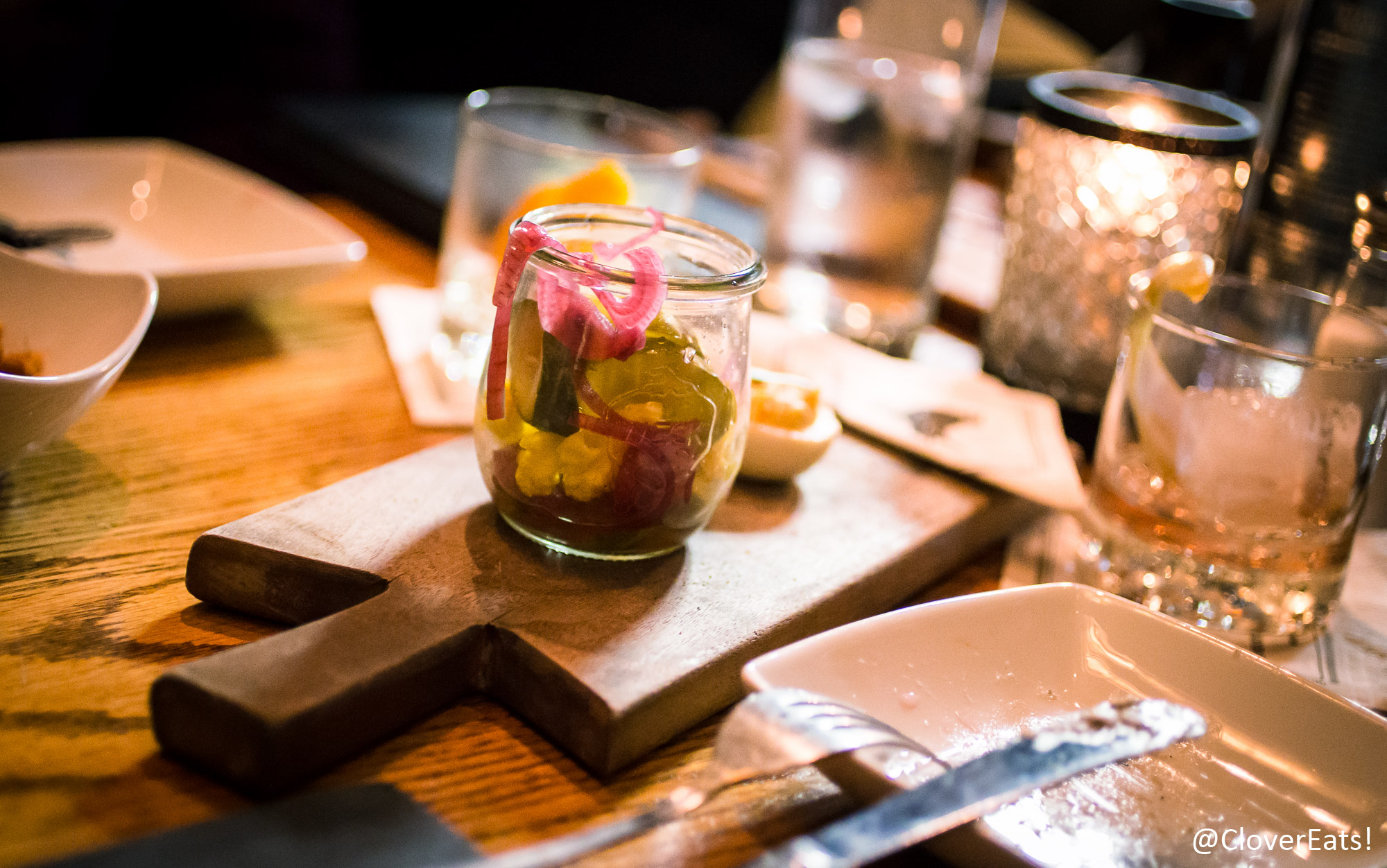
House-made pickles that paired very well with their rillette.
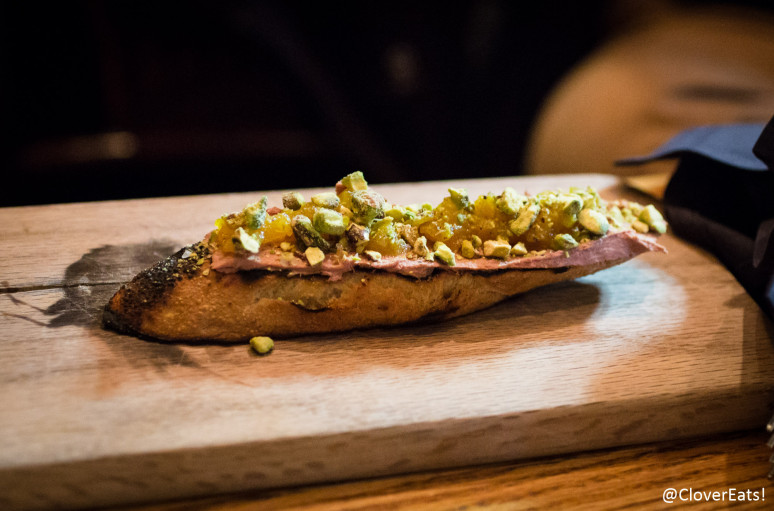
Insanely tasty chicken liver pate with apple chutney and pistachios. Probably my favorite of the night.
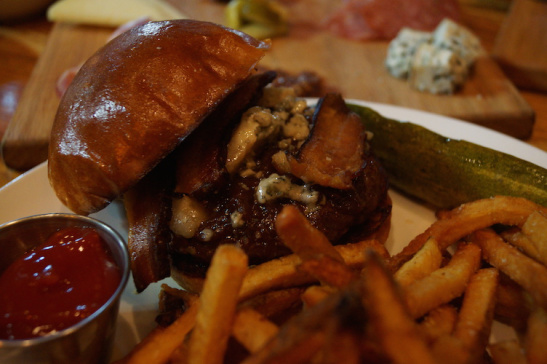
The burger was cooked exactly right, and was one of the best burgers I have had in town. Excellent.
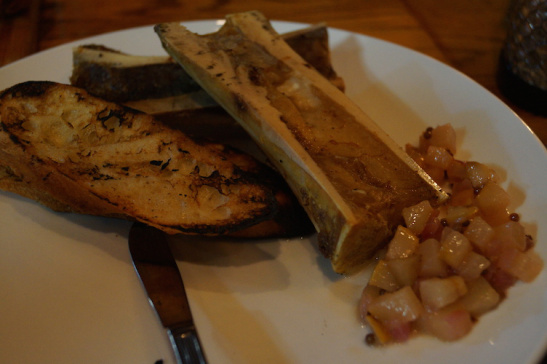
Kudos to chef Frank for putting roasted bone marrow on the menu. Unique, glibbery, and very tasty.
However, on to the wine list. Let me preface that I believe that bar’s have the hardest time to figure out a wine list: The normal customer comes for the cocktails or the beer (in The Ravens Club’s case mostly the cocktails). Wines lead a shadowy existence in a bar setting. This poses several issues for bar owners: How restricted should my wine list be? What’s my ratio of wines that an average customer might be interested in (I am just throwing it out here: Cabernet Sauvignon, Moscato, or a sweet Pinot Grigio) to wines that I am proud of serving? Should I offer wines at all? The Ravens Club, according to Jeff, tried various approaches in the past: From a vast wine list befitting a fine dining establishment to a small, mainstream (boring) list. Just like with the theme of The Ravens Club, they now feel they know what they want The Ravens Club’s wine list to be.
We had a chance to talk to the guy who put this list together, Ben Eberlein, who heads The Signature Collection, which is the boutique wine division of Henry A. Fox Sales Co. Ben is a super chill guy, and I loved talking to him for a while (it helped that his family’s roots are in Germany, and that we seem to have similar tastes in wine). First of all, he looked at what The Ravens Club has to offer: classic cocktails and American bar food. This led him to focus on American wines only. Except for the sparkling wine, which is a Spanish cava (which I always consider a good alternative to expensive champagne). He then decided to create a limited wine list of twelve still wines: six red, six white. Period. The wines are all from either California, Washington, or Oregon. I was a bit surprised to find no Michigan wines on the list, given how home state-proud a lot of Ann Arbor is, but it is what it is…and probably not for the worse.
The wineries deliver their wines in small barrels of 19.5 liters (around 5 gallons), and most wines are available on tap. At first I was a bit surprised, but it actually makes a lot of sense: Their wine sales aren’t overly big, and when you store the wines in the barrels and have them on tap, you can hold them and offer them for up to six months without them losing flavor. I think it is a win-win strategy for winery, The Ravens Club, and also the consumer. All wines I tried tasted fresh and one couldn’t tell how it got into the glass.
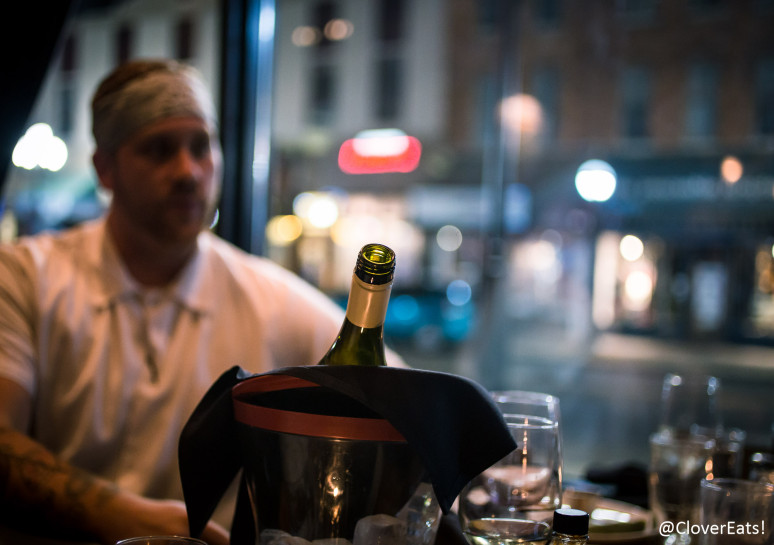
Chef Frank hanging out with us over a bottle of excellent Chardonnay.
With my wine buddy John sitting right beside me, and Hannah helping out from across the table, we got a good go around of a lot of their wines. Here are my thoughts on what I had:
- We started with the Stolpman Sangiovese Carbonic from Ballard Canyon, California. The wine is made with carbonic maceration, which means the grapes are not crushed but put in a tank and then infused with carbon dioxide which causes the grapes to ferment in the berries. It’s an interesting way of making wines. However, the result was not my style at all: It showed a very light and VERY bright color (insanely bright for a Sangiovese), and ended up being pretty sweet without any Sangiovese characteristics (no cherry or underbrush). While this was not my style, I think this can work for those seeking a sweeter wine and I grant The Ravens Club that this is more interesting than your average Pinot Grigio.
- I also tried the Blacksmith Cabernet Sauvignon fromOakville, California. Now most of you know I am not a big fan of that grape in a monovarietal, but I wanted to see what The Ravens Club offers that most consumers will probably go for. This was about what I expected: wood and red fruit. Clean, nothing really objectionable, but also nothing that would excite or entice. For what it is, it probably works well for many.
- Now the Corvidae Lenore Syrah from Columbia Valley, Washington was an entirely different story: If you want to try wine at The Ravens Club (and you should), I highly recommend this one. Pitch dark, juicy and smoky, with depth and layers and layers of interestingness. To my palate, which likes restraint, Syrah can easily be too spice. But this one was just the right amount. This also paired well with the burger.
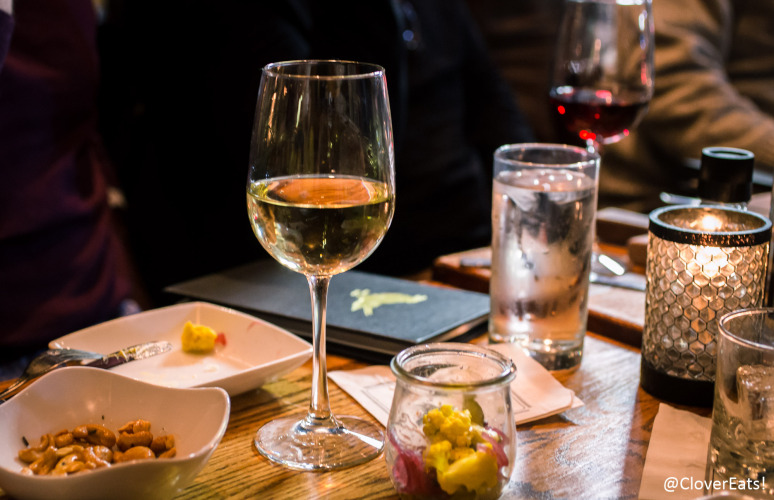
You knew I had to try the Riesling…
- I simply had to try the Corvidae Ravenna Riesling from Columbia Valley, Washington. Most West Coast Rieslings leave me wishing for more and often disappoint me, but this was outstanding. I would compare it to Alsatian Riesling in style, with prominent notes of petrol, clean and bright citrus flavors with good acidity. The wine was very balanced, and it paired amazingly with the rillette and then the chicken liver. I was a bit stunned, because I didn’t expect this wine to wow me that much, but in fact it did. Pretty high up on the list. In what I assume is an attempt to make people actually order this wine it is described as off-dry. But to my taste buds, this seemed way more dry than off-dry. In a very pleasant way.
- When we asked Ben what else we HAD to try, he said the Chardonnay that they sell as a bottle only. It took little to convince us at that stage (two cocktails and a couple of wines into the evening): the Roco Chardonnay from Eola-Amity Hills, Oregon. US chardonnay and I have a charred history, where I often struggle with too much alcohol in the wines (which is my personal crux). Everyone that tried this wine seemed to love it. It was the picture perfect example of what a well-made Chardonnay can be: crisp, clean, refreshing, with bright lemon and green apple flavors. A delight to drink, and definitely worth a try.
As should become obvious here, there are some true gems on this wine list. For Wine Century Club lovers, they have a Grenache blanc on the list, and for the eccentrics or the bourbon lovers, they have a wine that matured in bourbon barrels. In any case, it is worth looking past the cocktails and the excellent selection of bourbons that The Ravens Club has to offer. The wines make for interesting pairings, and can be a nice mix-up of the regular fare.


 the winegetter