Category Archives: Mosel

Meeting the vintners: Weingut Karl Erbes, Ürzig (Mosel), Germany

So much better than Hollywood

Some of my readers might remember our awesome tasting at Vereinigte Hospitien in June (if not, the venue is described here and the tasting notes are here). It should not be a surprise to you if I say that this tasting was not the last tasting of the day…we had an appointment with Stefan Erbes at Karl Erbes winery.

From Trier we headed to the autobahn to race to Ürzig (about 35 minutes down the Mosel, but our car was weighed down by the accumulated wine boxes in it, so we might have been a bit slower) because we had made arrangements with Stefan Erbes of Karl Erbes winery there. I first came across this winery, low and behold, through my friend ManSoo (yes, you have heard that name before). When friends of ours had given Nina a wine weekend along the Mosel as a birthday gift in 2011 we were looking at a lot of wineries.  ManSoo suggested we give them a try, so we did. It was not a mistake. The tasting that day was epic: Stefan opened bottle after bottle, and we had tons of fun. We even came back the next morning for some of their sparkling wine (made like champagne, but cannot be called that for trademark reasons). We went back several times since, and Stefan has become a good friend.

View towards Erdener Prälat and Treppchen

For those unfamiliar with Ürzig let me quickly recap why I like that village so much. Ürzig is nestled to some steep hills along the Mosel. Just driving into it from the Autobahn gives you an idea how steep when the view opens up to the Mosel. This village is all about wine. The drive down the sloped roads also reveals vine after vine, even in the village. It is home or close to three of my favorite vineyards: Ürziger Würzgarten (Spice Garden), Erdener Treppchen (Little Steps), and Erdener Prälat (Prelate).

Karl Erbes winery is a rather young winery, founded in 1967. Karl Erbes had been cellarmaster for other wineries when he decided to start his own winery. Stefan, his son who is now in charge of wine making, joined in in 1984. The winery owns about 5 hectares (about 12.3 acres) in the Würzgarten and Treppchen, with ungrafted vines up to 80 years old. They recently were able to snatch a small lot in the much coveted Erdener Prälat (there is usually a scramble for lots there: only a handful of winemakers own or rent land in this tiny vineyard). I am really excited about this, because a) I love the Prälat wines and b) I love Stefan’s style of winemaking, so the combination should be great! The winery has a tasting room and wine bar where you can go and try their wines with some food during the summer months. It is a great way to spend an evening.

Stefan and I

Stefan is a great guy. I will never forget how open and welcoming he was when we first stumbled into their tasting room. There is nothing artificial about him: He is a straight talker, but he also has a wonderful sense of humor. He strongly cares about his wines, but there is also a human connection that I really enjoy. Last fall, I spent one day harvesting with his crew and the way he took care of me was really heart-warming. Silly me had not prepared a lunch package (hell, I was glad I made it out there at 7.30 AM!). So, he just brought me some of his mother’s home-cooked meal with a pastry bun and hot coffee for lunch. It was a great experience working in these vineyards, although I am glad I only did it for a day. My muscles were hurting the next few days…I later went with my mother, and we had a great time as well (Stefan’s uncle, who runs the wine bar, actually was able to convince my mother that riesling can be good…a feat I never accomplished). In short, it is one of the friendliest and most hospitable wineries I know.

Another cool thing is that Karl Erbes was smart enough to stash away bottles of each vintage and hold on to them. Their list of rarity wines is phenomenal (and so are the prices for these wines – for some 25+ year wines you pay as little as $15!). We have had incredible 1996 and 1997 wines, I tried a 1977 (my birthyear), and we have an 1987 put aside for another of Nina’s birthdays. It is a great chance to actually buy and try some old rieslings without paying a fortune.
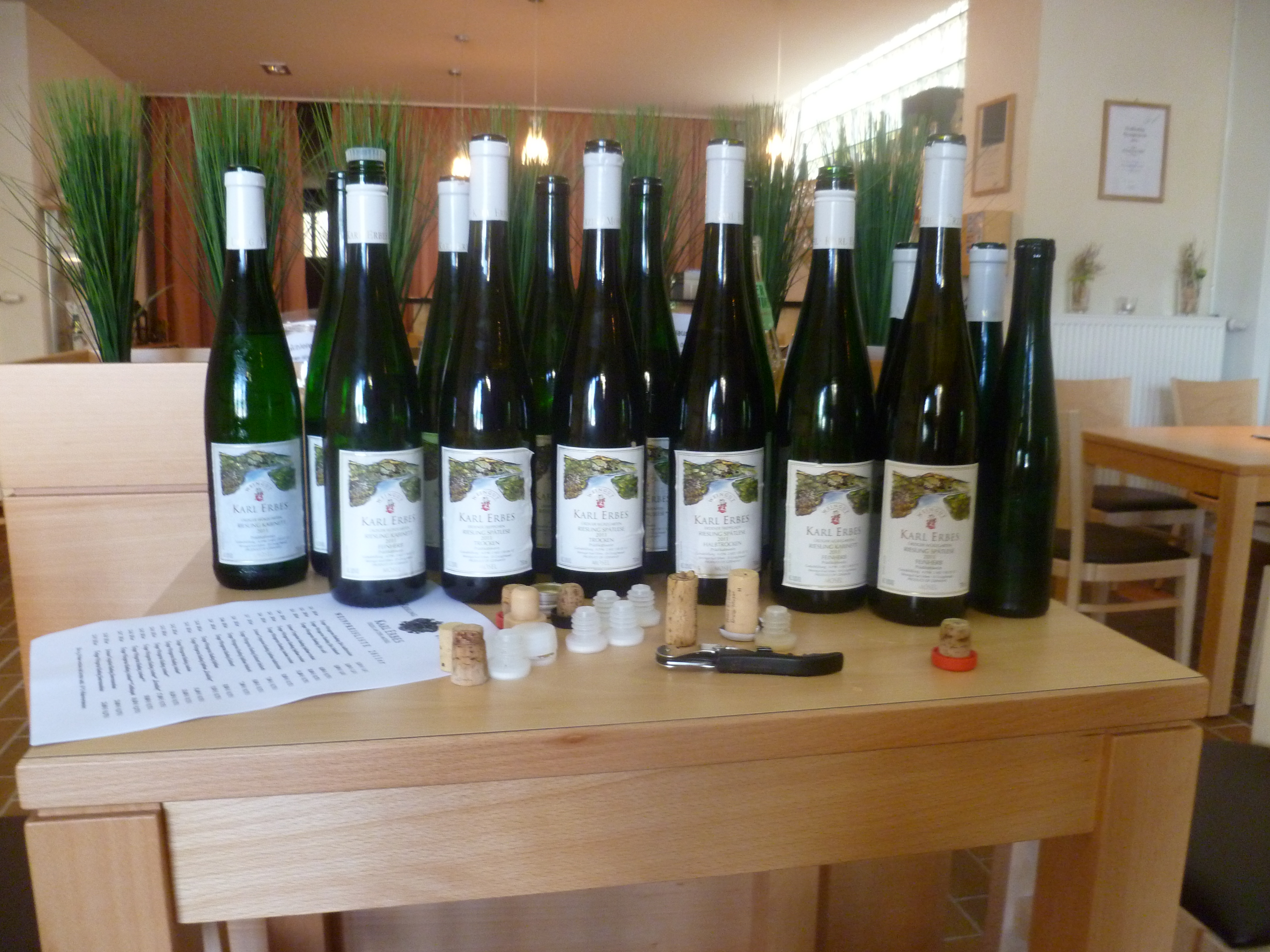
The line

Alright, with that, to the wines. We tried a total of 15 wines from Kabinett to Beerenauslese and ice wine, all 2011. If you are unaware of the wine levels in Germany, check out my at a glance sheet. As before, I will write about some wines seperately. All grapes are riesling grapes.

We started with two dry spätlesen from Würzgarten and Treppchen (he even produced a dry auslese, but we did not try that one). Again, it became clear that 2011 was a great year for dry rieslings. The 2011 Erdener Treppchen Spätlese trocken was mild with the typical Treppchen aromas of yellow fruit. The 2011 Ürziger Würzgarten Spätlese trocken was fuller bodied and had more muscle to it with its terroir typical floral notes. Both wines were quite good, but I do prefer the sweeter wines (as you should know by now).

On to the three semi-sweets: The Erdener Treppchen Spätlese halbtrocken was nicely silky on the tongue, with a good amount of acidity. But it was a bit too heavy for my taste. The Ürziger Würzgarten Kabinett feinherb was, again, floral but with distinct minerality to it and some not overpowering fruit. My star in this line up was the Ürziger Würzgarten Spätlese feinherb: full of minerality, awesome perfume notes in the nose, silky texture, long finish. Just a great, great typical Mosel wine.

On the sweet end of the spectrum, we tried ten wines. This is where Stefan is really strong. The Ürziger Würzgarten Kabinett was an explosion of fruit, with some banana, and the sweetness wrapped in healthy acidity. The spätlesen and his auslesen will be dealt with in a seperate post.

We finished with the Beerenauslese (BA) from Treppchen and Würzgarten. The Treppchen had so much fruit in it that it was hard to wrap your head around. The viscosity on the tongue, the sugar and acidity playing on your tongue, the seemingly endless finish made this wine incredibly sensuous. At 301 grams of residual sugar per liter, you would think it is all syrup, but it was not. The Würzgarten, with an insane 315 grams of residual sugar per liter, was much more lively than the Treppchen. The wine was dancing on my tongue with tons of dried fruits. These wines are not for daily consumption, and they are not ready for consumption at this point. But they will be stellar in many years to come…

But we were not quite finished yet. Stefan was pouring us a browny, slightly milky wine without telling us what it was and asked us what we thought of it. The wine tasted somewhat off, it had a somewhat muggy smell. It had some salty notes in it, too. Turned out it was berries he harvested as ice wine on February 3, 2012. That is pretty far into the new year, even for an ice wine. The problem was that some berries were rotten at that point. So, he cannot sell it as an ice wine (grapes have to be healthy), but it was still an interesting experience…

We had big plans to go back once more after an insane 24 hour Rome trip the next week, but it turned out that a night without sleep was not the best starting point for going to theirs the next morning. So we had to skip that. But I am really looking forward to the next visit!! Stefan speaks good English, so please go and visit them if you get the chance. Readers in Europe can order their wines through their website at winery prices plus a modest shipping fee. There is absolutely no reason not to try their wines.

With that, we ended our trip to the Mosel in June 2012. I so cannot wait to go back.

Back in my hometown
Tagged , , , , , , ,

The Vereinigte Hospitien tasting in June 2012

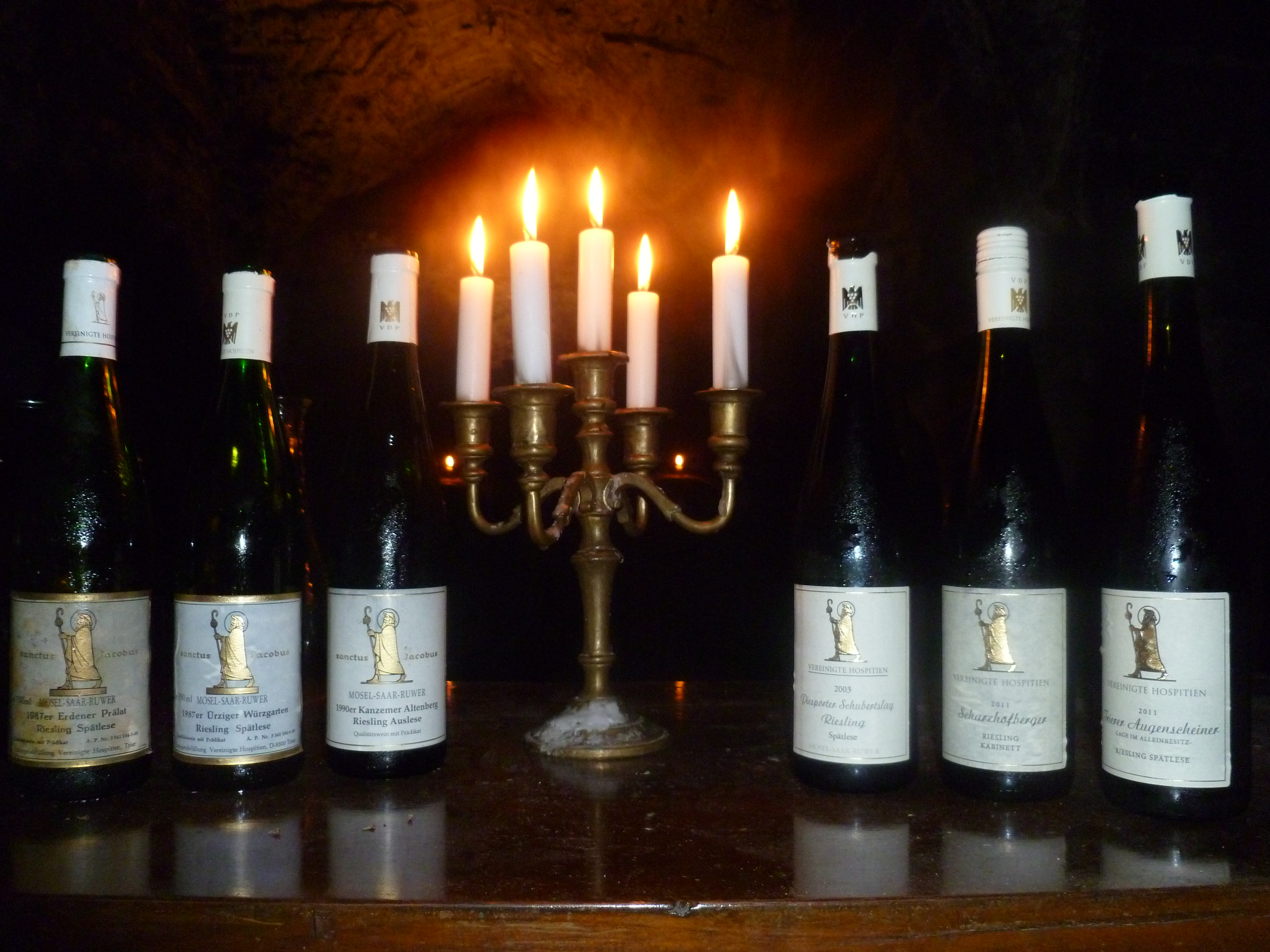
The line up

Finally, here are the tasting notes for our awesome tasting at Vereinigte Hospitien in June. As you might remember (if not, here is the initial report), we were sitting in Germany’s oldest wine cellar (the walls dating back to the 300s A.D.), soaking in the awesome atmosphere as our host Marc was picking up some bottles to try. And he did not let us down!

Here is the wine list:

1) 1987 Ürziger Würzgarten Riesling Spätlese

2) 1987 Erdener Prälat Riesling Spätlese

3) 1990 Kanzemer Altenberg Riesling Auslese

4) 2011 Scharzhofberger Riesling Kabinett

5) 2003 Piesporter Schubertslay Riesling Spätlese

6) 2011 Trierer Augenscheiner Riesling Spätlese

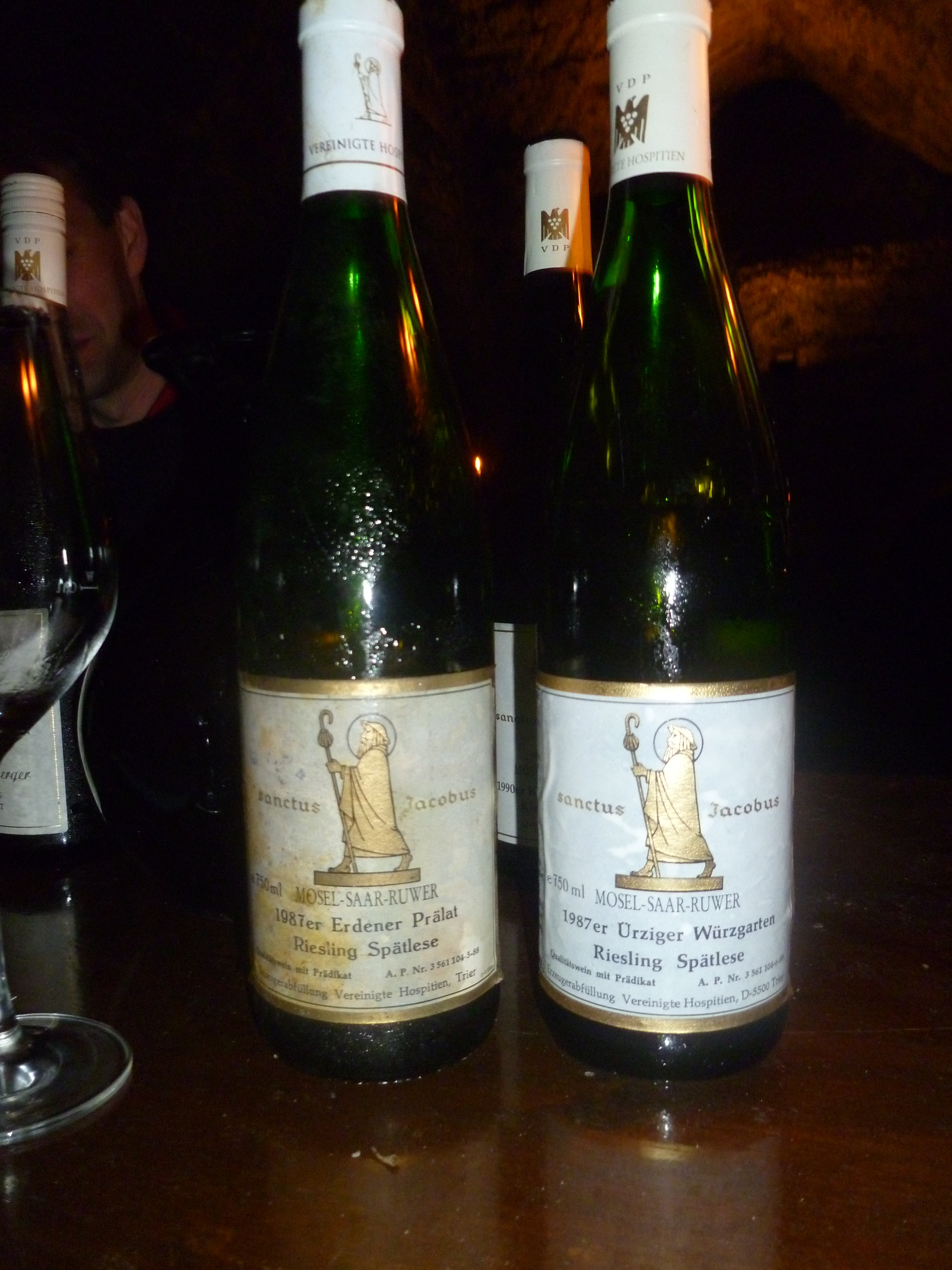
We began with a tasting of two 1987 wines from two of our favorite vineyards: Ürziger Würzgarten and Erdener Prälat. It is Nina’s birth year and Marc had learned that from the blog. We had tried the Erdener Treppchen Spätlese before, so now we were able to compliment this tasting experience that I described here.  Just think about that: we were able to try three similar quality wines from three connected vineyards of a 25 year old vintage. Maybe it is just me, but I get pretty excited about that!!

Both wines were spätlesen and they had remarkably similar profiles. The Ürziger Würzgarten had 10.4 grams of acidity per liter, with 41 grams of residual sugar; the Erdener Prälat was slightly higher in acidity at 10.5 grams and sweeter with 45 grams of residual sugar. At 84 degree Oechsle (a scale to measure the sugar in the harvested grape), it had the highest Oechsle for any of their spätlese in that year.

The Ürziger Würzgarten’s nose was flowery and fresh, one could say a typical nose for this vineyard. On the tongue, it had a sizeable amount of acidity, which gave it an incredibly fresh taste. The acidity persisted throughout the tasting. It was hard for me to discern what fruits I tasted.

The Erdener Prälat was remarkably well preserved. The nose was full of peach and once the wine reached our mouths, it broadened out, fully taking command of our taste buds with peach and apricot. The acidity only appeared more towards the end. It had a long finish.

It was interesting to see how different these two wines tasted. You could definitely tell the terroir in them, but the higher residual sugar in the Prälat probably helps explain why the acidity was less pronounced in it.

Two beauties

Another interesting thing we learned was that Vereinigte Hospitien did a chemical analysis of the Würzgarten and it produced a fascinating result. One thing that you hear over and over again when tasting older rieslings is that they tend to be more balanced, because the sweetness goes down and the acidity stays, so the wines become less fruit-pronounced. However, the chemical analysis showed that the amount of sugar in the wine had not gone down – at all. There was still the same amount of sugar in the wine! We just do not taste it anymore. Apparently, there is no real explanation for that. One guess is that the sugar transforms into longer-chained molecules that our taste buds cannot taste…crazy, right?

We then went for a 1990 Kanzemer Altenberg Auslese. Kanzem is at the river Saar, a small contribuary that meets the Mosel just south of Trier. Saar wines are usually more mineralic and have higher acidity levels than the Mosel, which makes for very interesting wines. Kanzemer Altenberg is one of the top vineyards along that river. The bottle had been recorked. The wine has 52 grams of residual sugar, harvested from fully ripe grapes.

Upon opening and pouring, we saw a dark orange wine, with a salty and sherry like nose. On the tongue it was weirdly metallic, some hints of passion fruit. It then fell flat fast. We decided the bottle was flawed (actually, Marc, who knew how it should taste decided…but it did taste odd). The second bottle we opened was very different: lighter in color, the nose full of gooseberry. On the tongue, it had a fabulous acidity, lively fruit notes and just gave us a great mouth-full of wine. The texture was wonderful. A great wine!

We then tried a 2011 Scharzhofberger Riesling Kabinett. The Scharzhofberg is the Saar’s most famous vineyard and its wines rank among my favorite. It has a hard to describe terroir note to it that I just find incredibly endearing and comforting. This one did not let us down. At 88 degree Oechsle, this Kabinett is actually a wine that could have been labelled as an Auslese, two spots higher. It has 9.8% ABV. The nose was fruity and flowery. On the tongue I tasted banana and apricot, with a looooong finish. Just a very decent, yummy wine.

Nina’s highlight, and I was pretty impressed, too, was the 2003 Piesporter Schubertslay Riesling Spätlese. Initially a single-owned vineyard by Vereinigte Hospitien, they are now leasing some out to other winemakers. The color was light and fresh. The nose full of strawberry and cream, with vanilla thrown in. On the tongue, the same tastes prevail. The sweetness is wonderfully balanced by a fresh acidity. Later on, we tasted caramel notes creeping in. Long finish, too. It was such a fun wine. We have had another bottle since, and that was just as good. A great wine at a great price ($15).

We finished the tasting with a 2011 Trierer Augenscheiner Riesling Spätlese, a vineyard completely owned by Vereinigte Hospitien. At 72 grams of residual sugar and 92 degree Oechsle, the first thing we noticed was sweet peach in the nose, complimented by perfumy and flowery notes. The taste was floral as well (I am bad with discerning different floral notes), the texture silky. The wine seemed incredibly concentrated, and definitely not yet ready for consumption. I bought a couple of bottles to see where this one is headed to…

As you can see, it was quite the outstanding tasting: old and new, Saar and Mosel. The full variety, even of just the sweeter rieslings, came out beautifully. I am looking forward to many more tastings there…

Bliss…

Tagged , , , , , , , , , , ,

Meeting the vintners: Vereinigte Hospitien, Trier (Mosel), Germany

Sometimes, coincidences can be really awesome. Like this one. A friend of mine and former flatmate is now living in Brazil. She checked out my blog when I posted my tasting notes and introduction to the 1987 Vereinigte Hospitien Erdener Treppchen Riesling Spätlese. She then sent the link to the blog entry to her father, who happens to be the director general of the Vereinigte Hospitien (in charge of the whole enterprise, not just wines). He thought it to be nice enough that he forwarded it to his winemakers. And the next day, I found a comment on the entry telling me that I should get in touch next time I was in Germany for a tasting. Coincidence had it, that we were leaving for Germany a few weeks later. In our ensuing email exchange we established that the comment was made by Marc. Turned out, he and I had spent one Saturday morning trying to find a suitable old wine from their cellars to drink at one of Nina’s birthday parties while we were still living in Germany. So, we actually knew each other. And certainly he knows ManSoo and Yutaka…the world is small indeed, and the wine world is even smaller.

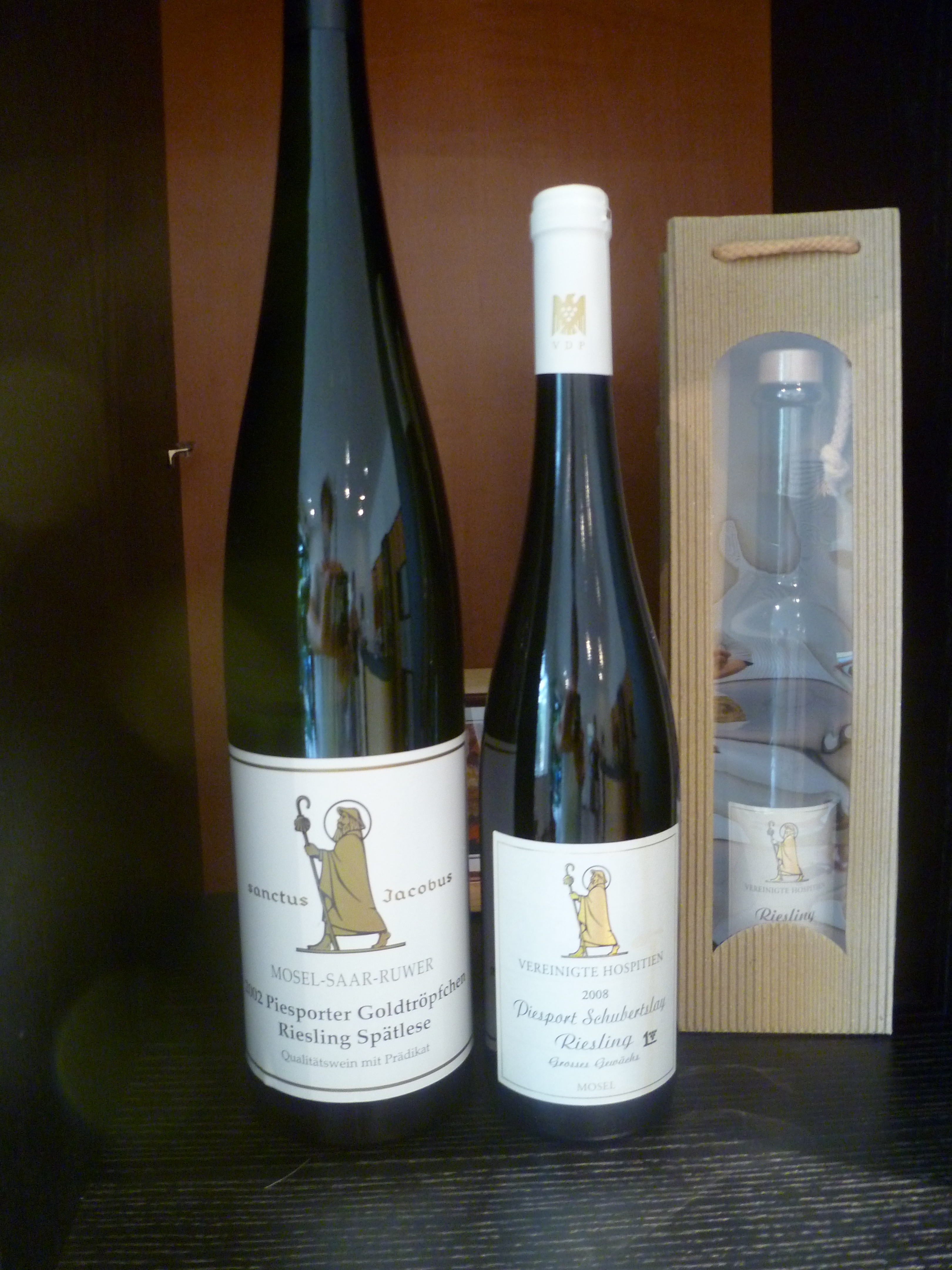
Now, the idea of a tasting at Vereinigte Hospitien was exciting us for two reasons: First, I have liked their wines a lot over the last years, especially fond of their Scharzhofberger spätlesen. We have had a great 2002 Piesporter Goldtröpfchen Spätlese in a magnum bottle that converted a friend of ours to sweeter rieslings. And in 2011 (thanks toMarc), we had a fantastic 1990 Erdener Prälat Auslese (I still have one bottle cellared). Second, while they have a modern tasting room where one can freely try most of their wines every day, the Hospitien also are in possession of what is deemed Germany’s oldest wine cellar, the walls of which are dating back to the 300s A.D. We always wanted to have a tasting there, but somehow managed never to be in town when they had their annual vintage presentations or failed to get a group together for an individual tasting there…so now we finally had the chance!

We met with Marc on June 18. It was a sunny day, and we were ready to go to the cellars. I have written about the Hospitien’s history earlier, so I will spare you those stories here. However, some background on Trier is required to understand why they have the oldest wine cellar in Germany. Trier was a pretty big deal for most of its recorded history. It is Germany’s oldest recorded city, founded before 16 B.C. It went on to become the capital for the Roman province of Gallia Belgica, and in the 300s A.D. was the residence of the Western Roman Emperors, among them Constantine the Great. The city is therefore full of Roman ruins, among them a fully preserved Roman city gate from before 200 A.D., the Imperial Baths of around 300 A.D. and Constantine’s Throne Hall of around the same time.

To shorten this: a) Go visit if you have a chance! and b) the city was thriving in Roman times: an imperial household with all its demands.

All this leads us to the wine cellar. The Hospitien are located at the banks of the Mosel. Right in front of them, at the Mosel, is a crane from medieval times and it is very likely that there were cranes already in Roman times to unload ships that would bring all sorts of goods. To house those goods, huge warehouses were built. The current street level is about 4-5 meters (12-15 feet) above what the Roman street level was. That means, that the foundations and walls of these houses, if they are still around, lie underground now.

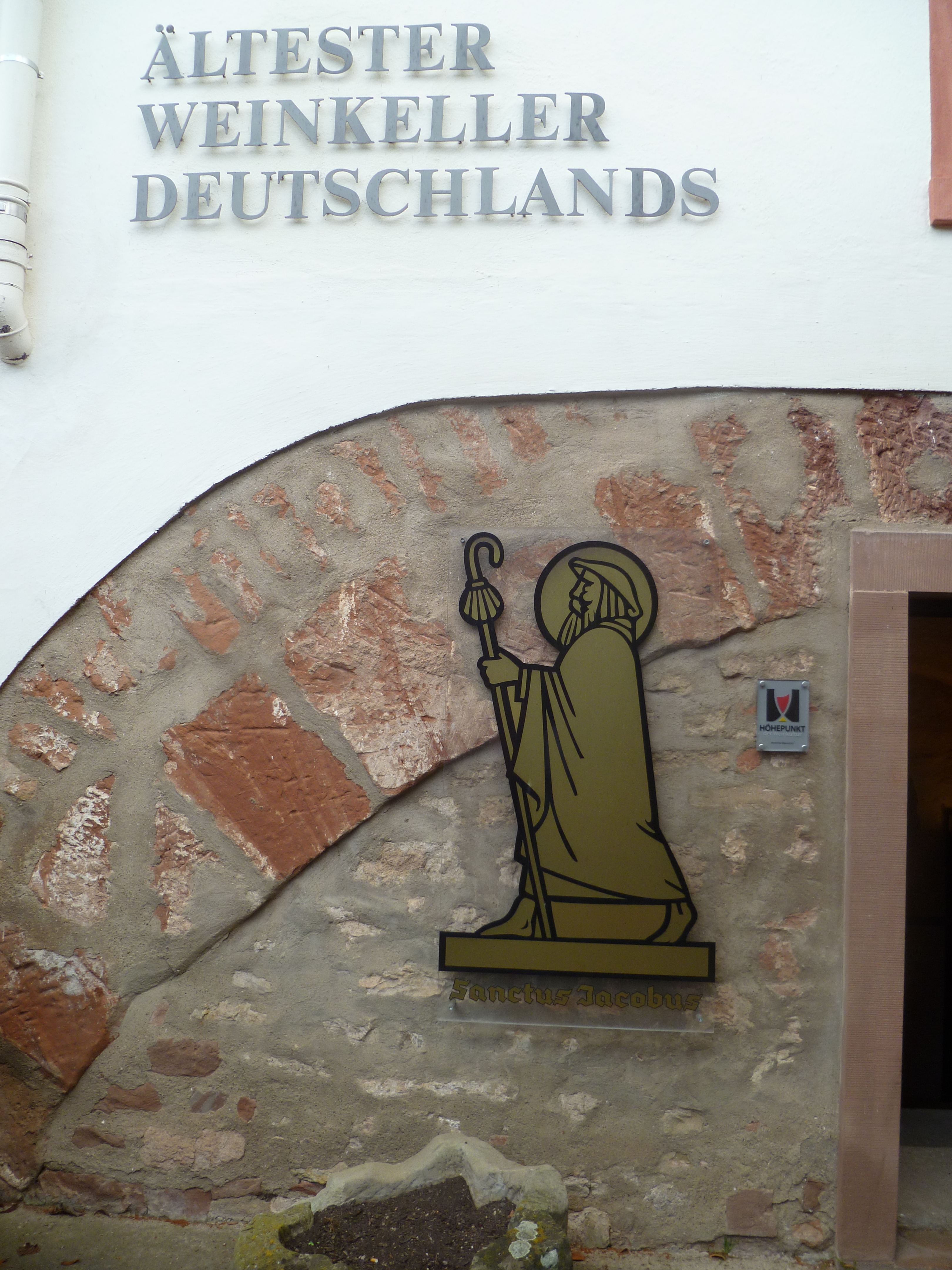
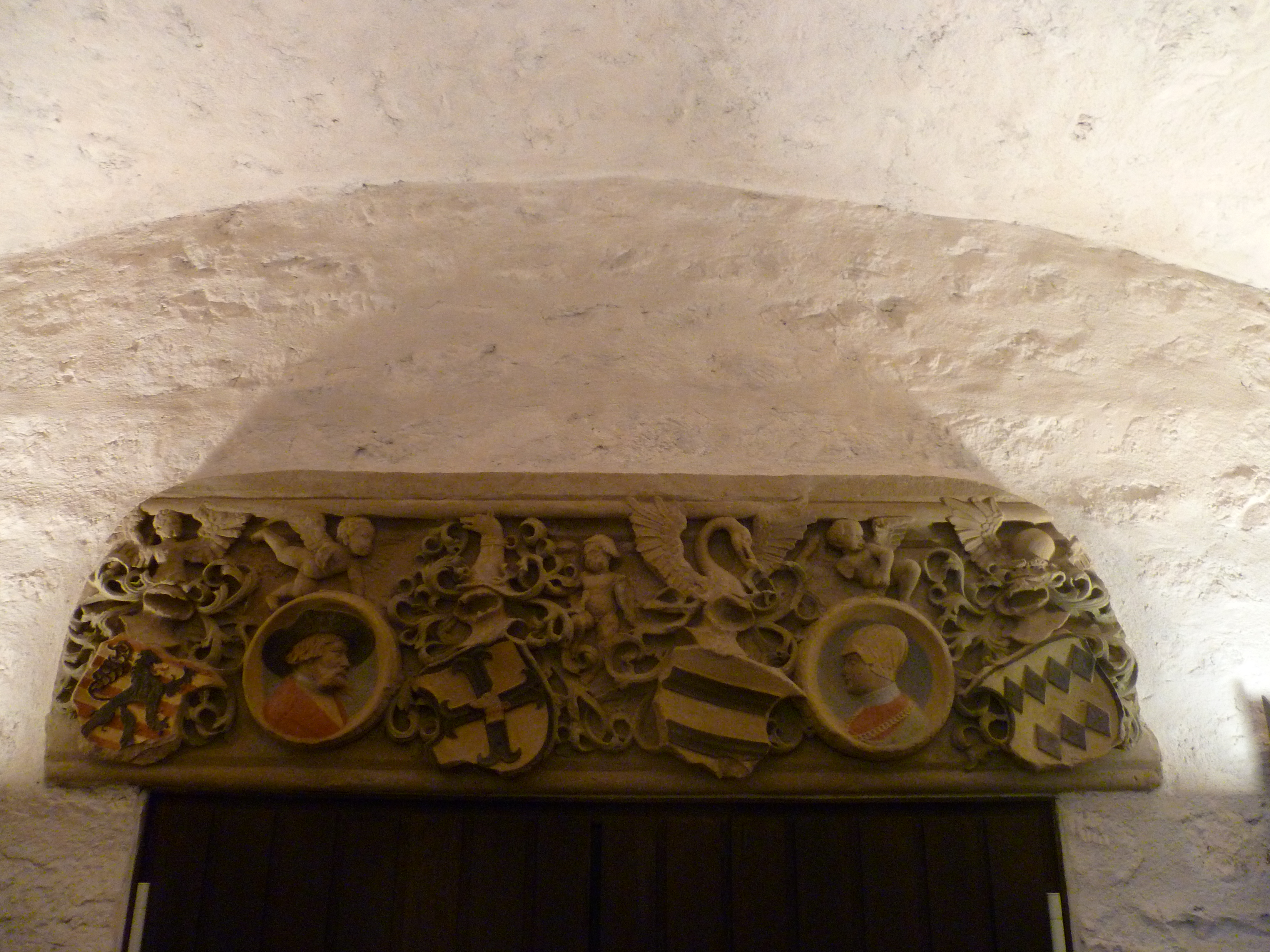
The cellars of the Hospitien make use of that: The walls are part of two warehouses that were a total of 70 meters (210 feet) long. The cellars stretch the whole length of this, and make for a very impressive structure. You enter through a door that has a medieval architrave. The buildings were used as a “Stift”, which is a sort of convent for aristocratic and rich women, where they lived among each other in a religious way but always had the option to leave and still get married. Their dowries made the convent rich.

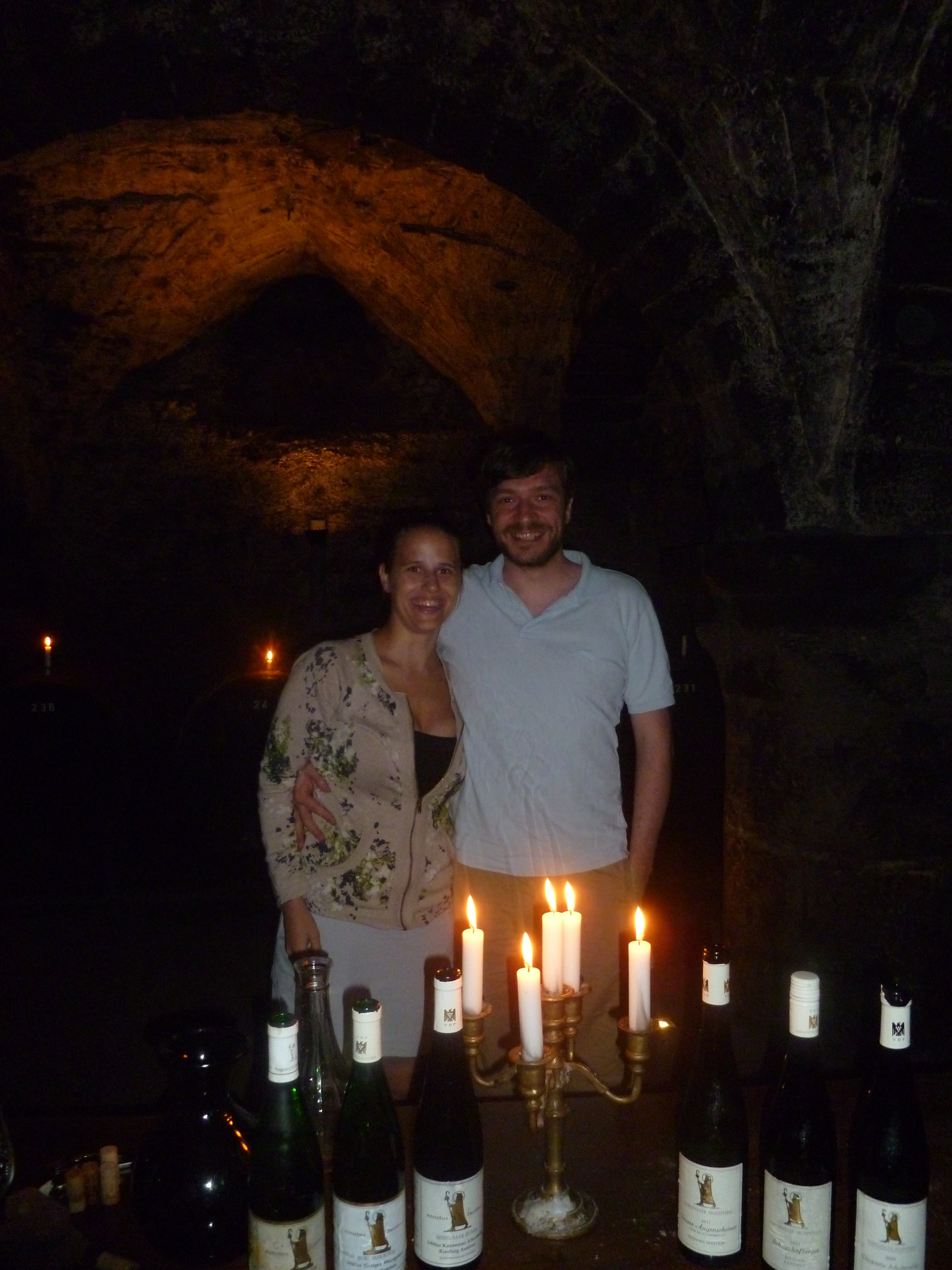
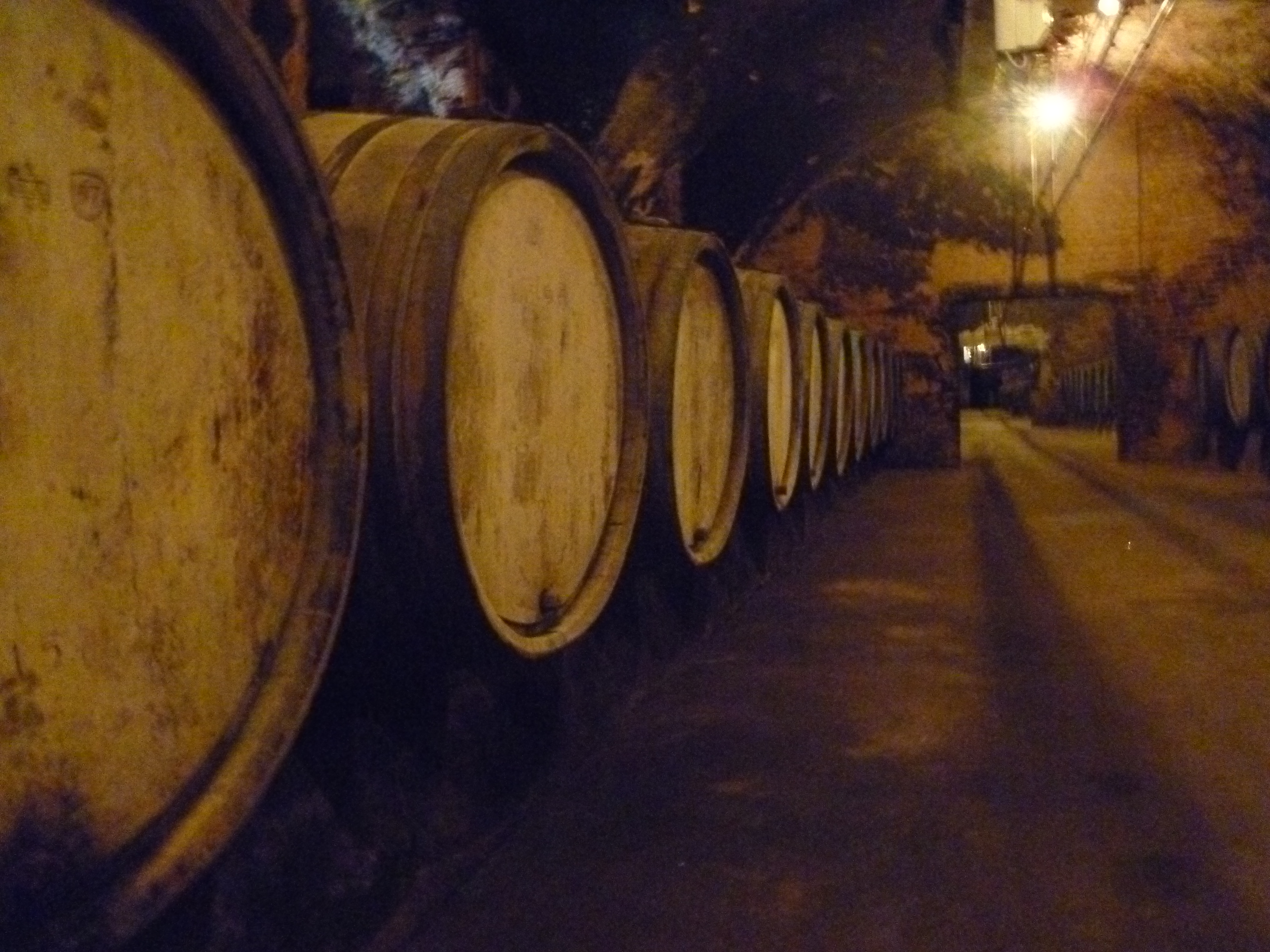
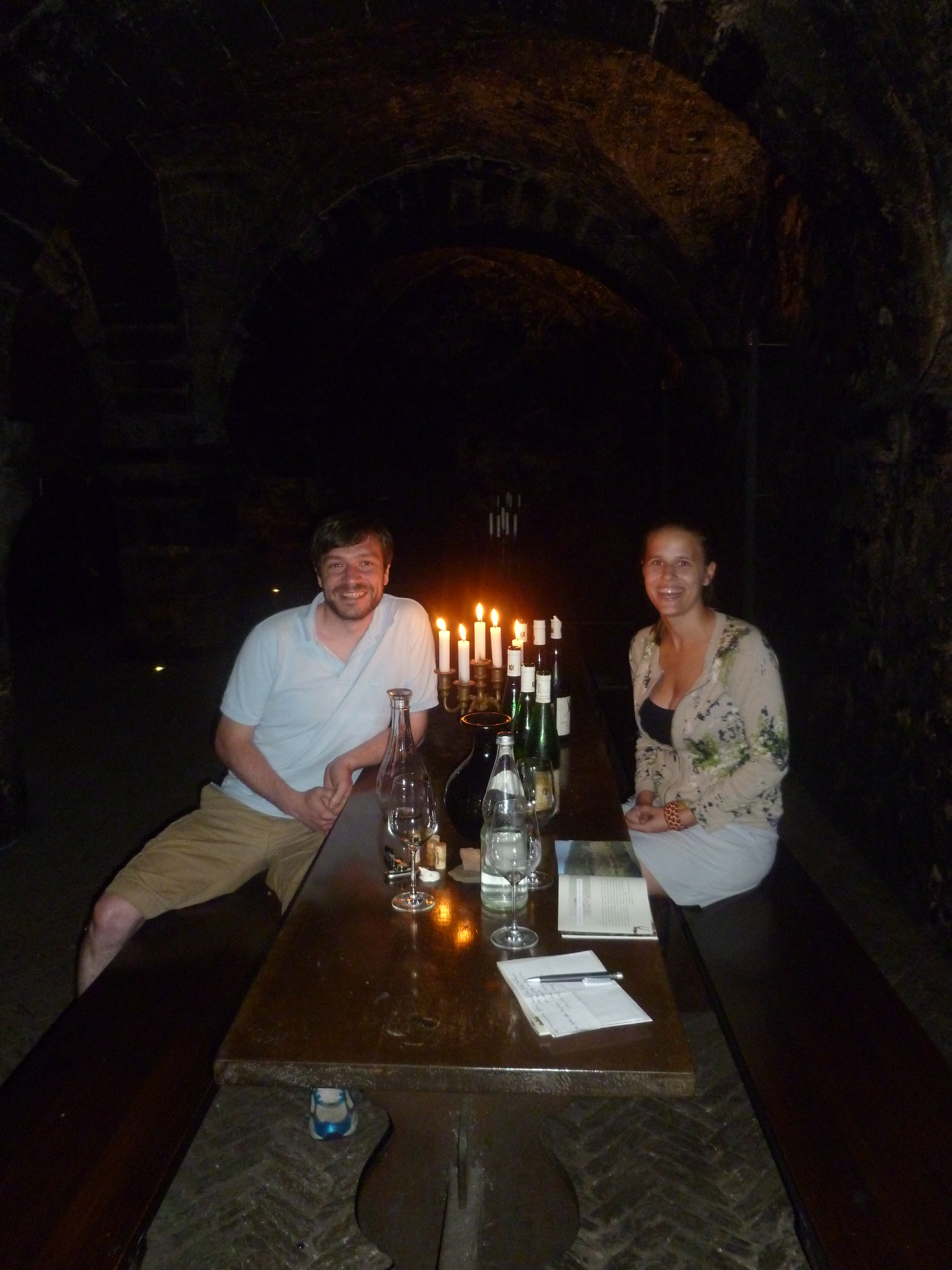
The moment we stepped down into the cellar we knew we were in for definitely the coolest (literally and figuratively!) tasting of this trip. Just to be standing on the original Roman floors is incredible. Add the medieval and baroque vaults to that and it was just breathtaking. The barrels you can see are no longer in use. Almost all wines are now made in stainless steel. It was a big burden working with these barrels, because every couple of years, the tax assessor wanted to measure them because wineries are taxed on the amount of liters they can hold in their barrels. We walked almost the whole length, Marc was explaining everything and way more than I could remember, when he made us turn into the tasting room itself. We were startled:

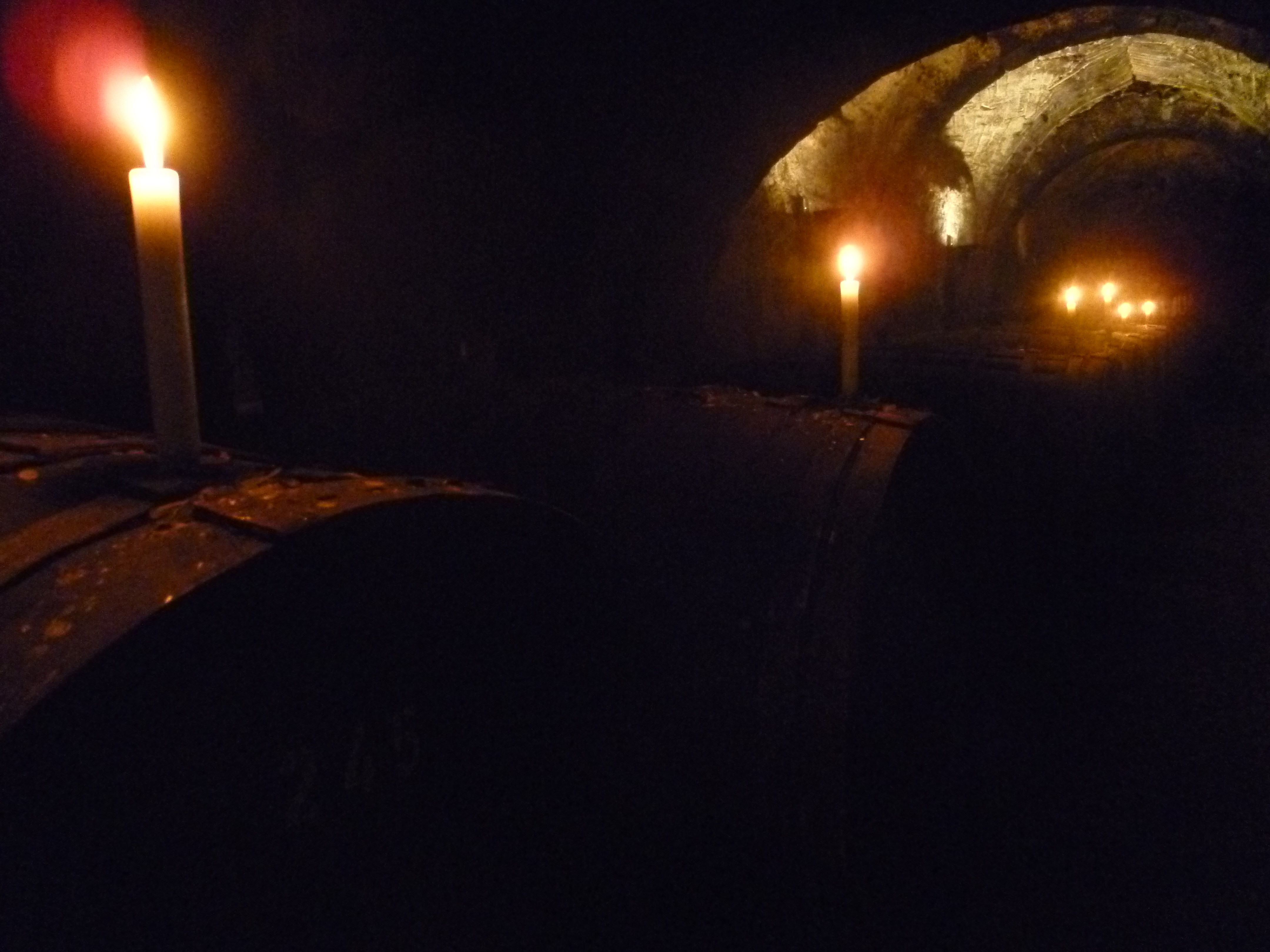
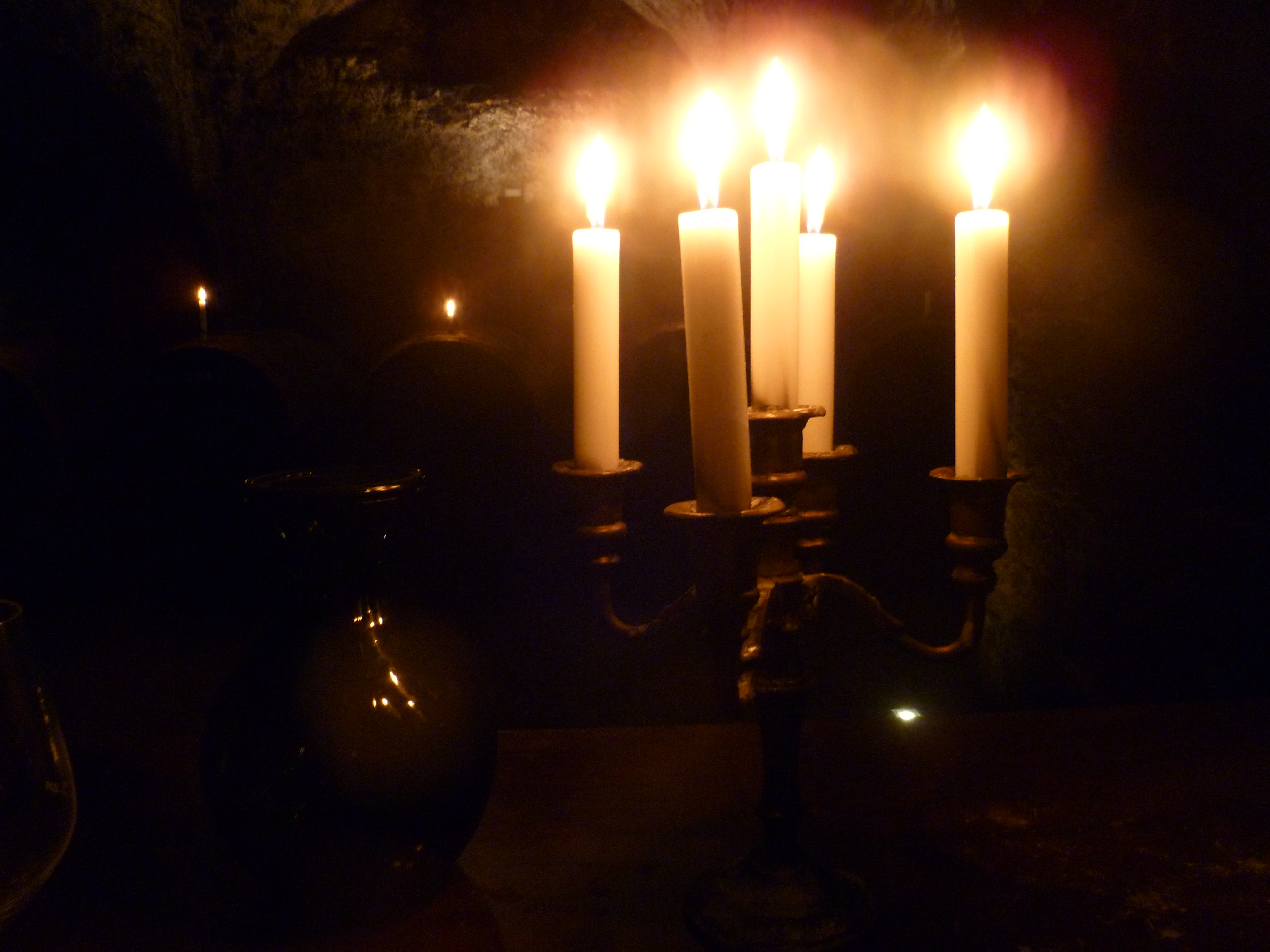
Candles on the barrels were lit, the vaults were lit, and there was an endlessly long wooden table with a candelabra on it. We were stunned. And that just for us! Man, did my blog entry from May pay off big time. It definitely had something magical. Our gracious host wandered off to grab some bottles, and we took the place in some more…

I really do not want to write about the tasting now, because it was so special in its own right. And I know that I do not like to read too long blog posts. So I will write about the wines we tried in a seperate post. Let it be enough here to say that they fully matched the occasion: We tried two different 1987s spätlesen side by side (when does one ever get the chance to try two old wines and compare them straight?!), a 1990 auslese, a 2003 spätlese and two 2011s.

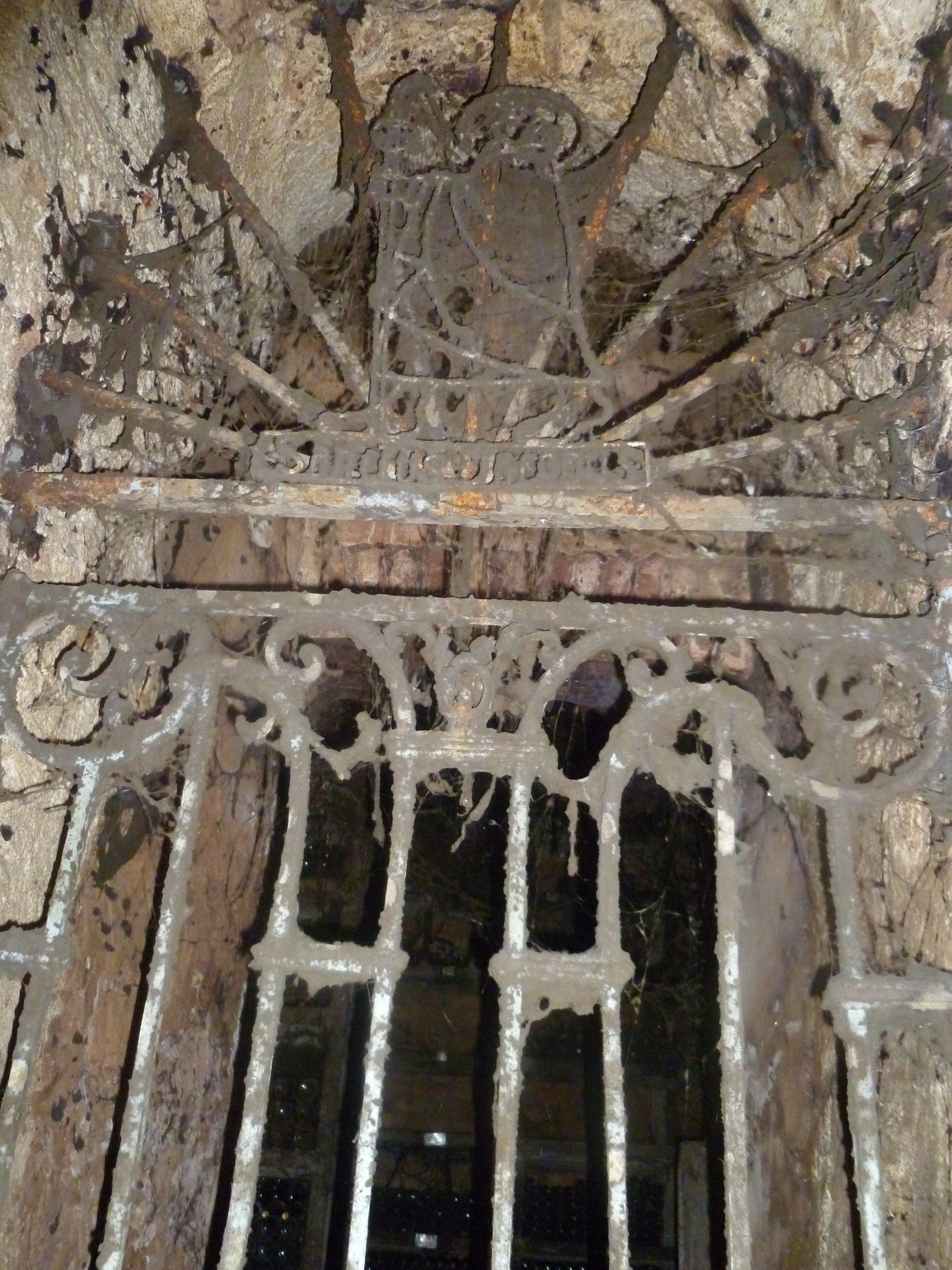
Before we went back up into daylight after an awesome two hours and a half, we had the privilege to take a glimpse at the treasure vault, where the real treasures are locked up and heard a story fitting this ancient place. Apparently, there is a greyish-black fungus living in the cellars that spreads like crazy when the alcoholic fermentation is going on, covering the walls and cobwebs and whatever it can lay hands on. It lives of the alcoholic vapor. When fermentation is over, it recedes and waits for the next harvest. You can still see some of it on the cobwebs and over St. Jacobus, the patron saint of the largest hospice and who can be found on every bottle of wine. The people employed at the Hospitien apparently say that they either want to be born again as a winemaker or as that fungus…

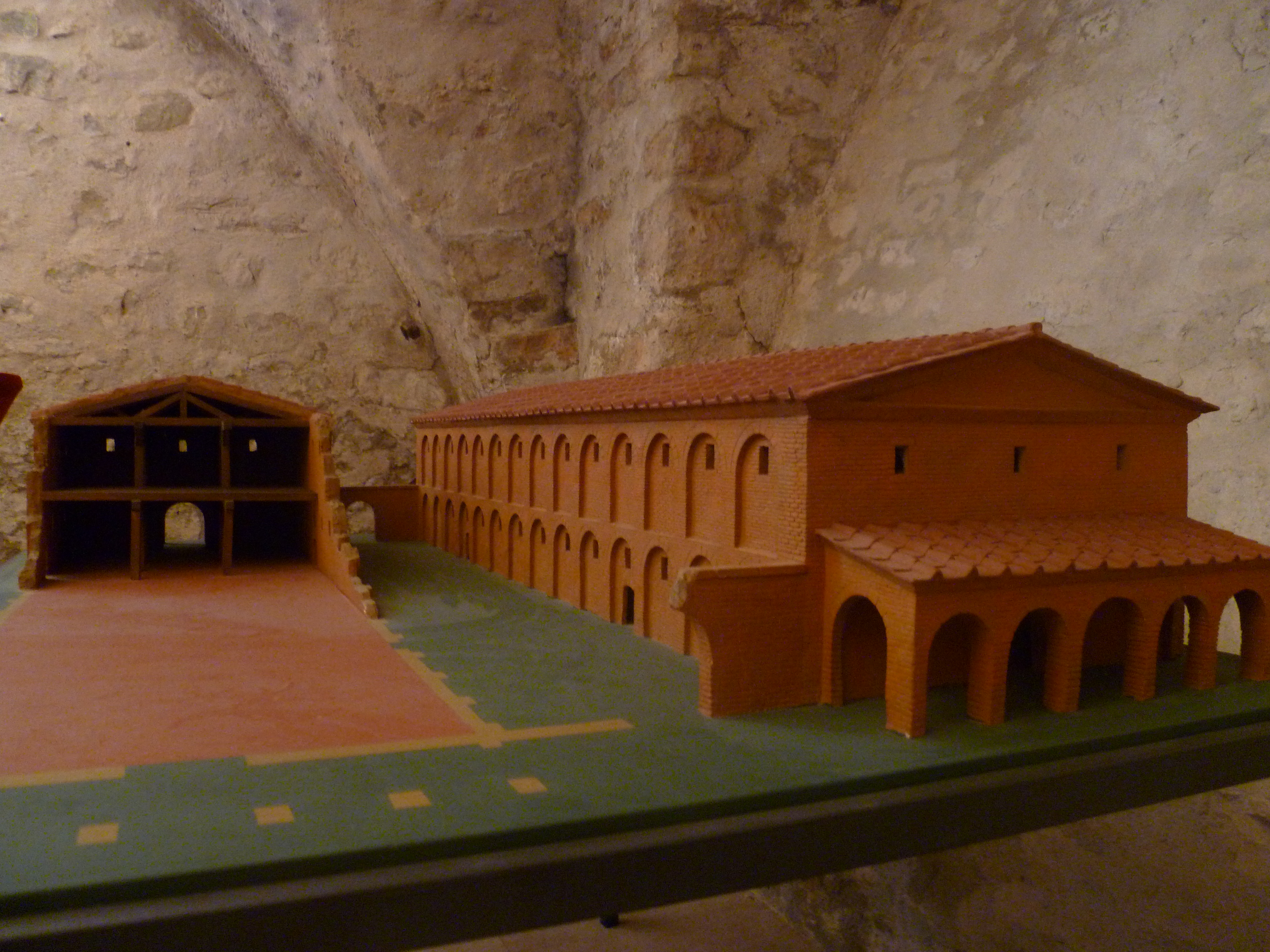
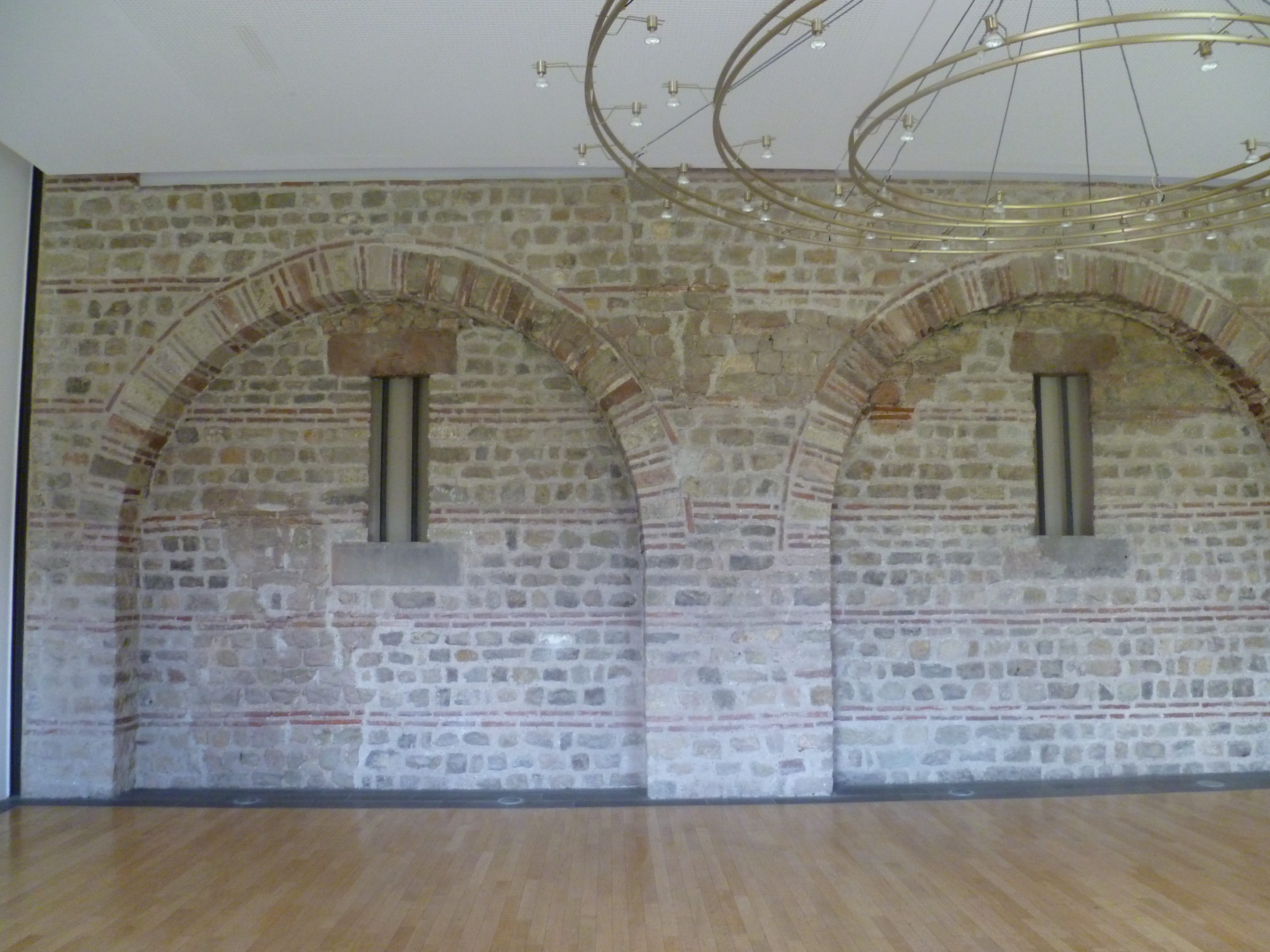
Upstairs, we had a chance to look at a replica of what the Roman wall probably looked like when it was new in the Hospitien’s big hall for receptions and conferences with a gorgeous view over the gardens. It was quite stunning. When Marc told us that he had found the blog through the director general, my friend’s father, I mentioned that I knew him, too. So we went to his office and had a nice chat. Like I said, the world really is pretty small…

While I was busy getting the wines we wanted could afford loaded up and billed, Nina kept imbibing in the modern tasting room. Lucky her. But hey, what an amazing experience!! I am also glad to have had the time with Marc, who was an amazing host and ambassador for the Hospitien and I definitely look forward to many more exchanges and tastings with him.

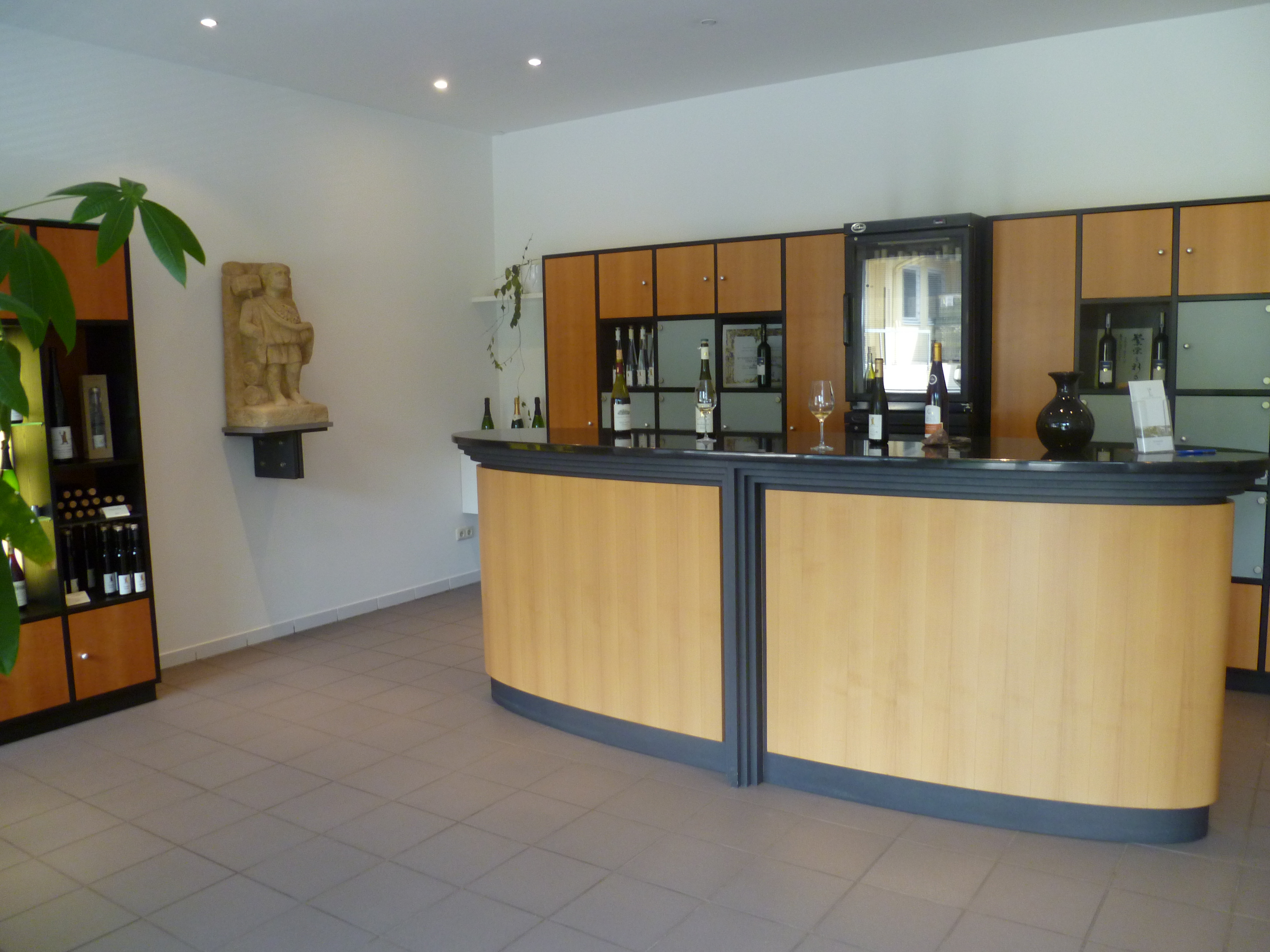
Their (modern) tasting room is open Monday through Thursday from 8am until 5pm (with a lunch break from 12.30-1.30), and Friday and Saturday in the mornings. It is well worth a visit. Try some amazing wines, and find great bargains on older vintages. Just ask the staff!

Tasting notes will follow soon. Promised.

Tagged , , , , , , ,