I know, I have been quite silent lately. This is likely to continue for a couple more weeks. I will try to post when I can, and more importantly have something to say, but we’re not really drinking wine right now and my cousin is coming to visit so we will also be traveling a bit. Maybe that is why I am going a bit deeper today…
The exchanges with my cousin over the last weeks reminded me of something. We were talking about what wines he should bring for us. He had a couple of suggestions and we still had some bottles stored at my mother’s. It reminded me of those bottles, and it also made my excitement about the wines he is bringing rise. It reminded me of a discussion I had with my friend Tracy a while back, and that I had jotted down some ideas about it in one of my guest posts on the German expatriate website Go-Ra-Ra.
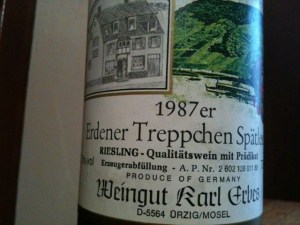
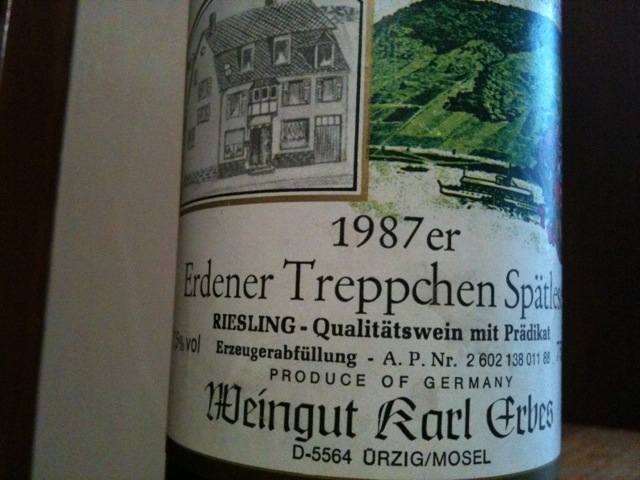
1987 Karl Erbes Erdener Treppchen Riesling Spätlese
Wines have a unique and particular quality that I just find fascinating and it is quite singular to them: They are perfect bridges into the past.
You might say that smells, too, can carry this magic because they have the ability to transport us back to fond memories and special moments. For me, one immediate example would be the aroma that arises from baking bell peppers – it will always remind me of my beloved grandma making her awesome Stuffed Peppers.
That brings us to food, which seems to do that, too. When I visit Germany nowadays, the first thing I long for is bread and ‘Wurst’, insufficiently translated as lunch meats or cold cuts. It is what makes me feel at home. And don’t get me started on the taste of actual, real bread…
And finally, music appears to be similar: Every time I hear a particular song by The Killers, one that I obsessively listened to two years ago when working on a paper, I start re-arguing the case in my head all over again. And we all know these songs that make our hearts swell because of the connotations our brain has from when we listened to them for the first time, or many times in a row.
But there is a caveat: These three triggers for our senses cannot function as true bridges, because – in my book at least – they do not take the process of ageing or evolving into account. They lock in memory from the past, the way it was.

Two beauties, meant for each other
A bottle of wine from a particular year offers more than food, music or smells can offer: It offers me a taste of something that was produced at a certain time, and that did not stay the same. A substance that, just like me, has aged since it was first created. We both evolved and we both are not what we were at the time the wine was made.
But still, it brings back memories: The name of the winery will remind me of past experiences with it; the name of the vineyard might remind me of a hike in this particular hill. Or I might even have enjoyed this particular wine in the past, and just like me it has evolved since then and is not the same.
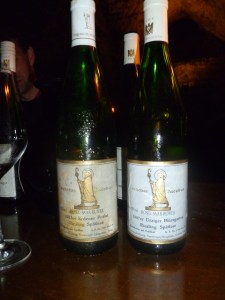
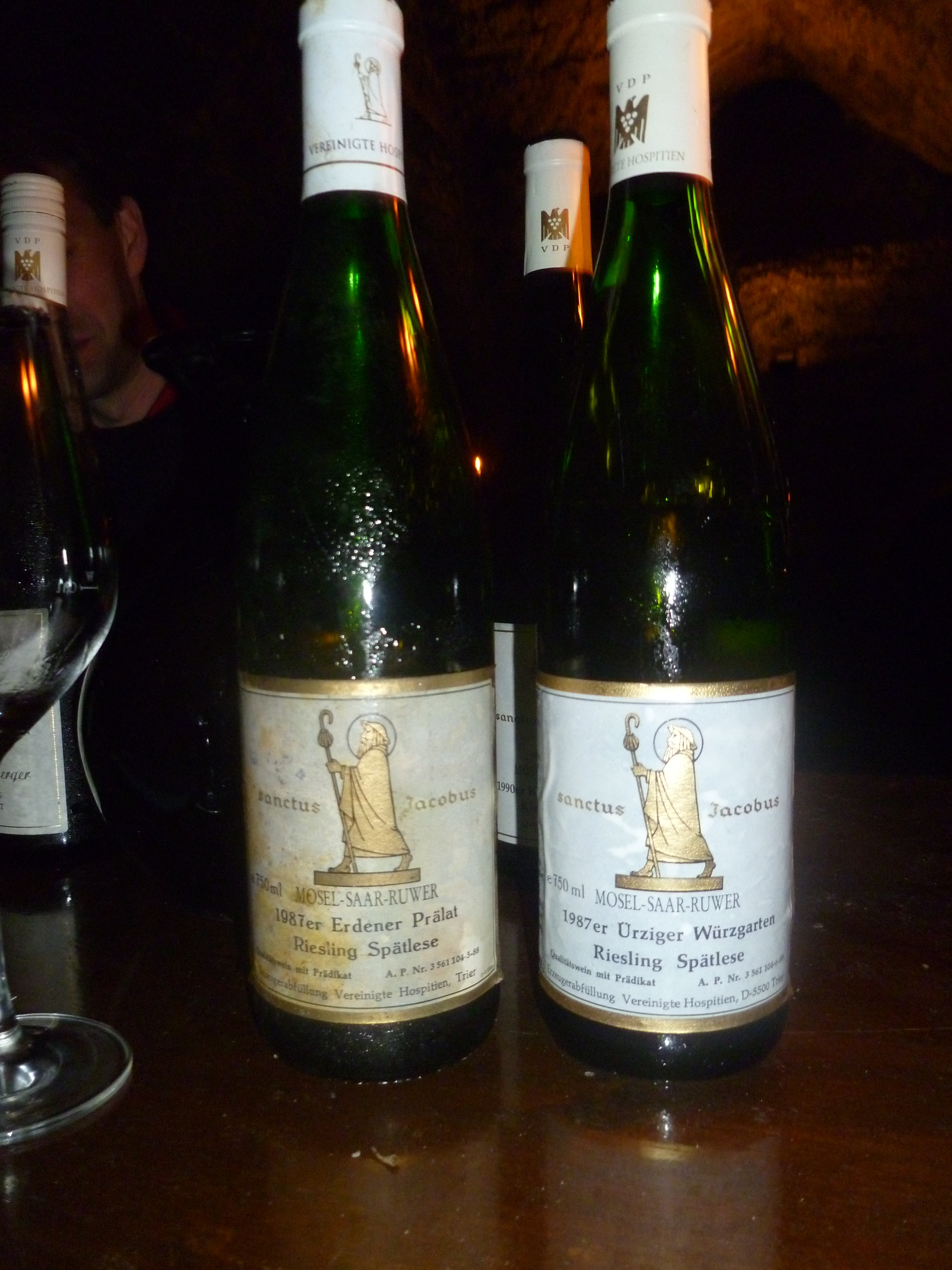
Two beauties
A bottle of wine gives me a chance to think of the grand scheme of things. What happened during this specific year? How did the German national team do? Or, on a more personal level, I might consider my life: Where was I at this point in time … physically … emotionally … spiritually? What has happened since? A lot of history, all captured in one sip, if you will. I love this about wine.
And there we are: This wine that transports me back in my head, it meets me in the here and now at the same time. It is a messenger from the past, that is not just a memory in my head, it is actually here. Ready to meet me and engage with me…
In that sense, a bottle of wine is like an old friend, that evolves with us, that grows with us, but still connects us to our past. So just like old friends, they are true bridges into our past.

Best buddies.




 the winegetter