Category Archives: France

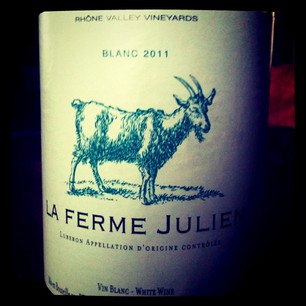
2011 Rhône Valley Vineyards Luberon AOC Blanc “La Ferme Julien”

2011 La Ferme Julien Vin blanc

I bought this wine for two reasons: First, fellow blogger Talk-A-Vino had given this particular wine an honorable mention in this post. Second, Nina and I have been on a mission to become Wine Century Club members. For those not in the know, you can become a member in this club once you have tried 100 (hence the century) different grape varieties. It is completely based on an honours system of reporting and membership is free. While I am pretty certain that I have had more than 100 grape varities in my life, I am only counting those that I actively remembered, so I am still a bit short. This wine is a blend of four grapes that I did not have on my list, so it brought us closer with even just one sip…I think it is a fun way to expand our knowledge of grapes and horizons by trying to get to the magic number.

Let me start by saying that I am not the biggest white wine fan, aside from Riesling, Gewürztraminer and Sauvignon blanc. I find a lot of the other whites I try uninspiring and lacking in exciting flavors and aromas. That said, we were excited to try four grapes we had never heard of: Bourboulenc, Grenache blanc, Ugni blanc and Roussanne.

For short, I will just call this La Ferme Julien blanc. I bought the bottle at Trader Joe’s for $5.99. The wine has 13.5% ABV, and, according to its back label, has been blended by the Perrin family, a well respected French négociant. You can find their wines on all levels of pricing and quality. I was surprised to find their name on this wine!

The wine showed a light yellow in the glass, with hints of green. On the nose, it was incredibly fruity: initial notes of yellow apple, peach and floral aromas. Later on I got banana (I think; Nina agreed). It was a really appealing and refreshing nose. On the palate, light bodied wine was dry, rather bland with light citrus aromas and a certain creaminess to it. There was slight strawberry, I think, but for me it was all overpowered by the alcohol, which also left me with some bitter notes at the finish, which I did not enjoy much.

In a way, this wine seemed to highlight my problem with higher alcohol white wines (not reds!): they become too heavy on my palate, when I want something fresh and clean. I felt like this wine would have been great at maybe 12% ABV, but that bit more made it hard for me to like it. The nose was fun, but the taste – not for me.

Tagged , , , , ,

2009 Kermit Lynch Côtes du Rhône

It was our anniversary this weekend, so we decided to try a restaurant in Ann Arbor that is focused on using local ingredients. It was our first time there, so we tried their five course tasting menu to see what the chef was capable of. The restaurant offered an accompanying wine pairing for half of what dinner cost. While I sometimes have had good experiences with these restaurant offered pairings, this is usually only the case if the restaurant has a sommelier and is as devoted to its wine menu as it is to its cuisine. Somehow, this place (and their wine menu) did not give off that impression, so I was reluctant to take it.

Given that the tasting menu was a surprise menu, it was not the easiest thing to decide what wine to go for then. Given that there was no riesling on the menu (shame on them), we decided to go with a lighter red wine that could complement most of what was possibly going to come, and sit out on the wine when it did not match at all. I find Côtes du Rhône wines to usually be a good companion when it comes to this. They are not as heavy bodied as other French reds, and at the same time offer an interesting mix of spices and earthiness. The only Côtes du Rhône the restaurant had was this one, so we decided to go for it.

Today I found out that Kermit Lynch is a major wine merchant in the tradition of French négociants from California. They offer a whole variety of wines from France and Italy with a gazillion of producers working for them. This particular Côtes du Rhône blend is vinified by Jean-François Pasturel from Grenache, Syrah, Cinsault and Carignan grapes from 40 year old vines on 36 hectares around Avignon.

The wine had a medium ruby color. Its nose was nicely perfumy with wooden and earthy notes, Nina detected some blueberries that were definitely there. On the palate, the wine was on the lower end of medium bodied, and it showed a nice fruitiness of red berries and herbal, foresty aromas. The finish was of medium length, with a nice peppery note to it. It was pretty yummy to guzzle at dinner, and was just the right weight.

It also paired nicely with our – quite disappointing – dinner. The first course was a duck liver paté, to which the earthy notes paired well. The second course was a very nice salad with pan-seared (over-peppered) local trout, where it sort of worked. This was followed by uninspired “gnocchi” (which had nothing in common with gnocchi any Italian would serve) in a tomato sauce – the wine worked again. The next course was pork loin with potatoes (talk about uninspired again), where the wine complemented the roast aromas on the pork and went nicely with the onions. The dessert was an abomination of a panna cotta, made with buttermilk which destroyed its texture and taste (hardly any vanilla, and not even a reminder of the creaminess a panna cotta should have) and topped with a horrible concord grape syrup that tasted as bad as a Welch grape juice (which I completely detest)…luckily, I had the wine to clean my palate from the few spoons I ate before I abandoned the dish.

It was kind of a sad thing, this dinner. While I want to support locally sourced restaurants and like the idea, using these ingredients does not absolve you from making dishes that taste good. It is like organic wines. There is no inherent goodness in making wines in an organic fashion. They have to taste good first and foremost. If the two go together, the better. If not, I will relinquish ingredients over taste at any moment.

The wine was nice, so I recommend it.

Tagged , , , , , , ,

1997 Karl Erbes Ürziger Würzgarten Auslese* and 1999 Bonnes et Guerre Pommard AOC

Two beauties, meant for each other

Some pairings seem to be made in the heavens: Think steak and malbec, think cheese and sweet riesling, think cooked beef and burgundy wines…the list is endless. But sometimes, we have the chance to reconsider our preconceived ideas, and be surprised, because a whole new horizon opens up as we do.

On one of these days, Nina and I were visiting Stefan Erbes of Karl Erbes. We were trying our way through his newer wines and on to older wines. I mentioned it before, but the cool thing with his winery is that his father has stashed away wines of virtually every vintage. We were trying the 1996 Ürziger Würzgarten Auslese against this 1997 Ürziger Würzgarten Auslese* (they make up to a *** Auslese to distinguish between them according to what Stefan and his father consider the most stellar ones). Both tasted beautifully, unfortunately I cannot find the tasting notes for that visit. Stefan started explaining that he had had the 1997 with a grilled steak the other day and that that was amazing. This is when I intervened and told him to stop pulling my leg. I was incredulous. A steak and a Riesling Auslese? I know Riesling is versatile (think Korean food and riesling), but that versatile? Stefan just laughed, handed me a bottle and challenged me to try it out.

The next day, we did. We threw coals on the grill and seared beef steaks with friends. And, oh man, did it work. The wine nor the steak were ruined by the pairing. Incredibly, the sweetness of the wine gave the steak a new feel and aroma, and the smokiness of the steak gave the wine a certain depth. I was stunned. We stocked up on the wine (because it is amazing, steak or not) and were looking forward to the next BBQ Riesling dinner.

The occasion arose when we made plans with two good friends for dinner. She is falling more and more in love with German Riesling, while he has remained a bit skeptical, but is definitely indulging in the older vintages we’ve brought along. We agreed on steak, a butternut squash with sage risotto and baby potatoes. This was to be followed by a cheese platter, our usual routine.

I knew I wanted to take another bottle of wine, too, and my eyes fell on a bottle of 1999 Bonnes & Guerre Pommard. It was a gift by my French exchange partner and great friend Fred (another match made in the heavens). Pommard is a very well renown village just south of Beaune on the Cote d’Or and my friend knew full well that it is also the sister city of my home village Nackenheim. He had brought two bottles of this wine. I have not been able to find out anything about Bonnes & Guerre, so if any of you know them, please let me know. The first of these bottles I shared with two friends in my last weeks in Germany before heading over to Ann Arbor. It was an utter disappointment: The wine had clearly been dead, whether of cork or another flaw or just bad wine making, I could not determine it. It was just sad. So, I had been worrying about the bottle sitting here in Ann Arbor for a while, and I decided it was time to take it and see…
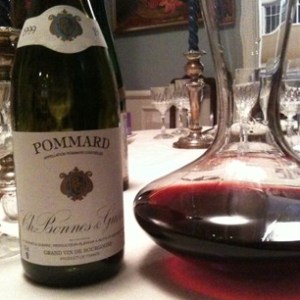
The Pommard and the decanter

The white was opened and left to breathe for about 30 minutes prior to tasting, the red was decanted and stood for about 45 minutes. We had parts of the Würzgarten with our steaks, and then some of the Pommard as well. That led over to the cheese course, where we also had both wines.

My notes on the 1997 Ürziger Würzgarten Auslese* (the wine had 7.5% ABV): The color was surprisingly light, not as ambered as one would expect an Auslese to be when 15 years old. The nose initially was not very prominent, I could not distinguish any particular aromas. As the wine opened up, there was peach in the nose. On the palate, the wine was very fresh, no significant indications of ageing. The peach aromas came through very nicely, the acidity in the wine balancing the reduced sugar beautifully. I guess I was most endeared by how fresh the wine still tasted. About 2 hours into the evening, the wine opened up further and there were tropical fruits coming in. The wine paired nicely with our steaks, but we were also happy to have preserved some for the cheese, because it definitely shone more on the cheese course, when it opened up and was supported more by the goat cheese we were having. It is a marvelous piece of art that Karl Erbes created…

So light…

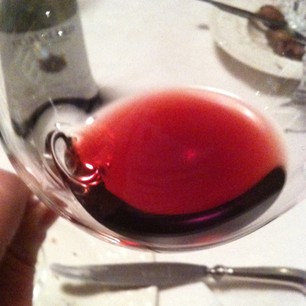
I knew this bottle of 1999 Bonnes & Guerre Pommard AOC was not flawed as soon as I uncorked it. The cork looked clean and intact, and when I poured the wine into the decanter, a full blown raspberry attack was going on. I don’t recall ever to have had such a prominent and distinct raspberry aroma in the nose. The wine was incredibly light in color, almost translucent. There was no darkening or browning on the edges when poured into the glass. It was remarkably fresh as well. In the nose, the raspberry aromas persisted, with some jam and tartness mixed in. I also smelled something like dough batter, but that might have been my brain playing tricks on me (I love raspberry tartes). There were also notes of chalk in the nose. On the palate, the wine was condensed, but very fruity. The alcohol of 13% ABV was noticeable, but at no instance was the wine heavy. Later in the evening, when we were having cheese, the wine showed cherry, plum and slight tomato notes. There was also a certain earthiness to it. The wine was such a surprise to me. I had expected it to be flawed or a heavier, darker pinot noir. The light color deceived that it was deep and subtle and strong. The finish was long, and it shone through.

Was this a pairing made in the heavens? I think it was. Trying old wines with friends, from two regions in the world that matter a lot to me, both fruity, both light, both deep. They expressed some great European wine making, and to have them side by side, was an experience I likely will not forget for quite some time…

Playing with filters to show how light it looked…

Tagged , , , , , , , , ,